Red Light Therapy for Skin: What the Research Actually Says
A research-based look at red light therapy for skin health, from collagen and wrinkles to acne and wound healing. Real studies, practical protocols, and honest takeaways.
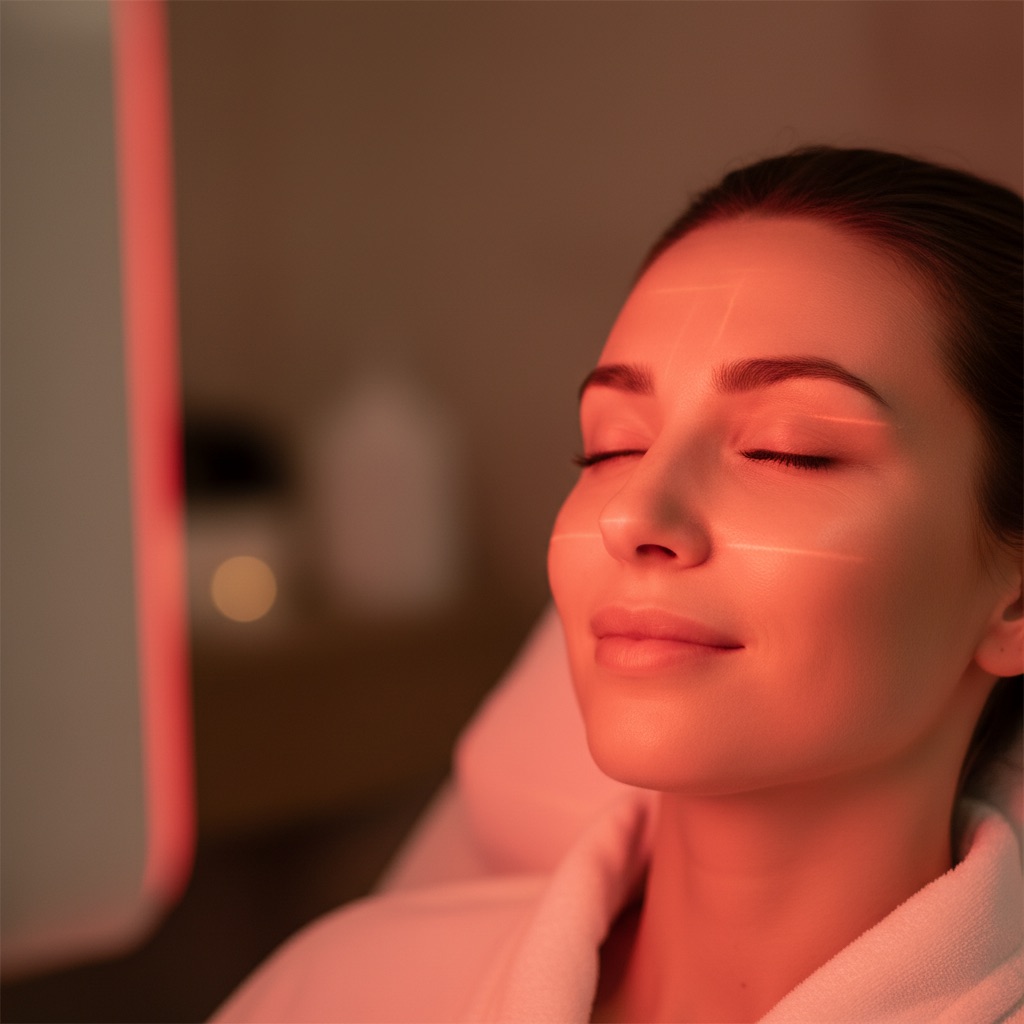
Red light therapy for skin is one of the most researched applications of photobiomodulation. Unlike many wellness trends that rely on anecdotal reports, this one has actual clinical trials behind it, including randomized controlled studies with blinded evaluators.
That does not mean it is a miracle treatment. The research is promising for specific skin concerns, limited for others, and still developing across the board. This article breaks down what the studies actually show, which wavelengths matter for different skin goals, and how to use red light therapy for skin at home without wasting time or money.
New to red light therapy in general? Start with our beginner’s guide for an overview of the basics. If you are ready to compare devices, see our best red light therapy panels review.
How Red Light Affects Your Skin
Your skin is the most accessible tissue for red light therapy because it is the first thing the light reaches. Red wavelengths (630-660nm) penetrate approximately 8-20mm into the skin, reaching the dermis where collagen and elastin are produced. Near-infrared wavelengths (810-850nm) go deeper, reaching 20-50mm into underlying tissue.
At the cellular level, the light is absorbed by cytochrome c oxidase in your mitochondria. This triggers a chain of events that includes increased ATP production, reduced oxidative stress, and modulated inflammatory signaling. For skin specifically, these effects translate to:
- Increased collagen synthesis by stimulating fibroblast activity
- Reduced collagen breakdown by lowering MMP-1 (the enzyme that degrades collagen)
- Improved blood flow through nitric oxide release, delivering more nutrients to skin cells
- Anti-inflammatory effects that calm redness and irritation
- Enhanced cellular repair for damaged or aging skin
The key insight from the research is that red light works on skin through multiple pathways simultaneously, not just one mechanism. This is why it shows up in studies on such different skin concerns.
Collagen and Anti-Aging: The Strongest Evidence
If there is one skin application where the research is genuinely solid, it is collagen stimulation and wrinkle reduction. Multiple randomized controlled trials have demonstrated measurable improvements.
The landmark study: Wunsch and Matuschka (2014) published a controlled trial in Photomedicine and Laser Surgery with 136 volunteers. Participants received red light (611-650nm) twice per week for 30 sessions. The results, evaluated by three blinded assessors, showed significant improvements in skin complexion, collagen density (measured by ultrasound), and reduced fine lines and wrinkles compared to the control group.
At the molecular level: Barolet et al. (2009) published in the Journal of Investigative Dermatology showing that pulsed 660nm LED light produced a 31% increase in type-1 procollagen levels and an 18% reduction in MMP-1 (the enzyme that breaks collagen down). This means red light both builds new collagen and protects existing collagen.
The landmark trial: Lee et al. (2007) conducted a split-face, double-blind, randomized, placebo-controlled study with 76 patients. After 12 treatments with 633nm and 830nm light, they found wrinkle reduction of up to 36% and skin elasticity improvements of up to 19%. Histology confirmed increased collagen and elastic fibers. Over 90% of subjects showed reduced wrinkle depth.
What this means practically: If you use a quality red light panel consistently (3-5 times per week) for 8-15 weeks, you can reasonably expect measurable improvements in skin texture, fine lines, and overall complexion. These are not dramatic overnight transformations. They are gradual improvements that compound over time.
The timeline matters. Most studies showing positive results used protocols of at least 4-8 weeks. Quick fixes are not what red light therapy offers for skin aging.
Acne: Promising, Especially Combined with Blue Light
Red light therapy for acne works primarily through its anti-inflammatory properties. Acne is fundamentally an inflammatory condition, and reducing that inflammation helps reduce the severity and frequency of breakouts.
The combination approach: Papageorgiou, Katsambas, and Chu (2000) published a landmark trial in the British Journal of Dermatology with 107 patients. The combination of blue (415nm) and red (660nm) light achieved a 76% improvement in inflammatory acne lesions over 12 weeks, outperforming blue light alone, white light, and even 5% benzoyl peroxide cream.
Red light alone: Suh and Na (2007) ran a split-face study showing that red light alone (15 minutes, twice daily for 8 weeks) produced significant improvements in both inflammatory and non-inflammatory lesions compared to the untreated side.
The takeaway for acne: Red light helps, but the strongest results come from combining it with blue light. Blue light (415nm) targets the bacteria (P. acnes) that contribute to breakouts, while red light reduces the inflammation around those breakouts. If acne is your primary concern, look for a device that offers both wavelengths, or consider using a separate blue light device alongside your red light panel.
Important caveat: for severe or cystic acne, red light therapy is not a replacement for medical treatment. It works best for mild-to-moderate acne, either as a standalone approach or alongside conventional treatments.
Wound Healing: Strong in Theory, Mixed in Practice
Red light therapy for wound healing has a fascinating backstory. NASA first noticed the effect in the 1990s when researchers working with LED grow lights observed faster wound healing on their own hands. This observation launched formal research into photobiomodulation for tissue repair.
The animal and laboratory evidence is strong. Red light consistently accelerates healing in cell cultures and animal models by promoting cell proliferation, upregulating growth factors, and reducing inflammatory markers like TNF-alpha.
The human clinical evidence is more mixed. Some studies show clear benefits for post-surgical healing and chronic wounds, while others have not reached statistical significance. A recent 25-subject clinical study, for example, did not find statistically significant differences between treated and control groups.
Practical perspective: If you are recovering from a minor procedure, cut, or skin injury, using red light therapy is unlikely to hurt and may help. But the evidence is not strong enough to recommend it as a primary wound-healing intervention. Think of it as a potentially helpful addition to normal wound care, not a replacement for it.
Other Skin Conditions: Early and Limited Research
Psoriasis: Ablon (2010) studied red and near-infrared LED for psoriasis that had not responded to other treatments, with some positive preliminary findings. Weinstabl et al. (2011) found clinical improvement with both blue and red light. However, these are small studies. The evidence is not yet strong enough to recommend red light therapy as a primary psoriasis treatment.
Rosacea: Case reports from 2020 showed that combined blue (480nm) and red (650nm) LED therapy reduced redness and papules in papulopustular rosacea. Again, this is preliminary evidence based on case reports, not large trials.
UV damage: Review papers (Avci et al., 2013, Seminars in Cutaneous Medicine and Surgery) reference red light as potentially helpful for reversing some signs of UV damage, but dedicated clinical trials for this specific application are limited.
The honest assessment: For psoriasis, rosacea, and UV damage, red light therapy is worth trying if you already own a panel for other reasons. But do not buy a device specifically for these conditions based on current evidence. Consult a dermatologist for these concerns.
Which Wavelengths for Which Skin Goals
Not all wavelengths do the same thing. Here is a practical breakdown:
630-660nm (red, visible): The most studied range for skin applications. Best for collagen stimulation, reducing fine lines, improving skin tone and texture, and reducing inflammation. This is what you want for general skin health and anti-aging.
810-850nm (near-infrared, invisible): Penetrates deeper than red light. Reaches underlying tissue, joints, and muscles. For skin specifically, it complements red wavelengths by addressing deeper dermal structures. The 830nm wavelength showed strong results in the Lee et al. split-face trial.
415nm (blue): Not technically “red light therapy” but relevant for skin. Primarily targets acne-causing bacteria. Most effective when combined with red light for acne treatment.
For most skin goals, a panel with 660nm and 850nm gives you the best coverage. If acne is a primary concern, adding blue light (415nm) is the most impactful upgrade you can make.
How to Use Red Light Therapy for Skin
Based on what the clinical studies actually used, here are practical guidelines:
Distance: Approximately 6 inches (15cm) from the panel for facial and skin treatments. This distance provides a good balance of irradiance and coverage area.
Duration per session:
- Start with 5 minutes per treatment area for your first week
- Work up to 10-15 minutes per treatment area
- Do not exceed 20 minutes per area per session
Frequency:
- Most successful clinical trials used 2-3 sessions per week
- Home device protocols typically recommend 3-5 sessions per week
- Daily use is safe but more is not necessarily better (see dosing note below)
Consistency: This matters more than anything else. The Wunsch study used 30 sessions over approximately 15 weeks. The Lee study used 12 sessions over 4 weeks. In both cases, consistency was the common factor. Pick a frequency you can maintain and stick with it for at least 8 weeks before evaluating results.
Bare skin: Remove makeup, sunscreen, and heavy moisturizers before sessions. These products can scatter or block the light before it reaches your cells. Apply skincare products after your session, not before.
The biphasic dose response: This is an important concept described by Huang and Hamblin (2009). Low doses of light stimulate cellular activity, while excessively high doses can actually inhibit it. More is not always better. The optimal energy density for skin applications is approximately 3-50 J/cm2. At standard treatment distances and session lengths, most quality panels deliver doses within this range. The practical implication: follow the recommended protocols rather than assuming longer sessions will produce faster results.
What to Expect (Realistic Timeline)
Based on the clinical literature and consistent user reports:
Weeks 1-2: You may notice improved skin tone and a subtle “glow” after sessions. This is primarily due to increased blood flow, not structural changes yet.
Weeks 4-6: Skin texture improvements become noticeable. Reduced redness and more even tone. If using for acne, you may start seeing fewer breakouts.
Weeks 8-12: Collagen-related improvements become more apparent. Finer lines may soften. Skin elasticity improves. These are the changes most clinical studies measured.
Weeks 12+: Continued gradual improvement. The Lee et al. study found that results persisted at the 3-month follow-up after treatment ended, suggesting that the collagen remodeling has lasting effects.
What you will not see: Dramatic before-and-after transformations. Deep wrinkles becoming smooth overnight. Complete elimination of acne. Red light therapy produces real but gradual improvements. If someone is selling you on dramatic instant results, be skeptical.
Who Should Be Cautious
Red light therapy has an excellent safety profile for most people, but there are situations that warrant caution:
- Photosensitizing medications: Many common medications increase light sensitivity, including certain antibiotics (tetracyclines), retinoids, some NSAIDs, and others. If you take any medication regularly, check whether it is photosensitizing before starting
- Active skin cancer or suspicious lesions: Do not use red light over areas with known or suspected malignancy
- Darker skin tones: The American Academy of Dermatology notes that people with darker skin may be more sensitive to visible light, with a potentially higher risk of hyperpigmentation. Consulting a dermatologist before starting is a good idea
- Systemic lupus erythematosus: Photosensitivity is a hallmark of this condition
- Retinoid use: If you use topical retinoids (tretinoin, adapalene), you may want to separate your retinoid application from your red light session by several hours, as some retinoids increase photosensitivity
When in doubt, a conversation with your dermatologist is always worthwhile.
Devices for Skin-Focused Use
You do not necessarily need the largest or most expensive panel for skin treatment. Here are practical recommendations based on how you plan to use it.
For face and targeted skin treatment: A smaller panel or flexible pad works well. You are treating a defined area from a consistent distance. The NovaaLab Pad (~$350) wraps comfortably for targeted use and is the most affordable entry point.
For face plus body skin treatment: A mid-size panel gives you the flexibility to treat your face and larger skin areas (chest, arms, legs) without repositioning constantly. The BON CHARGE Max Panel ($999) is a strong option here with its independently verified irradiance and very low EMF at treatment distance.
For comprehensive skin plus recovery use: If you also want to use red light therapy for muscle recovery, joint health, and other applications beyond skin, a multi-wavelength panel like the Mito Red MitoPRO X ($449-$2,649) covers the broadest range of uses. The six-wavelength design means you are not limited to skin applications.
For a detailed comparison of these and other panels, see our full review.
Frequently Asked Questions
Does red light therapy really work for wrinkles?
Yes, with realistic expectations. Multiple randomized controlled trials show measurable improvements in fine lines, skin elasticity, and collagen density after 8-15 weeks of consistent use. The improvements are gradual and cumulative, not instant.
Can I use red light therapy with my skincare routine?
Yes, but apply products after your session, not before. Makeup, sunscreen, and heavy moisturizers can interfere with light penetration. Some people find that their serums and moisturizers absorb better after a red light session due to increased blood flow.
Is red light therapy safe for daily use on my face?
Yes. Daily sessions at recommended durations (10-15 minutes) are safe. However, many clinical trials achieved their results with just 2-3 sessions per week. More frequent use is not necessarily more effective due to the biphasic dose response.
How close should I hold the panel to my face?
About 6 inches (15cm). This distance provides effective irradiance while covering most of your face. Some manufacturers provide specific distance recommendations for their devices, so check your panel’s documentation.
Will red light therapy help with acne scars?
The evidence for active acne is stronger than for existing scars. That said, the collagen-stimulating effects of red light may gradually improve the appearance of shallow scars over time. Deep or pitted scars are unlikely to see significant improvement from red light alone.
Can I combine red light therapy with other skin treatments?
Red light therapy pairs well with most skincare approaches. It can complement chemical exfoliants, vitamin C serums, and hydrating treatments. Be cautious about combining it with procedures that increase photosensitivity (chemical peels, laser treatments, microneedling). Wait at least 24-48 hours after these procedures before resuming red light sessions.
The Bottom Line
Red light therapy for skin is backed by more clinical evidence than most people realize. The strongest case is for collagen production and anti-aging, where multiple well-designed trials show real, measurable improvements. Acne treatment is also well-supported, particularly when red light is combined with blue light. Other skin conditions have preliminary but encouraging evidence.
The key to results is consistency. Pick a realistic frequency (3-5 sessions per week), use bare skin at the right distance, and give it at least 8 weeks before evaluating. The changes are gradual, but the research suggests they are real.
If you are considering adding red light therapy to your skincare routine, start with our device comparison to find the right panel for your needs and budget.
Related Articles
Joovv vs Mito Red Light: Which Panel Is Actually Worth It?
A detailed spec-by-spec comparison of Joovv Solo 3.0 and Mito Red MitoPRO X. We break down wavelengths, irradiance, EMF, price, and who each panel is best for.
Red Light Therapy Dosing Guide: How Long, How Close, How Often
A practical guide to red light therapy dosing. Covers how to calculate your dose, recommended protocols by goal, session timing, and the most common mistakes that reduce results.
What Is Red Light Therapy? A Beginner's Guide
Everything you need to know about red light therapy: how it works, what the research says, and how to get started at home.