What Are Massage Guns? A Beginner's Guide to Percussion Therapy
Learn how massage guns work, what they're good for, and how to use one effectively for muscle recovery.
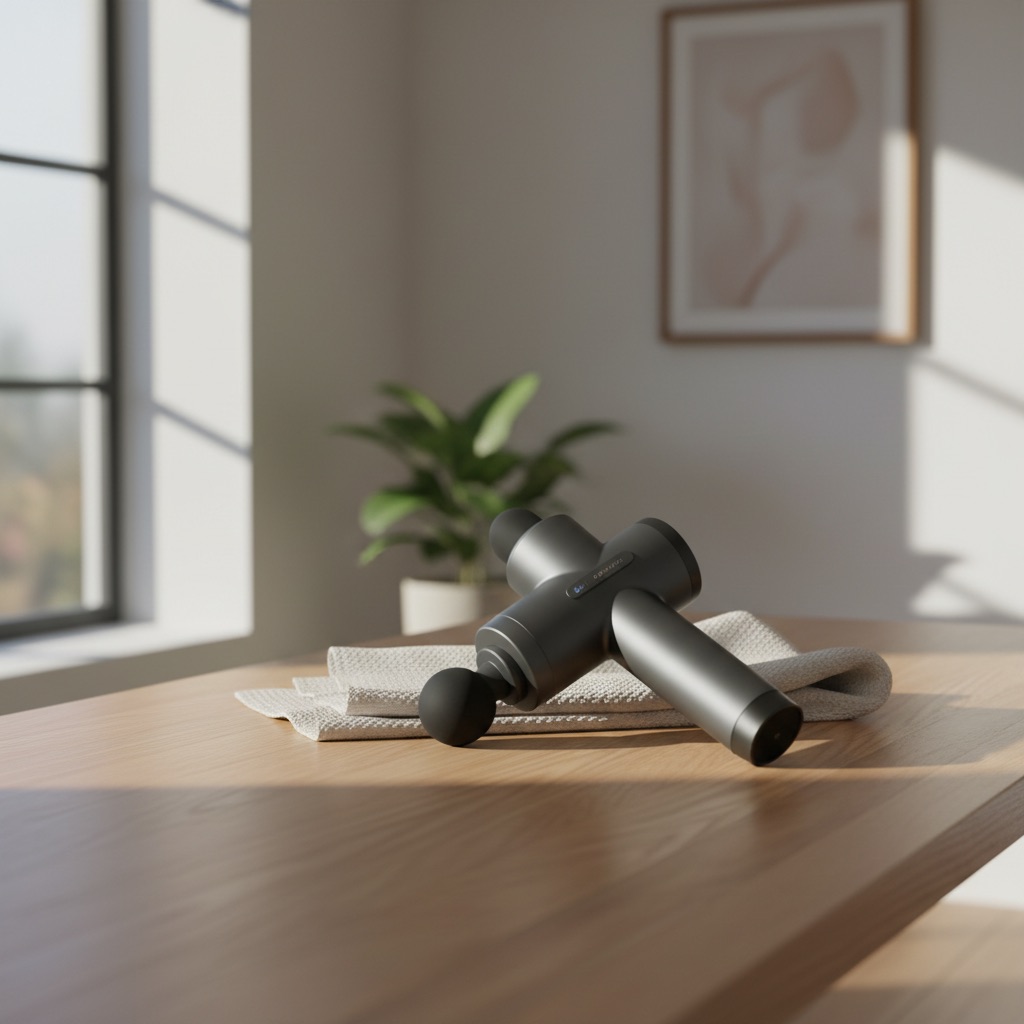
Massage guns were once limited to professional sports teams and physical therapy clinics. Over the past few years, they have become one of the most popular recovery tools for everyday athletes, gym-goers, and anyone dealing with regular muscle tension.
The concept is straightforward. A massage gun delivers rapid bursts of pressure into muscle tissue through a process called percussion therapy. The device moves a small attachment head back and forth at high speed, creating concentrated pressure waves that penetrate into the muscle. This helps reduce tightness, improve blood flow, and speed up recovery after physical activity.
But how do they actually work? And more importantly, are they worth it? This guide covers the basics so you can decide if a massage gun belongs in your recovery routine.
How Massage Guns Work
At the core of every massage gun is a motor that drives an attachment head back and forth in a rapid striking motion. This is percussion therapy, sometimes called vibration therapy, though the two are slightly different.
Percussion therapy uses a longer stroke length (amplitude) to physically push into the muscle tissue. The head moves several millimeters with each stroke, creating a deep, thumping sensation that reaches below the surface.
Vibration therapy uses shorter, faster oscillations that stay closer to the skin surface. Some lower-end devices fall into this category rather than true percussion.
Three specs matter most when comparing massage guns:
- Amplitude (mm): How far the head travels with each stroke. Higher amplitude means deeper tissue penetration. Most quality massage guns sit between 10-16mm. Anything below 10mm is closer to surface-level vibration
- Stall force (lbs or kg): How much pressure you can apply before the motor slows down or stops. Higher stall force means you can lean into tight muscles without the device losing power. Premium models offer 40-60 lbs of stall force
- Percussions per minute (PPM): How many times the head strikes per minute. Most guns offer adjustable speeds ranging from about 1,200 to 3,200 PPM
The combination of these three factors determines how effectively a massage gun can reach and work deep muscle tissue.
What the Research Shows
Research into percussion and vibration therapy is still growing, but several findings are worth noting.
Reduced muscle soreness. A 2020 study published in the Journal of Clinical and Diagnostic Research found that vibration therapy was as effective as traditional manual massage for reducing delayed onset muscle soreness (DOMS). Participants who used vibration therapy after exercise reported lower soreness levels in the following days compared to those who did nothing.
Improved range of motion. A 2014 study in the Journal of Clinical and Diagnostic Research showed that vibration therapy applied to the calf muscles improved ankle dorsiflexion range of motion. The effect was short-term, but potentially useful as part of a warm-up or cool-down routine.
Increased local blood flow. Several smaller studies have shown that percussion therapy increases blood flow to the targeted area. This makes sense mechanically. The rapid pressure stimulates the tissue and surrounding blood vessels, promoting circulation.
Reduced perceived fatigue. Some research suggests that using a massage gun between sets or immediately after exercise can lower the perception of fatigue, even if the underlying muscle damage is similar.
It is important to note that most of these studies are relatively small, and researchers generally call for more large-scale trials. The results are promising, but we should be honest about what the evidence supports and where gaps remain.
Massage Guns vs Foam Rolling
Massage guns and foam rollers both target muscle recovery, but they work differently and serve different purposes.
Foam rolling uses your body weight against a cylindrical surface to apply broad pressure across larger muscle groups. It covers more surface area in less time and works well for general myofascial release. Foam rolling is also essentially free after the initial purchase and requires no charging or maintenance.
Massage guns allow you to target specific spots with concentrated pressure. They are better for reaching small, tight areas like the traps, forearms, or calves where a foam roller can be awkward to use. They also let you control the exact intensity and location without contorting your body into odd positions on the floor.
These tools are not in competition with each other. Many athletes use both. Foam rolling for broad warm-up and cool-down, and a massage gun for targeted work on specific problem areas. If you can only choose one, consider where your tension tends to accumulate. If it is localized in specific spots, a massage gun may be more useful. If it is spread across your back, quads, or IT band, foam rolling might serve you better.
Who Should Consider a Massage Gun
Massage guns can be useful for a wide range of people.
Regular exercisers and athletes. If you train consistently, a massage gun can help manage the soreness and tightness that comes with repeated physical effort. Using one before training can help warm up muscles and increase range of motion. Using one after training can help reduce DOMS and speed recovery.
Desk workers. Sitting at a desk for eight or more hours a day creates chronic tension in the neck, shoulders, and upper back. A massage gun provides a quick way to address these areas without scheduling a professional massage.
Anyone with recurring muscle tension. Whether from stress, poor posture, or repetitive movements, regular muscle tension responds well to targeted percussion therapy.
Who Should Be Careful
Massage guns are not appropriate for everyone in every situation. Avoid using one in these cases:
- Acute injuries: Sprains, strains, or fresh muscle tears. Percussion therapy on injured tissue can make things worse
- Blood clotting disorders or blood thinners: Percussion can potentially dislodge clots. If you have any vascular condition, consult a doctor before use
- Over bony areas: Spine, shin bones, kneecaps, elbows, and other areas with little muscle covering. The impact against bone is painful and offers no benefit
- Nerve conditions: If you have peripheral neuropathy or other nerve issues, the intensity may cause problems. Start very gently or consult your healthcare provider
- During pregnancy: Some areas should be avoided. Talk to your doctor first
When in doubt, ask a healthcare professional before adding percussion therapy to your routine.
How to Use a Massage Gun Effectively
Getting the most out of a massage gun comes down to technique more than settings.
Let the gun do the work
This is the most common mistake. People press the massage gun hard into the muscle, thinking more pressure means better results. It does not. The device is designed to deliver percussion at its own amplitude. Just rest it against the muscle and let the striking motion do its job. Light to moderate pressure is all you need.
Spend 30-60 seconds per muscle group
More is not always better. For pre-workout activation, 30 seconds per muscle group is enough. For post-workout recovery, 60-90 seconds works well. Stay under 2 minutes on any single area to avoid bruising or irritation.
Move slowly across the muscle
Don’t hold the gun in one fixed spot. Glide it slowly across the length of the muscle, pausing briefly on any areas that feel particularly tight. Think of it as scanning the muscle rather than drilling into one point.
Avoid bones and joints
Keep the attachment head on muscle tissue. Avoid the spine, joints, and any bony prominence. This includes the kneecap, shin bone, elbow, and the vertebrae of your neck and back.
Use the right speed setting
Lower speeds (1,200-1,800 PPM) work well for warm-up, sensitive areas, and general relaxation. Higher speeds (2,000-3,200 PPM) are better for dense, thick muscle groups like quads, glutes, and hamstrings. Start low and increase only if needed.
Before vs after exercise
- Before: Use lower speed for 30 seconds per muscle group to increase blood flow and range of motion. Focus on the muscles you are about to train
- After: Use moderate speed for 60-90 seconds per muscle group to help flush metabolic waste and reduce incoming soreness
What to Look for When Buying
If you are shopping for your first massage gun, these are the specs and features that matter most.
| Feature | What to Look For | Why It Matters |
|---|---|---|
| Amplitude | 10-16mm | Deeper strokes reach more muscle tissue |
| Stall force | 30-60 lbs | More force means the motor won’t quit under pressure |
| Noise level | Under 60 dB | Anything louder gets annoying with daily use |
| Battery life | 2-8 hours | Longer battery means less charging |
| Weight | 2-3 lbs | You will hold this for several minutes at a time |
| Attachments | 4-6 heads | Different shapes for different muscle groups |
| Warranty | 1 year minimum | Longer is better, some brands offer lifetime |
Other nice-to-haves: Bluetooth app integration (guided routines, speed customization), a pressure sensor (real-time feedback on how hard you are pressing), an adjustable arm (easier to reach your back), and a carrying case for travel.
What to skip: Devices under $50 with vague specs are usually vibration tools, not true percussion devices. They lack the amplitude and stall force to do meaningful work on deep muscle tissue.
See our Best Massage Guns 2026 for head-to-head comparisons of the top models across different price points.
Our Picks for Getting Started
If you want a recommendation to start with, here are two solid options at different price points.
Hypervolt 3 Pro - Best All-Around
The Hypervolt 3 Pro from Hyperice is our top overall pick. It is quiet enough to use while watching TV, light enough to hold comfortably, and the built-in pressure sensor helps you maintain consistent force. Bluetooth app integration provides guided routines if you want structure. At $349, it sits in a comfortable middle ground between budget and premium.
- 14mm amplitude, ~35 lbs stall force
- Very quiet brushless motor
- Built-in pressure sensor
- Bluetooth with Hyperice app
- 2.6 lbs, approximately 2.5 hours battery
Ekrin B37 - Best Budget Option
If you want a reliable massage gun without paying premium prices, the Ekrin B37 is hard to overlook. The standout feature is the lifetime warranty, something almost no other brand at any price offers. Battery life is exceptional at around 8 hours per charge. You won’t get app integration or a pressure sensor, but the core percussion performance is solid.
- 12mm amplitude, 56 lbs stall force
- Quiet brushless motor
- Lifetime warranty from Ekrin Athletics
- 2.2 lbs, approximately 8 hours battery
- $330
Frequently Asked Questions
Can massage guns cause injury?
Yes, if used incorrectly. The most common issues are bruising from pressing too hard, irritation from spending too long on one area, and pain from using the gun on bones or joints. Follow the guidelines above (light pressure, 30-90 seconds per area, avoid bony spots) and the risk is very low. People with blood clotting disorders, acute injuries, or nerve conditions should consult a healthcare professional before use.
How often should I use one?
Daily use is fine for most people. Use it before workouts for activation (30 seconds per muscle group) and after workouts for recovery (60-90 seconds per muscle group). On rest days, a brief full-body session can help with general tension. Listen to your body. If an area feels tender or bruised, give it a day off.
Are expensive massage guns worth it?
It depends on what you need. A $188 massage gun like the Ekrin B37 handles basic recovery well. Premium models ($300-$500) add deeper amplitude, app ecosystems, pressure sensors, and adjustable arms. If you train heavily and want guided routines or deeper tissue work, the upgrade is worthwhile. For general soreness and everyday tension, a mid-range or budget option will do the job.
Can I use a massage gun on my neck?
With caution. Use only a soft, round attachment head. Keep the speed on the lowest setting. Avoid the front of the neck entirely (carotid artery and trachea). Stick to the sides and back of the neck, focusing on the trapezius and upper back muscles. If you have any neck injuries or conditions, consult your doctor first.
Can a massage gun replace professional massage?
Not entirely. A massage gun is effective for daily maintenance, targeted relief, and post-workout recovery. A professional massage therapist can assess imbalances, apply varied techniques, and work on areas that are difficult to reach yourself. Think of a massage gun as a daily maintenance tool and professional massage as periodic deeper work.
For full-body recovery including your legs, consider pairing a massage gun with compression boots. Compression therapy targets circulation and lymphatic drainage in ways that percussion cannot, making the two a strong combination for athletes.
Related Articles
Theragun PRO Plus vs Hypervolt 3 Pro: Which Massage Gun Should You Buy?
A detailed spec-by-spec comparison of the Theragun PRO Plus and Hypervolt 3 Pro. We break down power, noise, features, price, and who each massage gun is best for.
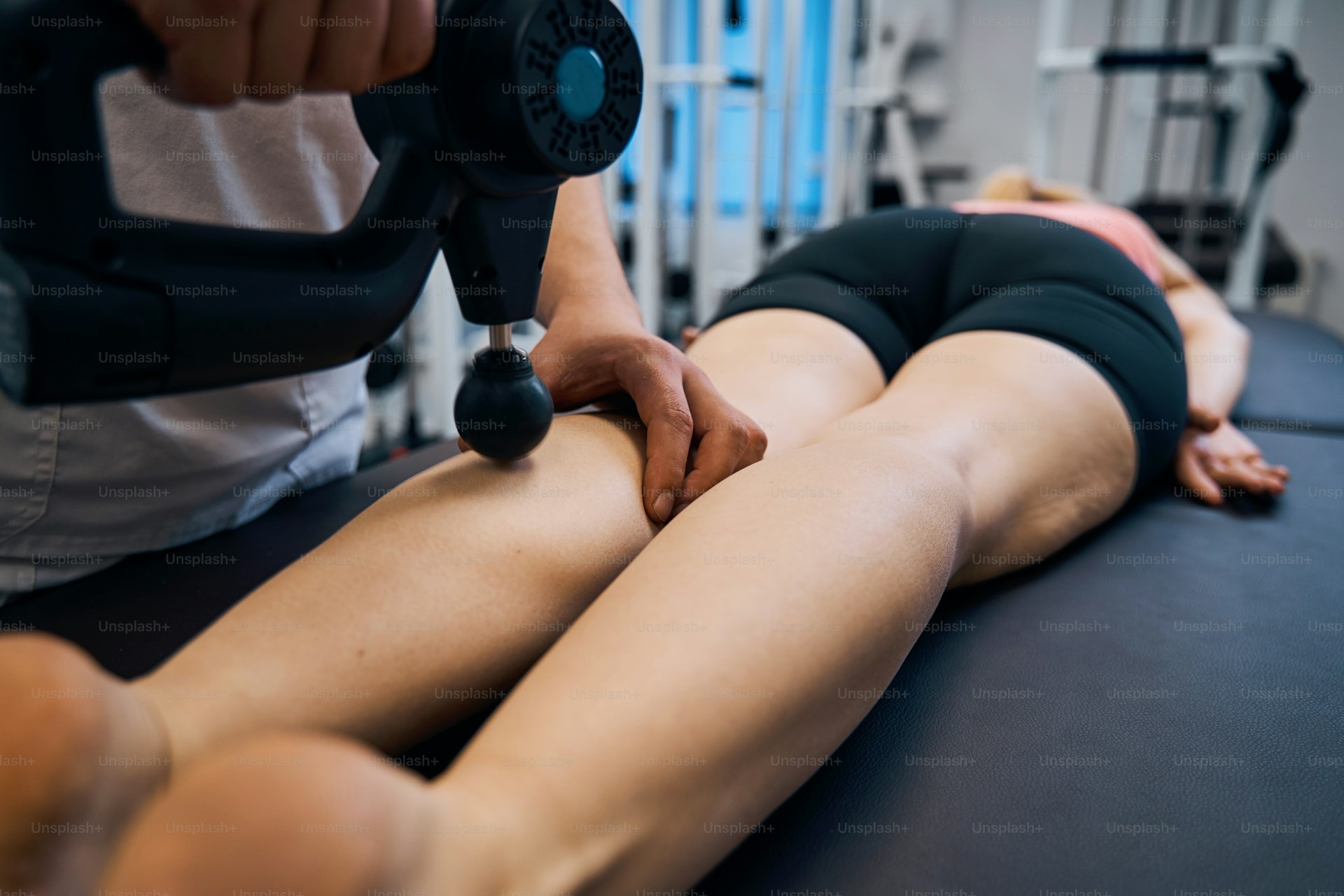
Best Massage Guns 2026: Compared Head-to-Head
We compared the top percussion massage guns for recovery: Theragun PRO Plus, Hypervolt 3 Pro, and Ekrin B37. See which one fits your needs and budget.
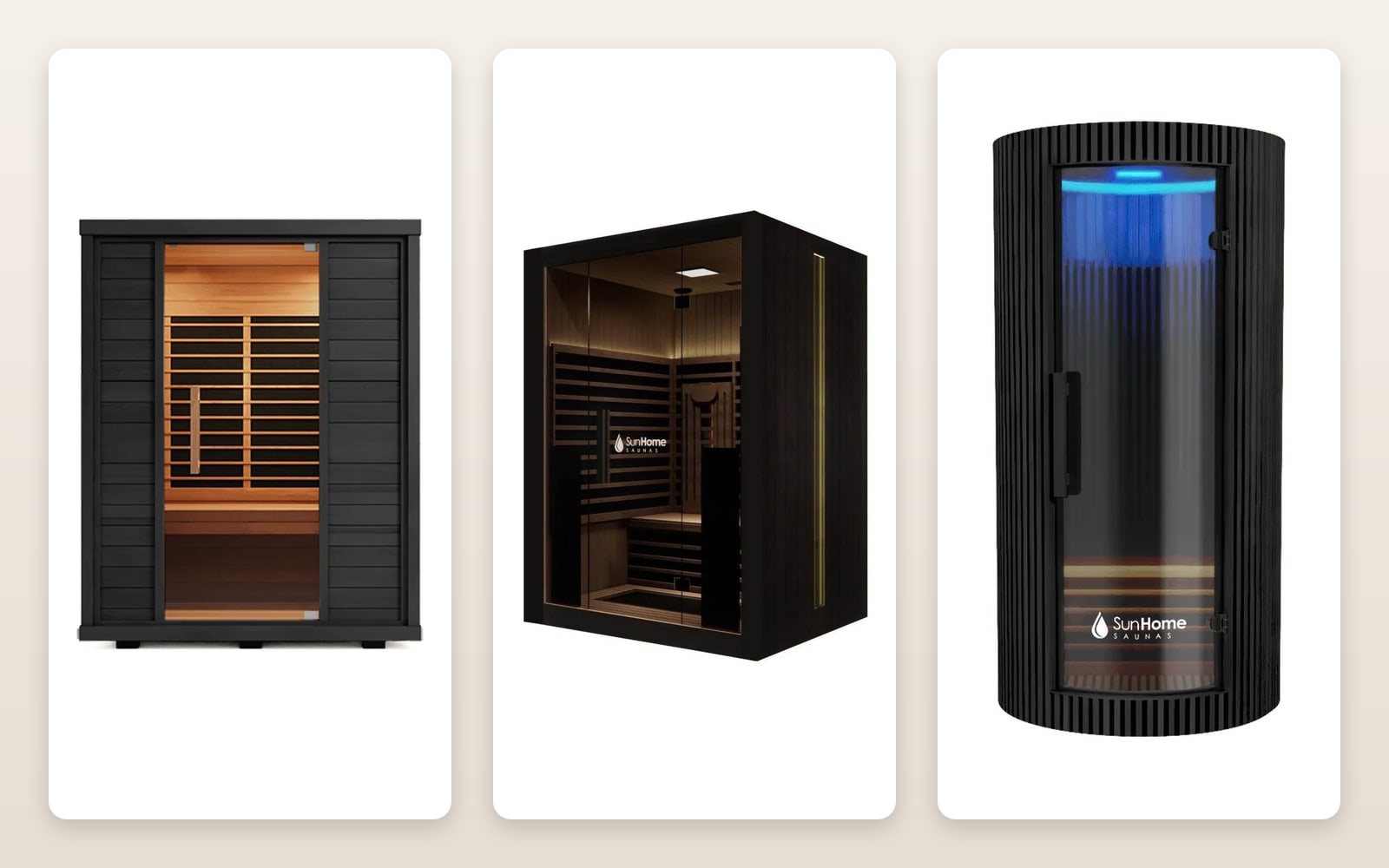
Best Home Saunas 2026: Top Infrared Saunas Compared
We compare eight infrared saunas for home use, from a $2,099 budget cabin to full-spectrum and outdoor-rated models with built-in red light therapy.