Best LED Face Masks 2026: 5 Red Light Masks Compared
We compared the best LED face masks of 2026 on LED count, wavelengths, FDA clearance, and price. Here are five red light masks actually worth considering.
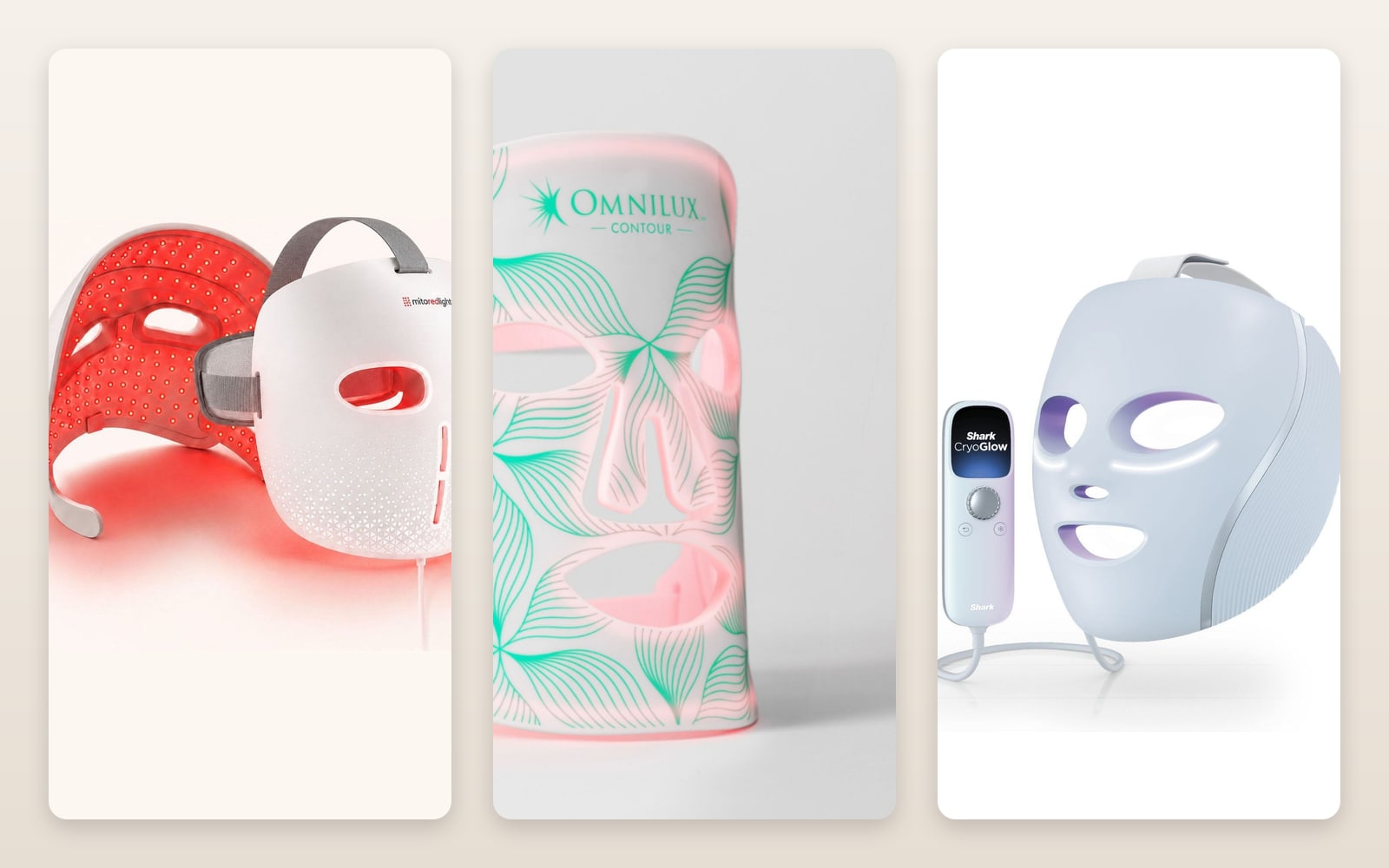
Best overall: Mito Red MitoGLOW. 1,064 LEDs, four wavelengths (blue, amber, red, near-infrared), five treatment modes, FDA cleared, and $424 at current pricing. No other mask in this comparison matches its LED density for the money.
Top 3 picks for 2026:
- Mito Red MitoGLOW (Mito Red Light, $424): best overall, 1,064 LEDs and four wavelengths covering both anti-aging and acne in one mask
- Omnilux Contour Face (Omnilux, ~$395): most proven, the mask with the deepest clinical paper trail, 633nm red plus 830nm NIR
- Shark CryoGlow (Shark, $349.99): best value, 480 light points, three light modes, and under-eye cooling plates at the lowest price here
LED face masks went from red-carpet curiosity to one of the best-selling skincare device categories in a few short years. The technology inside them is the same photobiomodulation used in full-size red light therapy panels, just shaped to your face and tuned for skin. The catch: the category is flooded with cheap masks that have too few LEDs, unverified wavelengths, or no FDA clearance at all.
We compared LED counts, wavelengths, clearances, treatment protocols, and pricing across the masks people actually ask about, and narrowed it down to five worth considering in 2026. All specs below were verified against manufacturer product pages in July 2026.
New to red light therapy? Start with our beginner’s guide to red light therapy for how photobiomodulation works, and our red light therapy for skin guide for the skin-specific science.
In Short
In short: The Mito Red MitoGLOW is the best LED face mask for most people in 2026. It packs 1,064 LEDs and four wavelengths (465nm blue, 590nm amber, 633nm red, 830nm NIR) into five targeted modes for $424, so one device covers fine lines, breakouts, and redness. If you want the mask with the most clinical evidence behind it, the Omnilux Contour Face at ~$395 remains the benchmark. On a tighter budget, the Shark CryoGlow at $349.99 adds under-eye cooling plates that nothing else in the category offers. Whichever you pick, expect to commit to roughly 10 minutes a day, most days, for 8 to 12 weeks before judging results.
Our Top Picks at a Glance
Do LED Face Masks Actually Work?
The honest answer: yes, for specific things, with realistic expectations.
The best-supported use is red and near-infrared light (roughly 630-830nm) for collagen production and fine lines. Multiple controlled studies have found measurable improvements in skin complexion, collagen density, and wrinkle depth with consistent red light treatment. The effect is real but modest, closer to “friends notice your skin looks rested” than “looks like injectables.”
Blue light (around 415-465nm) has decent evidence for mild to moderate acne. It targets the porphyrins produced by acne bacteria. Masks that combine blue with red tend to do better in studies than blue alone.
Two caveats matter. First, results require consistency: the studies showing benefits typically run 8 to 12 weeks of near-daily use. A mask you use twice and forget in a drawer does nothing. Second, dermatologists consistently describe LED masks as an adjunct to a good skincare routine, not a replacement for retinoids, sunscreen, or professional treatments. We think that framing is exactly right.
Home masks also deliver lower doses than in-office LED units, which is why the at-home protocols run daily instead of weekly. For more on how dose and wavelength interact, see our red light therapy dosing guide.
How We Compared These Masks
No lab, no paid placements. We compared manufacturer specifications, FDA clearance status, published wavelengths, LED counts, treatment protocols, warranty terms, and real-world pricing as of July 2026. Where a manufacturer’s claim could not be verified, we say so.
The five masks here all share a baseline: FDA clearance, published wavelengths in the ranges the research actually supports, and a company likely to still exist when you need warranty service.
Side-by-Side Comparison
| Feature | Mito Red MitoGLOW | Omnilux Contour Face | Shark CryoGlow | CurrentBody Series 2 | Solawave Wrinkle Retreat Pro |
|---|---|---|---|---|---|
| LEDs | 1,064 | 132 | 160 tri-wick (480 points) | 236 | 320 |
| Wavelengths | 465, 590, 633, 830nm | 633, 830nm | Red, blue, infrared | 633, 830, 1072nm | 605, 630, 660, 830nm |
| Blue light (acne) | |||||
| Near-infrared | |||||
| Treatment modes | 5 | 1 | 4 | 1 | 1 |
| Session length | 5-10 min | 10 min | Varies by mode | 10 min | 3 min cycles |
| FDA cleared | |||||
| Standout feature | Highest LED density | Strongest clinical backing | Under-eye cooling plates | 1072nm deep NIR | Flexible fit, short sessions |
| Price | $424 | ~$395 | $349.99 | $469.99 | $399 |
| Check Price at Mito Red Lightvia Mito Red Light | Check Price at Omniluxvia Omnilux | Check Price at Sharkvia Shark | Check Price at CurrentBodyvia CurrentBody | Check Price at Solawavevia Solawave |
Detailed Reviews
1. Mito Red MitoGLOW - Best Overall
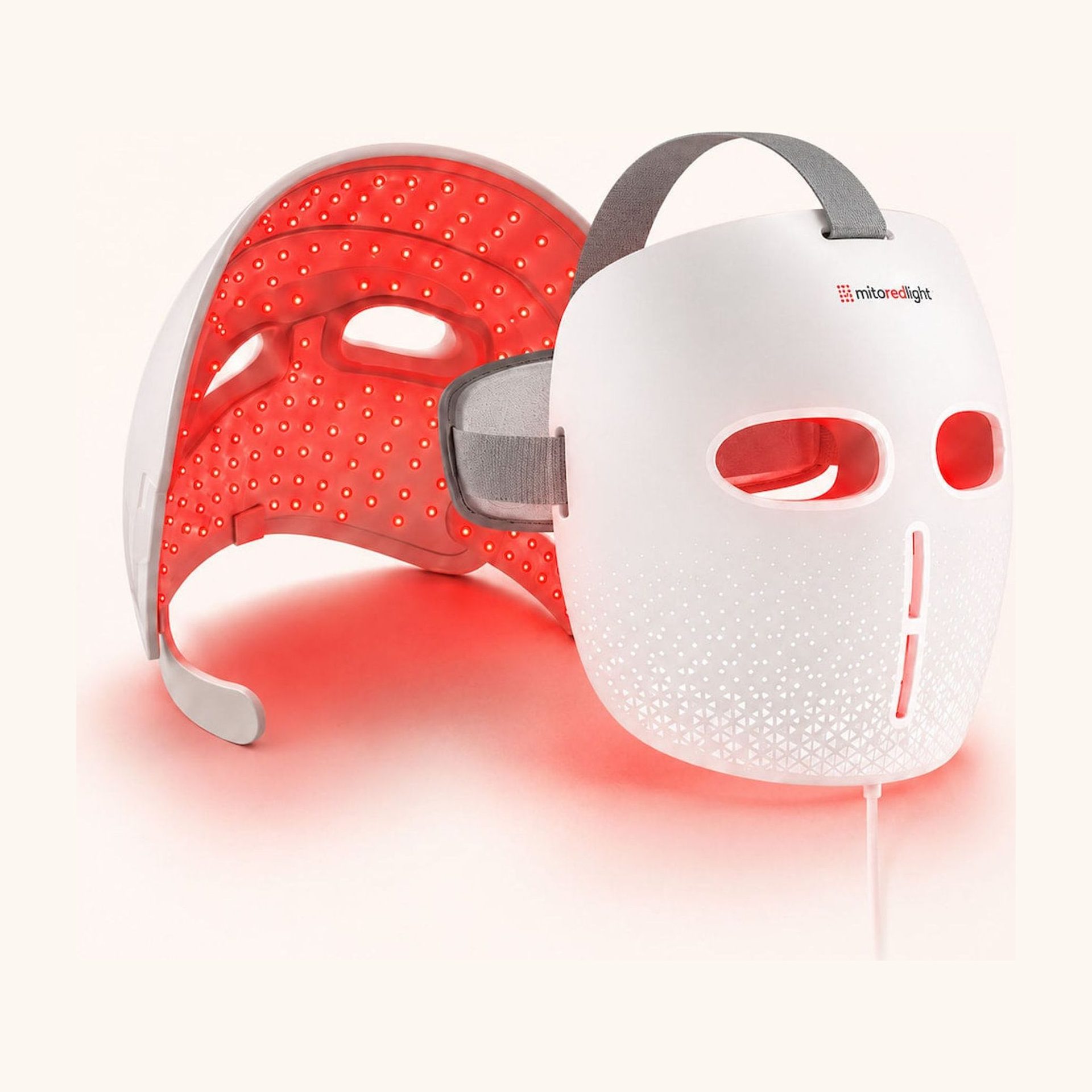
Mito Red MitoGLOW LED Face Mask
$424
Pros
- 1,064 LEDs, the highest density in this comparison by a wide margin
- 4 wavelengths: 465nm blue, 590nm amber, 633nm red, 830nm NIR
- 5 targeted modes covering fine lines, breakouts, redness, and dullness
- FDA cleared
- Short 5-10 minute sessions
- $424 at current pricing (MSRP $499), less than most premium rivals
Cons
- Newer product with a shorter track record than Omnilux
- No under-eye cooling or extras, light therapy only
- Rigid shell rather than flexible silicone
Mito Red Light built its reputation on full-size panels with published spectroradiometer data, and the MitoGLOW brings that spec-first approach to the face mask category. The headline number is 1,064 individual LED chips. For comparison, the Omnilux Contour Face has 132 and the CurrentBody Series 2 has 236. More LEDs mean more even coverage across the treatment area, with fewer gaps between light points.
The four wavelengths are sorted into five preset modes: Anti-Aging (633nm red), Purify (465nm blue for breakouts), Calm (590nm amber for redness), Deep Renewal (633nm red plus 830nm NIR), and Clarify (blue plus red together). That makes the MitoGLOW one of the few masks here that genuinely covers both the anti-aging and acne use cases in one device. Mito Red suggests starting with Deep Renewal for general skin improvement, running sessions of 5 to 10 minutes, 3 to 6 times per week.
At $424 (down from a $499 MSRP), it undercuts the CurrentBody Series 2 while offering blue light that CurrentBody lacks. The main thing it gives up against Omnilux is history: Omnilux has years of published clinical work behind its specific device line, while the MitoGLOW leans on the broader wavelength research. If you want maximum hardware for your money and the flexibility to treat breakouts as well as fine lines, this is the one to get.
2. Omnilux Contour Face - Most Proven
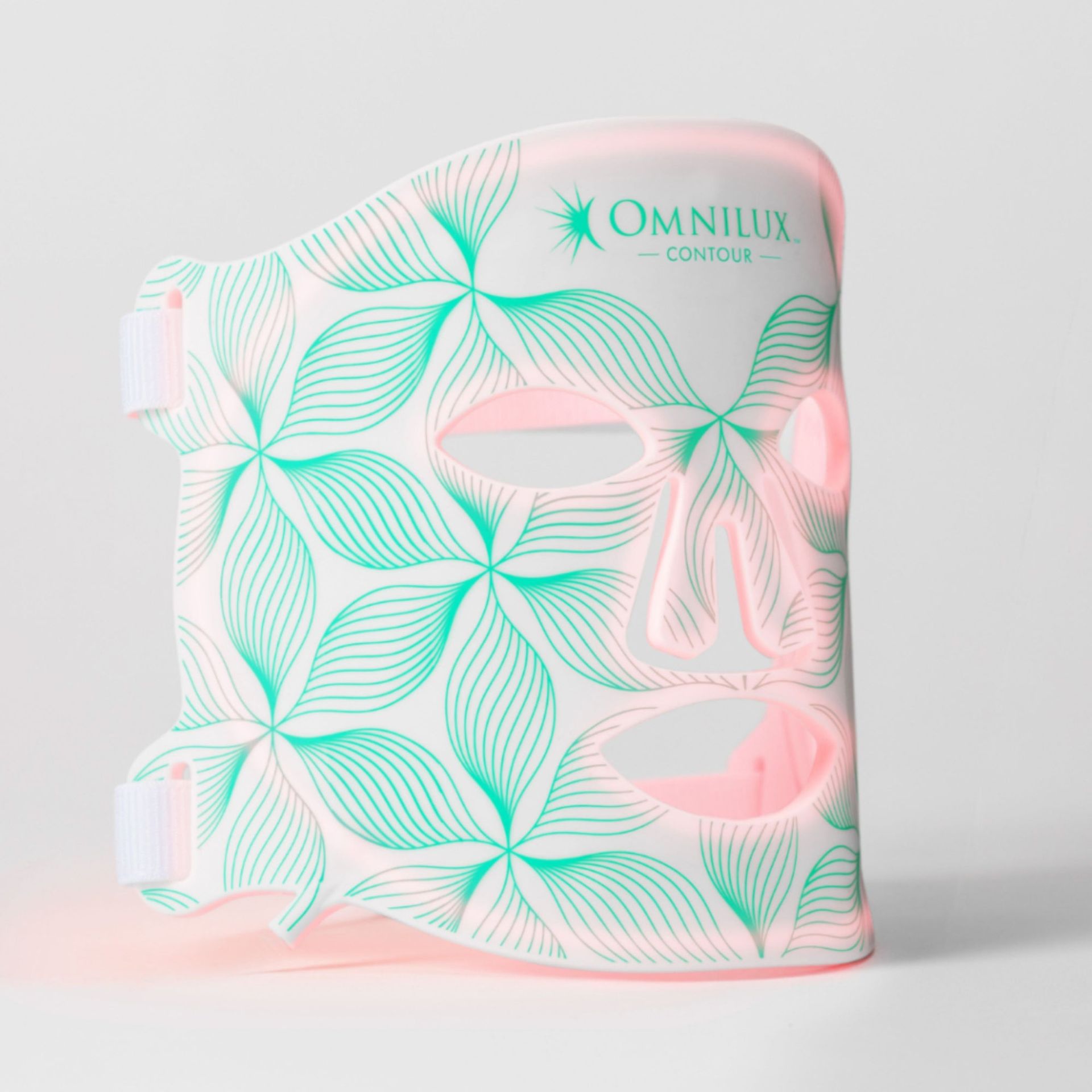
Omnilux Contour Face
~$395
Pros
- The most clinically documented home LED mask on the market
- 633nm red + 830nm NIR, the two best-studied skin wavelengths
- Flexible medical-grade silicone conforms to the face
- FDA cleared
- Battery powered and cordless during treatment
- Frequent promotions bring it to ~$355
Cons
- Only 132 LEDs, the lowest count in this comparison
- No blue light mode, not aimed at acne
- Single mode, no customization
Omnilux started in professional dermatology equipment, and the Contour Face is the home version of that lineage. It is the mask most often cited when dermatologists say home LED therapy can work, and Omnilux backs the device line with peer-reviewed clinical studies rather than borrowed research. If “show me the evidence for this exact product” is your bar, this is the mask that clears it best.
The spec sheet is deliberately simple: 132 LEDs delivering 633nm red and 830nm near-infrared simultaneously, one 10-minute program, 3 to 5 sessions per week. The flexible medical-grade silicone shell is a real advantage over rigid masks, since it keeps the LEDs at a consistent distance across the curves of your face, and it makes the mask comfortable enough that the 10 minutes pass easily. It runs off a rechargeable battery pack, so you are not tethered to an outlet.
What you give up is versatility. There is no blue light for breakouts, no modes to switch between, and the LED count looks thin next to the MitoGLOW’s 1,064. List price is $395, and Omnilux runs promotions often enough that ~$355 is a realistic buying price. For anti-aging specifically, with the strongest paper trail in the category, the Contour Face remains the benchmark everything else gets measured against.
3. Shark CryoGlow - Best Value
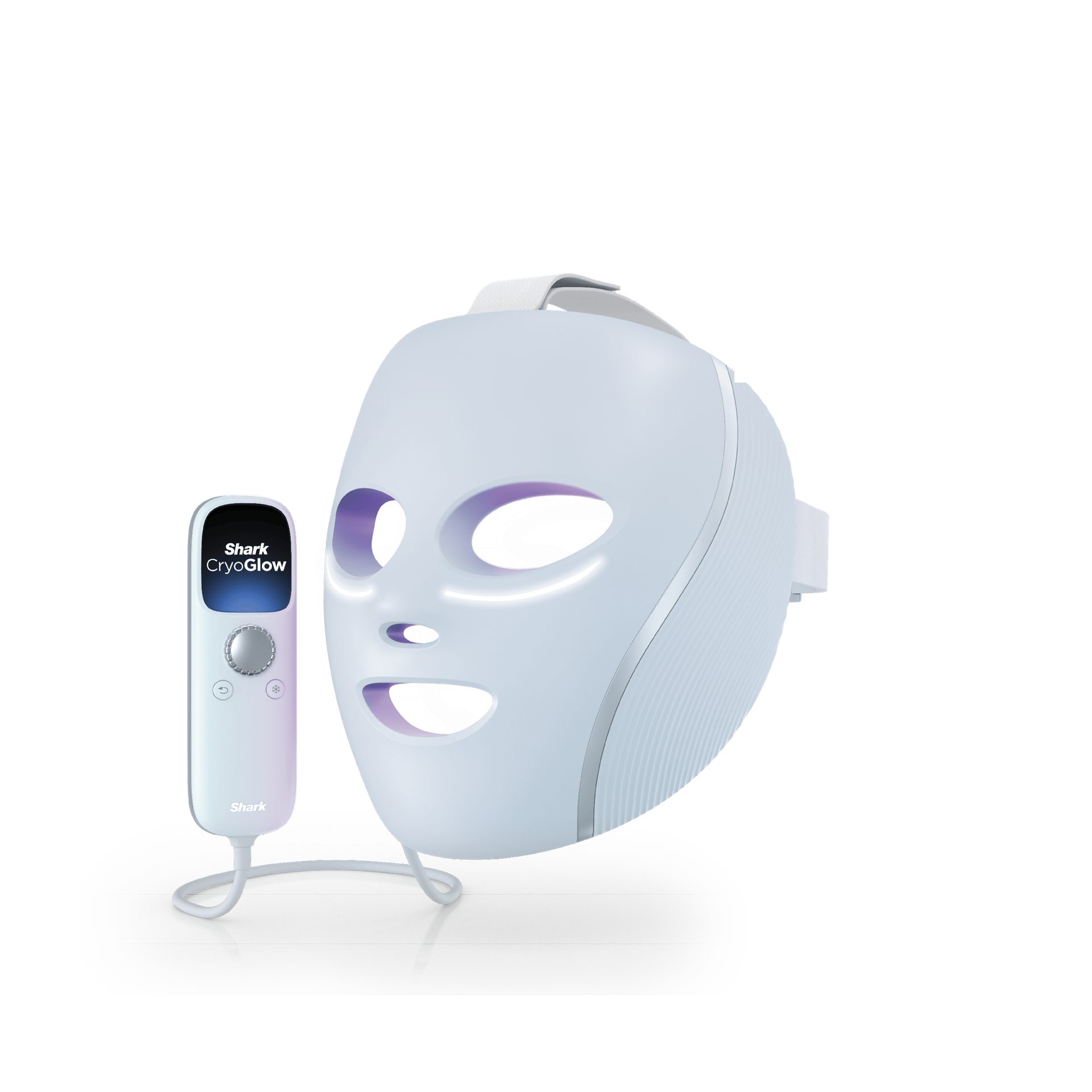
Shark CryoGlow
$349.99
Pros
- Under-eye cooling plates, unique in the category
- 160 tri-wick LEDs deliver 480 individual light points
- Red, blue, and infrared light modes cover aging and breakouts
- FDA cleared
- TIME Best Invention 2025
- Lowest price in this comparison at $349.99
Cons
- Shark is new to skincare devices, short category track record
- Bulkier than silicone masks
- Publishes fewer optical specs (irradiance, exact wavelengths) than enthusiast brands
Shark, the company best known for vacuums, entered skincare with more engineering seriousness than anyone expected. The CryoGlow earned a TIME Best Invention award in 2025 and quickly became one of the best-selling LED masks in the US. At $349.99 it is the least expensive mask in this comparison while offering the longest feature list.
The light engine uses 160 tri-wick LEDs, each housing three diodes, for 480 individual light points across red, blue, and infrared. Preset programs target skin aging, blemishes, and skin prep. The genuinely unique feature is the pair of under-eye cooling plates, which chill the skin under your eyes during or outside light sessions. Cooling does not boost the photobiomodulation itself, but it feels excellent, helps with morning puffiness, and is the kind of feature that makes you actually use the device daily. Consistency is what makes LED therapy work, so that matters more than it sounds.
The trade-off is transparency. Shark publishes fewer optical details (exact wavelengths per mode, irradiance figures) than enthusiast brands like Mito Red or Omnilux, so spec-focused buyers have less to verify. But as a first LED mask that covers both acne and anti-aging and costs the least here, the CryoGlow is easy to recommend.
4. CurrentBody Skin LED Mask Series 2 - Deepest NIR
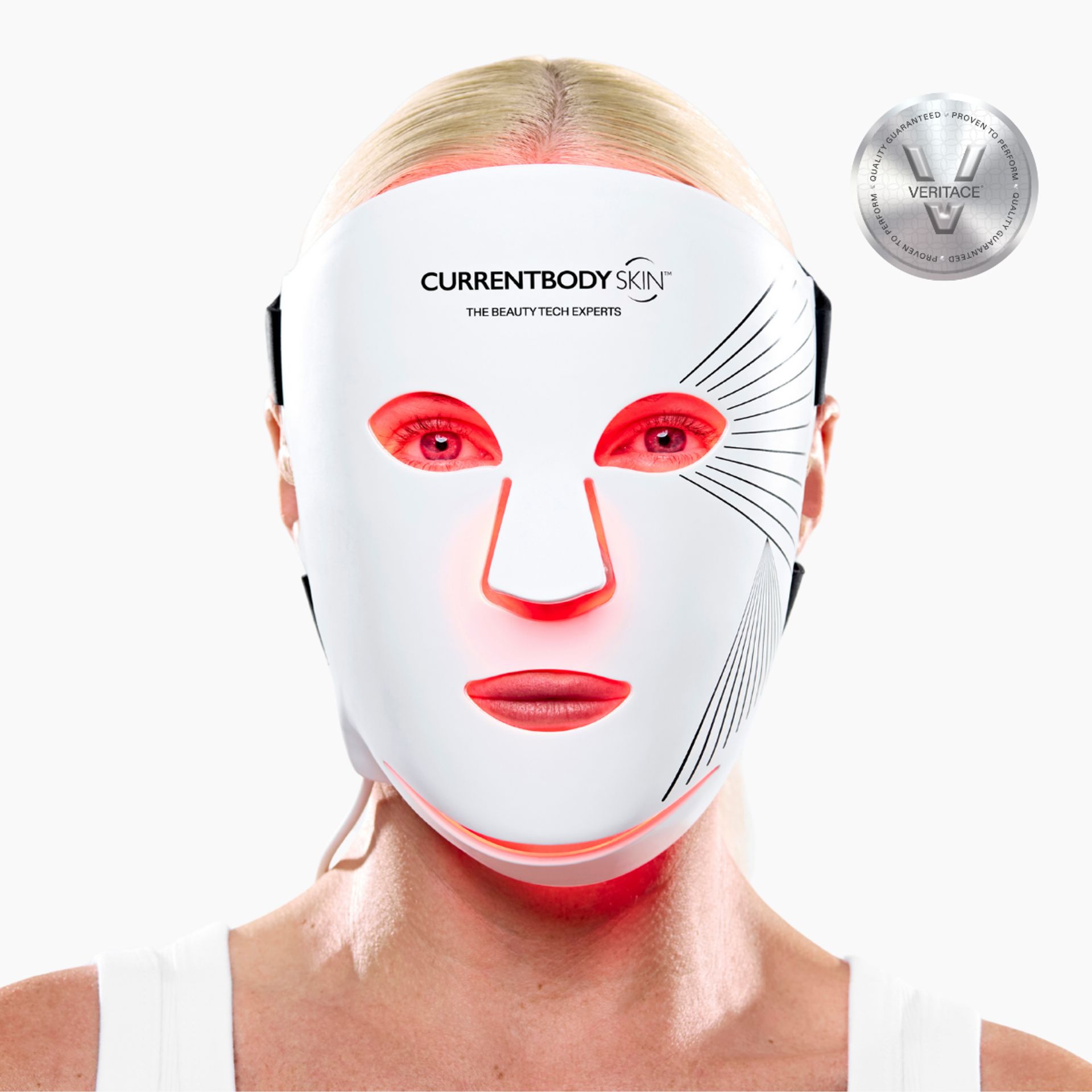
CurrentBody Skin LED Mask Series 2
$469.99
Pros
- 236 LEDs across 633nm red, 830nm NIR, and 1072nm deep NIR
- 1072nm wavelength is rare in any home device
- Flexible fit with improved eye and lip coverage over Series 1
- FDA cleared
- Widely reviewed, established product line
Cons
- Out of stock direct from us.currentbody.com as of July 2026 (waitlist)
- Most expensive mask in this comparison at $469.99
- No blue light mode for acne
- Deep NIR benefits for skin are less studied than 633/830nm
The CurrentBody Skin mask is one of the most visible LED masks in the world, a fixture of celebrity skincare routines and one of the original serious home masks. The Series 2 update raised the LED count to 236 and added a third wavelength: 1072nm deep near-infrared, alongside the standard 633nm red and 830nm NIR. That 1072nm wavelength penetrates deeper than typical NIR and is rare in any consumer device, though we will be honest that the skin-specific research at 1072nm is thinner than the mountain of work on 633nm and 830nm. Treatments are the standard 10 minutes.
One important practical note: as of July 2026, the Series 2 mask is listed as out of stock for direct order at us.currentbody.com, with a notify-me waitlist in place of a buy button. It remains available through Amazon in the meantime, typically at or near the $469.99 list price. If you are set on the Series 2, check both before paying a markup.
At $469.99 it is the most expensive mask here, and it lacks blue light, so acne is not its use case. It earns its spot for buyers who want the deepest wavelength coverage available in a face mask from an established brand with a long review history.
5. Solawave Wrinkle Retreat Pro - Most Flexible
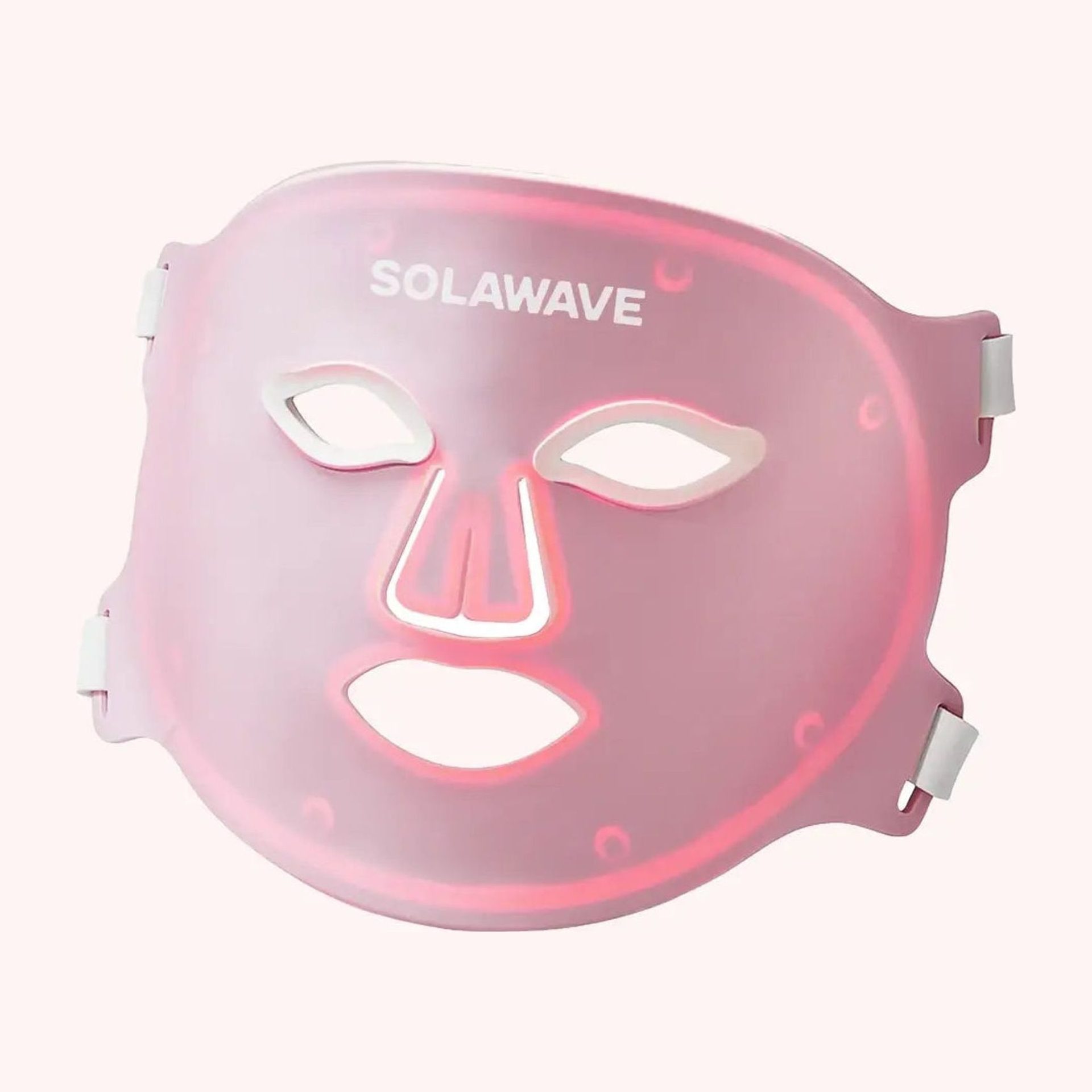
Solawave Wrinkle Retreat Pro
$399
Pros
- 320 LEDs, more than double Omnilux's count
- 4 wavelengths: 605nm amber, 630nm red, 660nm deep red, 830nm NIR
- Flexible silicone strap-on design, fully hands-free
- Short 3-minute treatment cycles
- FDA cleared
Cons
- No blue light, anti-aging only
- Solawave has less clinical documentation than Omnilux
- Marketing pushes companion serums you do not need
Solawave made its name with the viral red light wand, and the Wrinkle Retreat Pro is its full-face follow-up. The spec sheet is strong for the price: 320 LEDs spanning four wavelengths (605nm amber for the skin surface, 630nm and 660nm red for the mid dermis, 830nm NIR for the deepest layers), 65 mW/cm2 total irradiance, and FDA clearance. The flexible silicone design straps on securely enough that you can walk around, do dishes, or finish a skincare routine mid-session, which is genuinely useful for daily consistency.
The standout protocol detail is session length: Solawave’s treatment cycles run just 3 minutes, delivering a stated 11.7 J/cm2 per treatment, used 3 to 5 times weekly. The company itself says visible improvements typically show after 8 weeks of consistent use, which matches the research timeline and is refreshingly honest for this category.
Why does it rank fifth? The wavelength mix is all red-spectrum, so like Omnilux and CurrentBody there is no acne mode, and Solawave does not have Omnilux’s clinical documentation to justify choosing it purely on evidence. The companion serum and cream upsells are skippable. But if a flexible fit and the shortest possible sessions are what will keep you consistent, the Wrinkle Retreat Pro at $399 is a solid pick.
How Do I Choose an LED Face Mask?
Four things separate the good masks from the drawer-fillers:
Wavelengths. For fine lines, firmness, and general skin health, you want red around 630-660nm plus near-infrared around 830nm. Every mask on this list has both. For breakouts, you need blue light around 415-465nm, which only the MitoGLOW and CryoGlow offer here.
LED count and coverage. More LEDs mean more even light across your face. Anything under 100 LEDs starts leaving coverage gaps. There are diminishing returns at the top end, but the difference between 132 and 1,064 LEDs is real.
FDA clearance. Clearance means the device was reviewed for safety and its claims for a specific use. It is not proof of efficacy, but its absence on a $300+ device is a red flag. All five masks here are FDA cleared.
Fit and comfort. This one is underrated. The best mask is the one you actually wear 5 days a week for 3 months. Flexible silicone (Omnilux, Solawave) is more comfortable for longer sessions; rigid shells (MitoGLOW, CryoGlow) hold LED distance more precisely and fit extras like cooling plates.
LED Mask or Red Light Panel?
If your goals go beyond your face, a panel deserves a look. A mid-size red light therapy panel treats your face at higher intensity than most masks, and also handles neck, chest, joints, and muscle recovery. Panels cost more ($350-$1,200), need a place to hang or stand, and require you to sit in front of them, while a mask straps on and lets you move around.
Our take: choose a mask if skin is your only goal and convenience decides whether you stay consistent. Choose a panel if you also care about recovery, joint pain, or treating larger areas. There is no rule against starting with one and adding the other later.
How Often Should You Use an LED Face Mask?
Follow your device’s protocol, but the masks here cluster around the same routine: 10 minutes per session (3 to 10 depending on the device), 3 to 6 sessions per week, on clean, product-free skin. Apply serums and moisturizers after the session, not before, since products on the skin can block or scatter the light.
Expect nothing visible in week one. Most users who see results report them somewhere in the 4 to 8 week range, and the honest evaluation window is 8 to 12 weeks of consistent use. Take a photo in consistent lighting before you start, or you will have no idea whether it worked.
Are LED Face Masks Safe?
For most people, yes. LED masks are non-invasive, and the most common side effect is mild warmth or temporary redness. A few sensible precautions:
- Eyes: All five masks here have eye openings or built-in eye protection. Do not stare into the LEDs, and follow the manufacturer’s guidance on eye shields.
- Medications: Some medications (including isotretinoin and certain antibiotics) increase light sensitivity. Check with your doctor first.
- Skin conditions: If you have melasma, active skin cancer, or a photosensitive condition like lupus, talk to a dermatologist before using any light device.
- Pregnancy: There is little research either way; most manufacturers advise checking with your doctor.
Frequently Asked Questions
Is a red light therapy mask worth it?
Worth it if, and only if, you will use it consistently. The evidence supports modest, real improvements in fine lines, skin tone, and collagen with 8 to 12 weeks of regular use at 630-830nm, and blue light helps mild to moderate acne. If daily 10-minute sessions sound sustainable to you, a quality mask is a reasonable buy. If not, spend the money on sunscreen and a retinoid first.
What is the best LED face mask in 2026?
Our pick is the Mito Red MitoGLOW at $424: 1,064 LEDs, four wavelengths including blue for breakouts, five modes, and FDA clearance. The Omnilux Contour Face (~$395) is the better choice if you want the mask with the most clinical evidence behind it, and the Shark CryoGlow ($349.99) is the best value with its under-eye cooling plates.
How long until I see results from an LED mask?
Plan on 8 to 12 weeks of consistent use before judging. Some users notice subtle tone and texture changes around week 4. Collagen remodeling is slow, and no light device produces overnight changes.
Can an LED mask replace Botox or professional treatments?
No. Dermatologists describe LED masks as an adjunct to a skincare routine, not a replacement for injectables, lasers, or prescription topicals. A mask can complement those treatments and help maintain results between them.
Do cheap LED masks from marketplaces work?
Some might, but you have no way to verify wavelengths, output, or safety testing, and many sub-$100 masks have too few LEDs to deliver a meaningful dose. With light therapy, wavelength and dose are the product. We recommend staying with FDA-cleared devices from companies that publish their specs.
Our Verdict
The Mito Red MitoGLOW is the best LED face mask for most buyers in 2026. It has roughly 8 times the LED count of the category benchmark, covers anti-aging, redness, and acne in one device with four wavelengths and five modes, and costs $424, less than masks that do less.
Want maximum evidence over maximum hardware? The Omnilux Contour Face at ~$395 has the deepest clinical backing of any home mask and a comfortable silicone fit. Watching your budget, or want under-eye cooling? The Shark CryoGlow at $349.99 delivers the most features per dollar. The CurrentBody Series 2 ($469.99, currently via Amazon while direct stock is out) adds rare 1072nm deep NIR, and the Solawave Wrinkle Retreat Pro ($399) wins on flexible fit and 3-minute sessions.
A face mask covers one part of the picture. If you get results and want the same wavelengths for your whole body, muscles, and joints, step up to a full-size red light panel, and use our dosing guide to get the protocol right from day one.
Related Articles
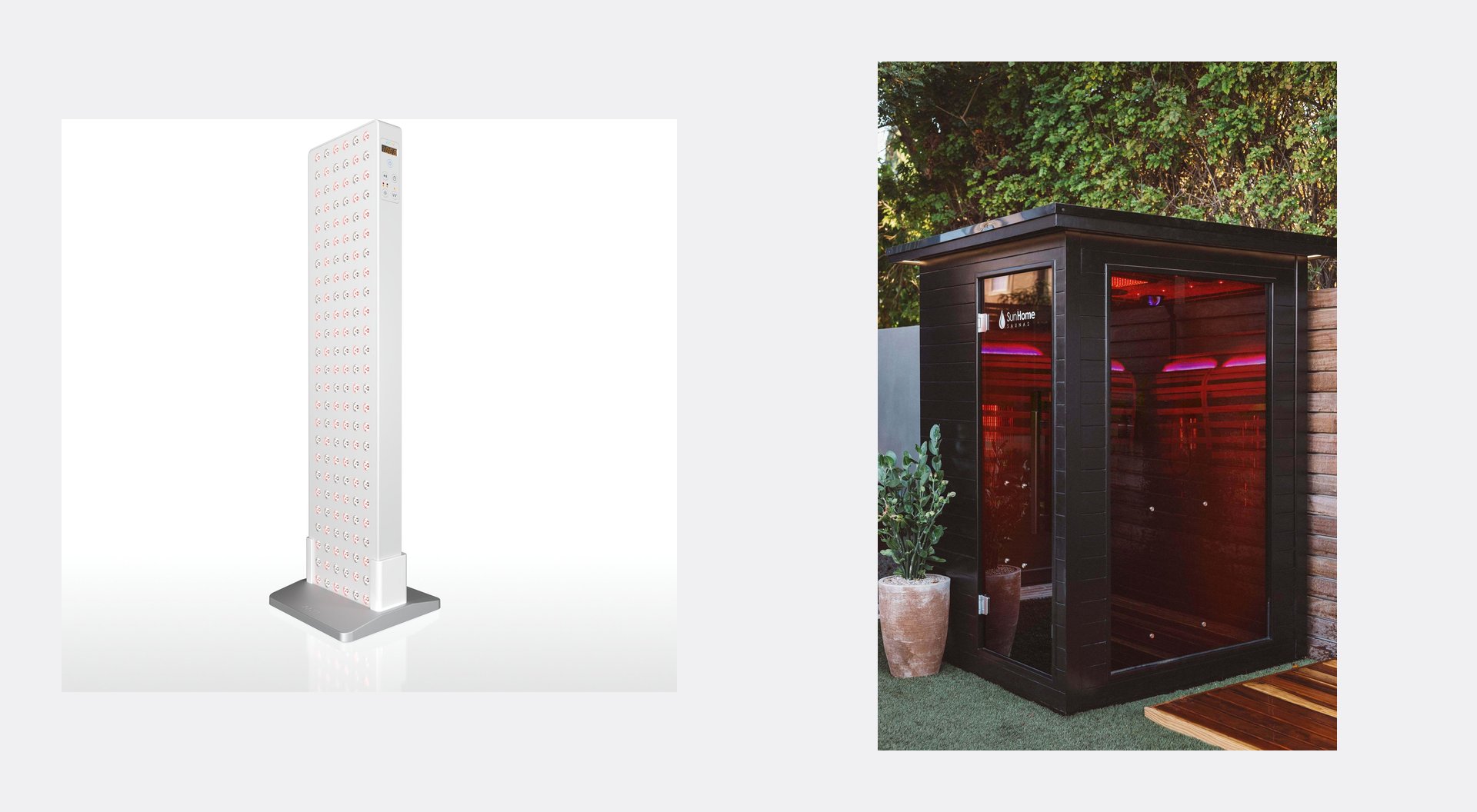
Red Light Therapy vs Infrared Sauna: Which One Should You Buy First?
A practical comparison of red light therapy panels and infrared saunas. We use the Joovv Solo 3.0 and Sun Home Luminar 2 as reference points and break down mechanism, benefits, cost, and who each tool fits best.
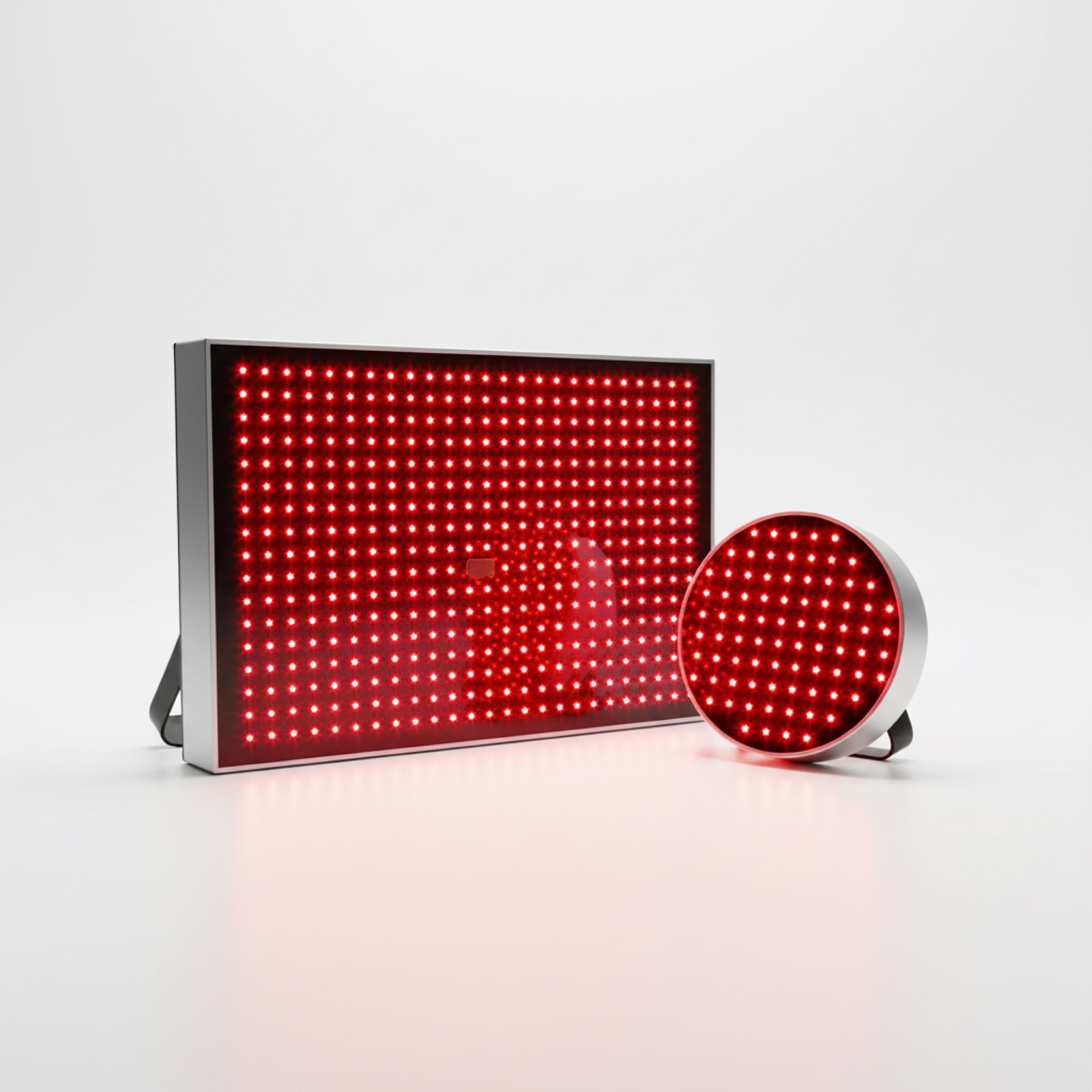
Joovv vs Mito Red Light: Which Panel Is Actually Worth It?
A detailed spec-by-spec comparison of Joovv Solo 3.0 and Mito Red MitoPRO+. We break down wavelengths, irradiance, EMF, price, and who each panel is best for.
Red Light Therapy Dosing Guide: How Long, How Close, How Often
A practical guide to red light therapy dosing. Covers how to calculate your dose, recommended protocols by goal, session timing, and the most common mistakes that reduce results.