What Is Compression Therapy? A Beginner's Guide
Learn how pneumatic compression boots work, what benefits they offer, and whether they're worth the investment.
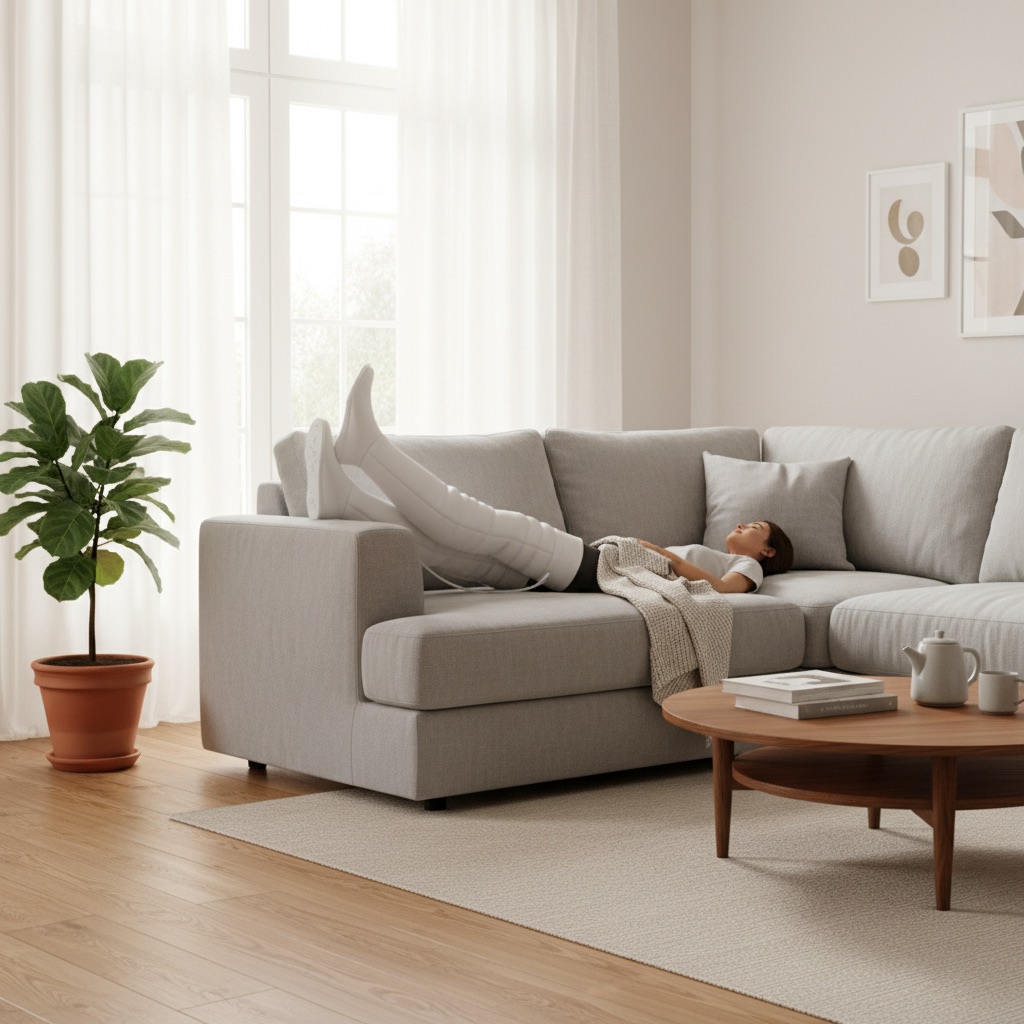
If you have ever finished a hard training session and wished someone would squeeze the soreness out of your legs, that is essentially what compression therapy does. Pneumatic compression boots use inflatable air chambers to apply rhythmic pressure to your legs, pushing fluids back toward your heart and helping your body clear metabolic waste faster.
The technology started in hospitals. Doctors have used intermittent pneumatic compression (IPC) devices for decades to prevent deep vein thrombosis (DVT) in patients who are bedridden after surgery. The concept is simple: inflate air chambers around the limbs in a sequential pattern to keep blood moving when the patient cannot move on their own.
Over the past ten years, that same principle migrated into the sports and wellness world. Professional cycling teams, NBA locker rooms, and marathon recovery tents all started using portable compression systems. Now, home-use devices have made this recovery method accessible to anyone willing to invest.
This guide covers how they work, what the research says, who benefits most, and what to consider before buying.
How Compression Boots Work
A typical compression boot system consists of two main parts: a pair of leg sleeves (the boots) and a control unit (either a handheld device or a small hub).
The boots contain multiple air chambers, usually between 4 and 7, arranged from your feet up to your thighs or hips. During a session, these chambers inflate one at a time in sequence, starting at the feet and working upward. Each chamber holds its pressure briefly, then the next chamber inflates, creating a wave of compression that travels up your leg.
The cycle works like this:
- The lowest chamber (around your foot) inflates and applies pressure
- The next chamber (lower calf) inflates while the first holds
- This continues upward through the calf, knee, thigh, and sometimes hip
- Once the top chamber has inflated, all chambers deflate simultaneously
- A brief pause allows blood to refill the veins
- The cycle repeats
This sequential pattern mimics what your calf muscles do naturally when you walk or run. Your calves act as a “second heart,” squeezing veins to push blood back up toward your core. Compression boots replicate this pumping action mechanically, which is why they are effective even when you are lying completely still.
Think of it like squeezing a tube of toothpaste from the bottom up. If you squeeze from the middle, the contents go in both directions. If you start at the bottom and work upward, everything moves in one direction. That is exactly what sequential compression does with the fluids in your legs.
Key variables that differ between systems:
- Number of chambers: More chambers mean smoother transitions and more precise compression. Premium systems use 5-7 overlapping chambers, while budget models may use 4
- Compression type: Some use simple inflate-hold-deflate sequences. Others, like Hyperice’s Normatec, use dynamic “pulse” patterns that feel more like a massage
- Pressure range: Most systems offer between 30 and 110 mmHg. Medical-grade devices can go higher
- Zone control: Premium systems let you adjust pressure for individual zones (more on calves, less on feet, for example)
What the Research Shows
Compression therapy has a longer track record in medical research than most recovery tools. Its origins in DVT prevention mean there are decades of clinical data supporting the basic mechanism.
For athletic recovery specifically, here is what the available research suggests:
Reduced perceived muscle soreness. A 2018 meta-analysis published in Frontiers in Physiology found that intermittent pneumatic compression improved perceived recovery and reduced muscle soreness compared to passive rest. Participants reported less leg heaviness and stiffness after sessions.
Improved lymphatic drainage. Compression helps move lymphatic fluid, which carries metabolic waste products generated during exercise. A study in the Journal of Athletic Training (2015) showed improved clearance of blood lactate and creatine kinase when compression was used post-exercise.
Reduced swelling. The sequential compression pattern helps prevent fluid from pooling in the lower extremities. This is particularly relevant after long training sessions, travel days, or periods of standing.
Faster return to baseline performance. Some studies have found that athletes using compression between sessions showed quicker restoration of jump height and sprint performance, though results vary across studies.
Improved range of motion. Several studies report that athletes who used compression boots post-exercise maintained better flexibility and range of motion in the following 24-48 hours. This is likely a secondary effect of reduced swelling and muscle stiffness rather than a direct structural change.
Subjective relaxation and sleep. While less studied formally, many users report that evening compression sessions help them feel more relaxed before bed. The rhythmic, predictable pressure pattern has a calming effect similar to weighted blankets. This is anecdotal, but worth mentioning given how frequently users report it.
What the research does not confirm: There is limited evidence that compression boots directly accelerate tissue repair at the cellular level. The primary benefits appear to be related to fluid dynamics (moving blood and lymph) and subjective recovery (feeling better, faster). That is still valuable, but it is worth being precise about.
Most studies also use relatively small sample sizes. The evidence is promising and directionally consistent, but compression therapy for athletic recovery is not as deeply studied as, say, ice baths or stretching. We expect the body of research to grow as home-use devices become more common.
It is also worth noting that much of the research uses medical-grade devices in controlled settings. Home-use consumer devices deliver the same principle but may differ in pressure output and chamber design.
A note on placebo and perception. Recovery is partly psychological. If you feel less sore and more ready to train, that has real value regardless of the exact mechanism. Compression sessions also force you to sit still for 20-30 minutes, which is itself a form of rest that many active people otherwise skip. Whether the benefits come purely from the mechanical action, the forced downtime, or some combination of both, the outcome for most users is the same: legs that feel better, faster.
Who Should Consider Compression Therapy
Compression therapy is not reserved for elite athletes. Several groups stand to benefit from regular use.
Runners and endurance athletes. Long runs and cycling sessions generate significant metabolic waste in the legs. Compression helps clear that waste faster and reduces the heavy, sluggish feeling that lingers after high-volume training weeks.
Strength athletes who train legs frequently. Squats, deadlifts, and leg press create substantial muscle damage. Compression can help manage the soreness that peaks 24-48 hours after a hard leg day.
People who stand or sit for long periods. If your job keeps you on your feet all day (nurses, retail workers, teachers) or seated at a desk, blood can pool in your lower legs. Compression counteracts this by mechanically pushing blood back up.
Frequent travelers. Long flights and car rides restrict leg movement. A portable compression system can help reduce swelling and stiffness after travel. Some athletes use them during flights. Battery-powered systems like the Normatec 3 make this practical.
CrossFit and functional fitness athletes. Workouts that combine running, squatting, and jumping in high volume create broad leg fatigue. Compression can help manage the cumulative load across a training week.
Anyone with general leg fatigue. You do not need to be an athlete to benefit. If your legs regularly feel heavy, swollen, or tired by evening, compression therapy can help. This includes people recovering from pregnancy, those who are on their feet for work, or anyone who notices swelling in their ankles by evening.
Who Should Avoid Compression Therapy
Compression therapy is generally safe, but certain conditions make it unsuitable:
- Active deep vein thrombosis (DVT) or blood clots. Compression could dislodge a clot. This is a serious contraindication
- Acute skin infections or open wounds on the legs. Pressure on infected tissue can worsen the condition
- Severe peripheral artery disease. Reduced blood flow combined with external pressure can be harmful
- Uncontrolled congestive heart failure. Moving additional fluid toward the heart can be dangerous
- Recent surgery on the legs. Unless specifically prescribed by your doctor
If you have any circulatory conditions or are unsure whether compression is appropriate, consult a healthcare provider before starting.
Your First Session
Knowing what to expect makes the first session more comfortable.
Getting set up. Most systems require you to sit or lie down with your legs extended. Slide your legs into the boots, zip or velcro them snug (not tight), and connect to the control unit. Some people prefer sitting on a couch with legs elevated on pillows. Others lie flat on the floor or a bed. Elevating your legs slightly (with a cushion under your calves) helps gravity assist the fluid movement.
What to wear. You can use compression boots over bare legs, athletic tights, or thin sweatpants. Avoid thick or bunchy fabric, as it can create uneven pressure and reduce the effectiveness of the chambers. Most people find thin athletic pants or bare legs most comfortable.
Start with low pressure. Every system has adjustable intensity levels. Begin at the lowest setting for your first few sessions. Even low pressure creates a noticeable squeezing sensation. You can gradually increase over subsequent sessions as you get comfortable. There is no rush to reach maximum intensity. Many experienced users settle on a moderate setting that feels firm but pleasant.
Session length. Most manufacturers recommend 15-30 minutes per session. A 20-minute session is a good starting point. Some athletes run longer sessions (45-60 minutes) on rest days, but there is no strong evidence that longer sessions produce significantly better results. If you are short on time, even a 15-minute session provides benefit.
What it feels like. The sensation is a firm, rhythmic squeeze that travels up your legs. It should feel like a deep massage, not painful. If you feel tingling, numbness, or sharp discomfort, reduce the pressure or stop the session. Most people find the rhythmic pattern relaxing. It is common to feel sleepy during a session, which is a sign your body is shifting into recovery mode.
When to use them:
- After training (within 1-2 hours) is the most common use case. This is when metabolic waste levels are highest
- Before bed is popular for reducing end-of-day leg fatigue and promoting relaxation
- On rest days for active recovery between training sessions
- After travel to counteract the effects of prolonged sitting
How often. 3-5 sessions per week is a reasonable frequency for regular exercisers. Daily use is fine. There is no evidence of negative effects from frequent use at appropriate pressure levels.
Combining with other recovery methods. Compression works well as part of a broader recovery routine. Many athletes use compression boots after a foam rolling or stretching session. Some pair them with cold plunge tubs for a contrast approach: cold exposure first to reduce inflammation, then compression to flush the area. Others combine them with a contrast therapy protocol that includes sauna, cold, and light exposure.
A sample weekly schedule for a runner training 5 days per week:
| Day | Training | Compression |
|---|---|---|
| Monday | Easy run | Skip or light session before bed |
| Tuesday | Tempo run | 20 min after running, medium pressure |
| Wednesday | Rest | 30 min in the evening, low pressure |
| Thursday | Hill repeats | 20 min after running, medium-high pressure |
| Friday | Easy run | Skip or light session before bed |
| Saturday | Long run | 20-30 min after running, medium pressure |
| Sunday | Rest | 30 min in the evening, low pressure |
This is just an example. Adjust based on how your legs feel and how much time you have. The key is consistency across the week rather than perfecting any single session.
What to Look for When Buying
Not all compression systems are equal. Here are the factors that matter most when choosing a device.
Number of chambers. More chambers provide smoother, more precise compression. Budget systems typically have 4 chambers, while premium systems offer 5-7 overlapping chambers. The difference is noticeable. More chambers create a wave-like sensation rather than a segmented squeeze.
Pressure range and intensity levels. Look for systems with multiple intensity settings (at least 4, ideally 7). Having a wide range lets you start low and increase over time. It also lets you adjust for different situations (lighter pressure for relaxation, higher for post-race recovery).
Portability and power source. Battery-powered systems are significantly more convenient. You can use them on a couch, in a hotel room, or even at the gym. Systems that require a wall outlet limit where you can use them.
App integration. Premium systems from Hyperice and Therabody offer Bluetooth apps with preset routines, zone-specific control, and session tracking. This is not essential, but it adds flexibility. Budget systems use physical buttons, which work fine but offer less customization.
Coverage area. Standard compression boots cover from foot to thigh. Some systems offer hip attachments as optional add-ons. If your primary concern is leg recovery, standard boots are sufficient. Hip attachments add value if you do a lot of hip-intensive work (cycling, running, squats).
Build quality and warranty. Compression systems are mechanical devices with pumps, valves, and air chambers. Look for at least a 1-year warranty. Premium systems typically offer 2 years. Durable boot materials and reinforced stitching are signs of longevity.
Boot sizing. Some systems offer multiple sizes (S, M, L), while others use a one-size-adjustable design. If you have particularly long or short legs, check the manufacturer’s sizing guide before purchasing.
Noise level. The pump generates some noise during operation. Premium systems tend to be quieter, but none are silent. If you plan to use compression boots while watching TV, reading, or on calls, check user reviews for noise complaints. Most modern systems are quiet enough for a living room.
Ease of cleaning. You will sweat in compression boots, especially during longer sessions. Some systems have removable, washable liners. Others require wiping down the interior. If hygiene matters to you (and it should), check whether the boots have machine-washable components.
For detailed product-by-product comparisons, see our Best Compression Boots 2026 review.
Compression Therapy vs Other Recovery Methods
Understanding how compression fits alongside other popular recovery tools can help you decide where it belongs in your routine.
Compression Boots vs Foam Rolling
Foam rolling applies direct pressure to specific muscle groups and fascia. It is effective for breaking up adhesions and targeting trigger points, but it requires physical effort and can be uncomfortable. Compression boots are passive. You lie back and let the device do the work. Foam rolling is better for targeted knots. Compression is better for whole-leg circulation and fluid movement. Many people use both: foam rolling first to address specific tight spots, then compression boots to flush the broader area.
Compression Boots vs Cold Plunge
Cold water immersion reduces inflammation through vasoconstriction and triggers a hormonal response (norepinephrine, dopamine). Compression works through mechanical fluid movement. They target different mechanisms and can be used together effectively. Some athletes do a cold plunge first (2-5 minutes), then use compression boots after to help circulate blood through the cold-constricted tissue. See our cold plunge guide for more on cold exposure.
Compression Boots vs Massage Guns
Massage guns deliver percussive therapy to targeted muscles. They are portable, require no setup time, and address specific pain points. Compression boots cover the entire leg simultaneously and focus on circulation rather than muscle fiber manipulation. For post-workout recovery, compression handles the systemic flushing while a massage gun handles localized tightness. They complement each other well.
Compression Boots vs Compression Socks
Compression socks provide static, passive pressure (typically 15-30 mmHg). They are designed to be worn during activity or travel to support circulation. Compression boots deliver dynamic, sequential pressure at much higher levels (up to 110 mmHg) and are designed for dedicated recovery sessions. Socks are a daily wearable. Boots are a recovery tool. Different use cases, and neither replaces the other.
Our Picks for Getting Started
If you are ready to try compression therapy, these are two solid starting points at different price levels.
Normatec 3 - Premium Choice ($799)
The Normatec 3 from Hyperice is the most widely recognized compression system on the market. It uses patented Pulse Technology with 7 intensity levels and per-zone control through the Hyperice app. The control unit is battery-powered (~3 hours) and compact enough to throw in a gym bag.
This is the system most commonly found in professional sports facilities. If you plan to use compression regularly and want the deepest customization, the Normatec 3 is the standard others are measured against.
Key specs: 7 intensity levels, 5 overlapping chambers, Bluetooth app, rechargeable battery (~3 hr), S/M/L sizing, 1-year warranty.
Therabody JetBoots Prime - Mid-Range Choice ($599)
The JetBoots Prime is Therabody’s compression system, with fast inflation cycles, overlapping chambers, and Therabody app integration. It uses 4 intensity levels rather than the Normatec’s 7, but the core sequential compression is effective for most home users.
If you already own a Theragun and want a unified app experience, or want to save $200 versus the Normatec without dropping to a no-frills budget system, the JetBoots is a sensible step down from the flagship.
Key specs: 4 intensity levels, overlapping chambers, Bluetooth app, rechargeable battery, S/M and L/XL sizing, 1-year warranty.
Frequently Asked Questions
How often should I use compression boots?
Most people benefit from 3-5 sessions per week, each lasting 20-30 minutes. Daily use is fine if you are training frequently. There is no known downside to regular use at appropriate pressure levels. Start with a few sessions per week and increase based on how your legs respond.
Can I sleep in compression boots?
That is not recommended. Compression boots are designed for active use during a session where you can monitor how you feel. Falling asleep means you cannot respond to discomfort or adjust pressure. Use them before bed instead, then take them off when the session is done.
Are they just expensive leg massagers?
Not exactly. A standard leg massager applies general vibration or kneading. Compression boots use sequential pneumatic pressure that specifically mimics the body’s circulatory pumping mechanism. The sequential, directional compression (feet to thighs) is what distinguishes them from massage devices. That said, the relaxation effect is real, and many people use them partly for that reason.
Do I need the hip attachments?
For most people, no. Standard leg boots cover the primary recovery area (feet through upper thighs) and address the majority of post-exercise leg fatigue. Hip attachments are an optional add-on offered by some brands. They may be worth considering if you do a lot of hip-dominant exercise (heavy squatting, cycling, running) and notice persistent hip tightness that standard boots do not address.
Can I use compression boots if I have varicose veins?
Mild varicose veins are generally not a contraindication, and some users report that compression helps relieve the discomfort associated with them. However, if your varicose veins are severe, painful, or associated with skin changes or ulceration, consult your doctor before using pneumatic compression. The increased pressure could potentially worsen certain venous conditions.
Is compression therapy worth the investment?
That depends on how much you value recovery and how frequently you train. If you exercise 4+ times per week and leg recovery is a bottleneck, compression boots can noticeably reduce soreness and improve how your legs feel between sessions. The JetBoots Prime ($599) is a sensible step in if you want app integration without the flagship price. If you rarely exercise or your legs recover fine on their own, the investment may not be justified.
Compression boots pair well with massage guns for a complete muscle recovery routine. Boots handle the circulatory flushing, while massage guns target specific knots and trigger points. For a full recovery stack that includes heat and cold alongside compression, check out our contrast therapy protocol.
Related Articles
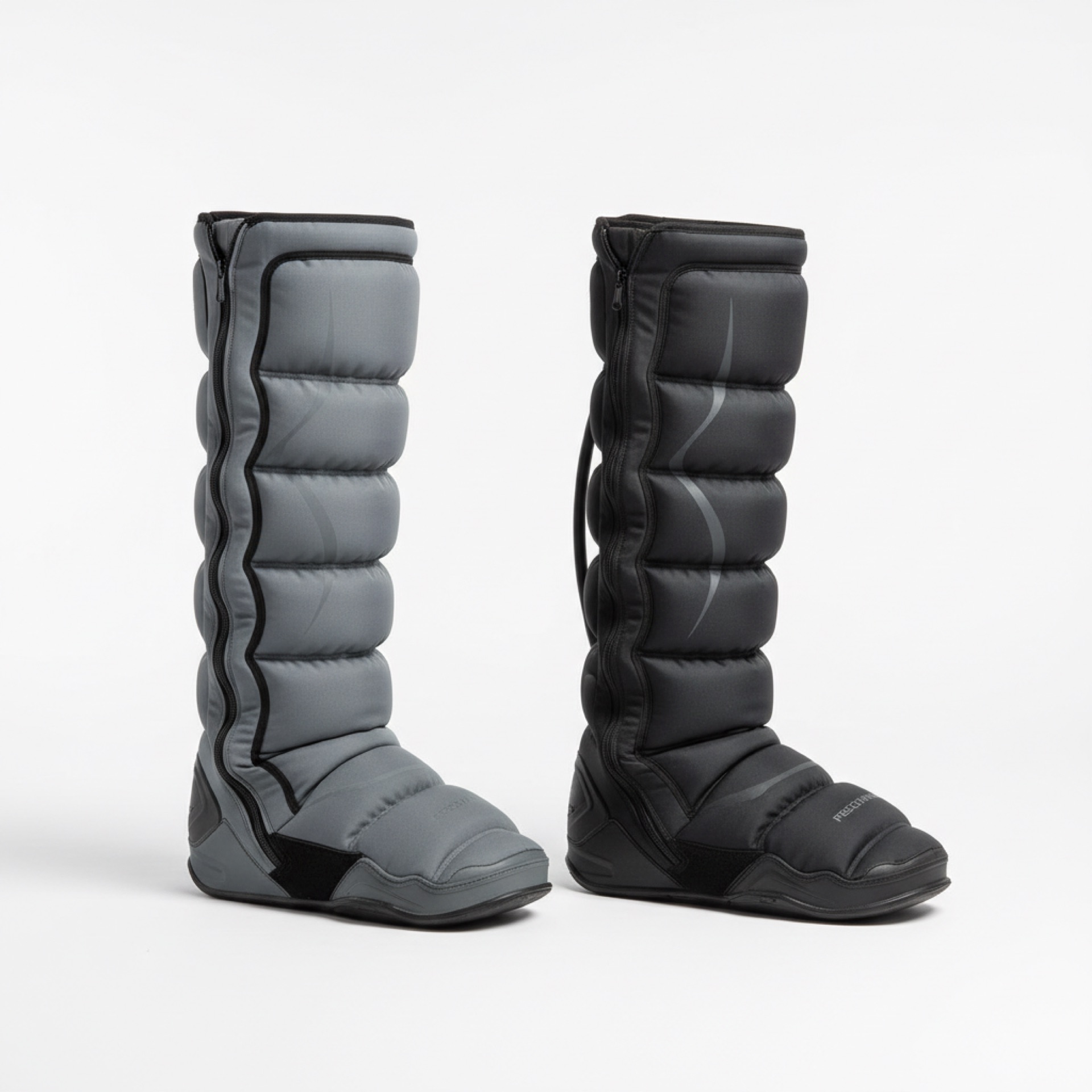
Normatec 3 vs JetBoots Prime: Which Compression Boots Are Worth It?
A detailed comparison of the Normatec 3 and Therabody JetBoots Prime. We compare compression technology, intensity levels, app features, portability, price, and who each system is best for.
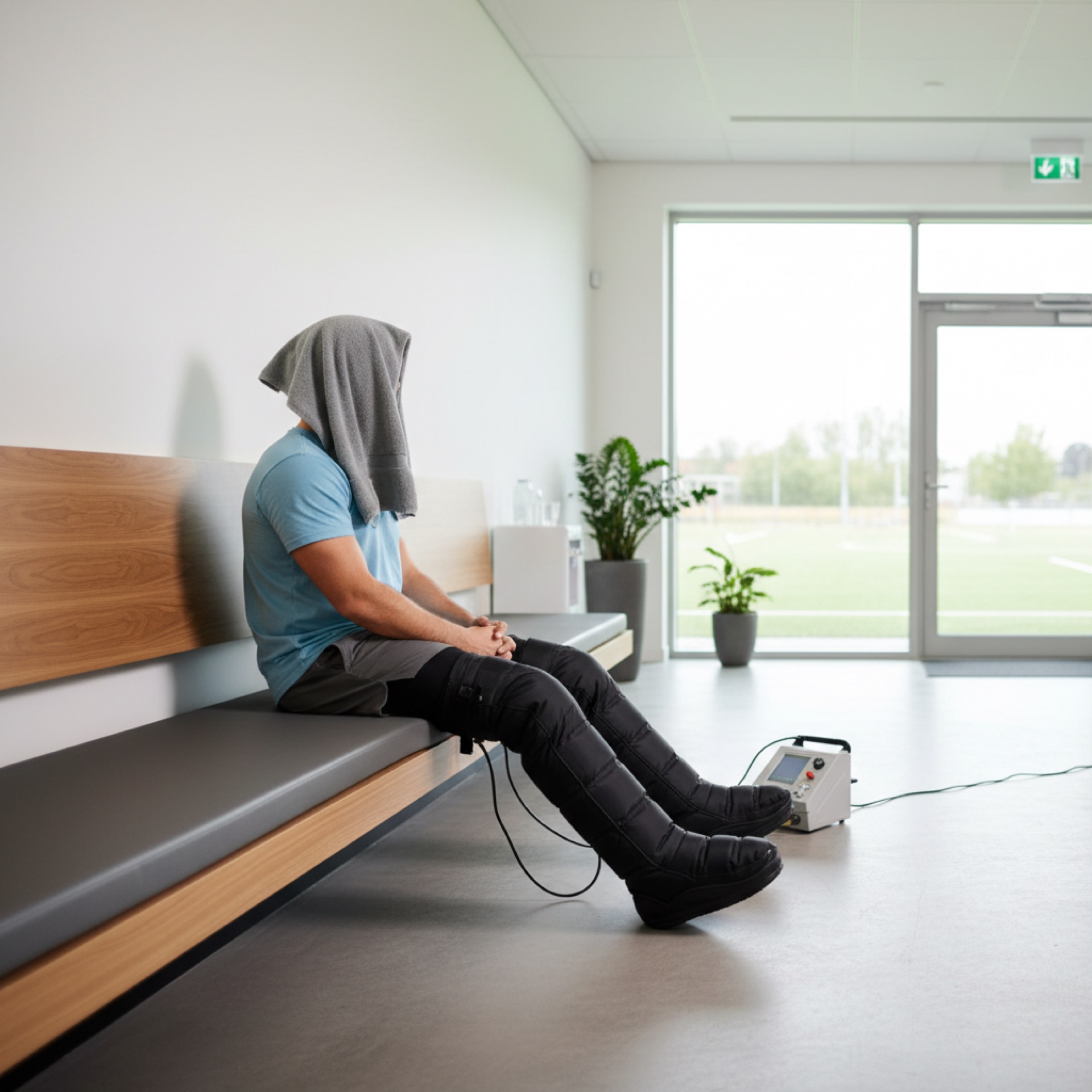
Best Compression Boots 2026: Compared Head-to-Head
We compared the top pneumatic compression boots for recovery: Normatec 3 and Therabody JetBoots Prime. Find the right fit for your recovery routine.

Best Home Saunas 2026: Top Infrared Saunas Compared
We compare eight infrared saunas for home use, from a $2,099 budget cabin to full-spectrum and outdoor-rated models with built-in red light therapy.