Infrared Sauna vs Traditional Sauna: What the Research Actually Says
A research-based comparison of infrared and traditional Finnish saunas. Covers health benefits, temperatures, session protocols, costs, and who each type is best for.
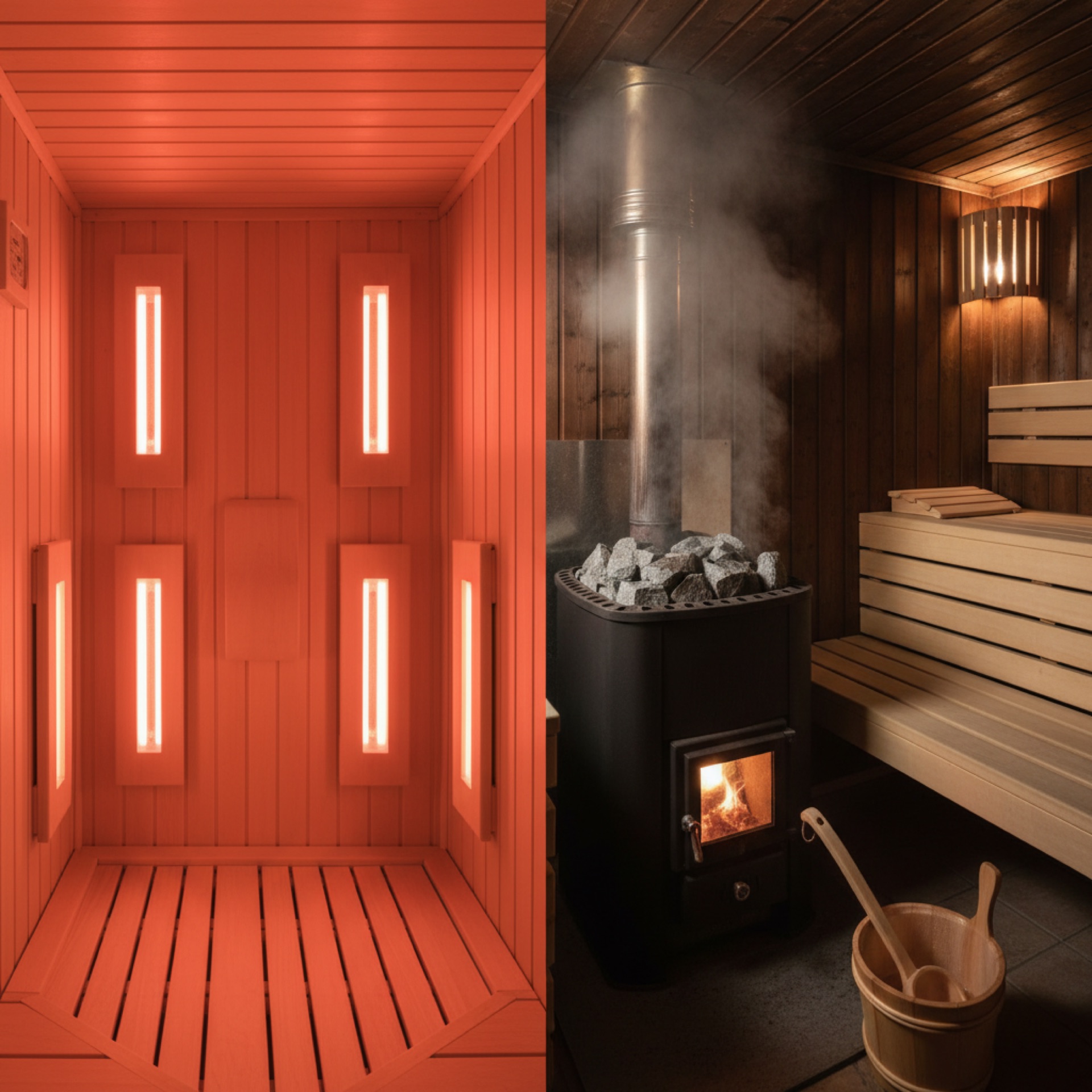
Verdict: Traditional Finnish sauna has the deeper research base (Finnish cohort data on cardiovascular mortality); infrared sauna is the more practical home option (lower power draw, faster heat-up, no plumbing). Both produce real benefits, just via different mechanisms.
At a glance:
- Traditional Finnish sauna: 80-100°C, surface heat, decades of cohort data on cardio-mortality benefits, needs ventilation and 220V wiring
- Infrared sauna (e.g. Sunlighten mPulse Aspire): 45-65°C, penetrating IR-radiation, smaller research base but viable home installs on standard outlets
- Choose traditional if you want the strongest evidence base and have the infrastructure; choose infrared for home practicality
The “infrared vs traditional sauna” debate is one of the most common questions in the wellness space. Marketing from infrared sauna brands claims deeper detoxification and superior health benefits. Traditional sauna enthusiasts insist that nothing replaces the authentic Finnish experience. The actual research tells a more nuanced story.
Both types of sauna produce real health benefits. But they work differently, the research base is not equal, and each suits different situations. This guide covers what the science actually says, without the marketing spin.
For a broader look at infrared sauna options, see our best infrared saunas review. If you are new to infrared therapy, start with our beginner’s guide.
How They Work: Two Different Approaches to Heat
Traditional (Finnish) sauna heats the air using an electric or wood-burning heater and stones. The room reaches 80-100°C (176-212°F). Water poured over the stones creates steam (called loyly in Finnish), briefly spiking humidity to 40-60%. Your body heats indirectly through contact with hot air and steam.
Infrared sauna uses infrared light to heat your body directly, bypassing the air. The room stays much cooler at 43-60°C (110-140°F). There is no steam. The infrared radiation penetrates approximately 3-4 cm beneath the skin surface, warming you from the inside out.
The key distinction: traditional saunas heat the air, then the air heats you. Infrared saunas heat you directly. This is why infrared saunas operate 30-40°C lower but can produce comparable sweating.
Side-by-Side Overview
| Feature | Traditional Finnish Sauna | Infrared Sauna |
|---|---|---|
| Temperature | 80-100°C (176-212°F) | 43-60°C (110-140°F) |
| Humidity | 10-20%, spikes to 40-60% with loyly | Very low, no steam |
| Heat-up time | 30-45 minutes | 10-15 minutes |
| Session format | 2-3 rounds of 10-20 min with cold breaks | 20-45 min continuous |
| Heating method | Convection (hot air + steam) | Radiant infrared (direct body heating) |
| Energy per session | 6-9 kWh | 1-3 kWh |
| Monthly cost (daily use) | $25-50 | $5-25 |
| Electrical requirement | 240V, dedicated circuit | 120V standard outlet (most models) |
| Home unit price | $3,000-8,000+ | $500-6,000 |
| Installation | Electrician needed, ventilation required | Plug-in, minimal setup |
| Research depth | Strong (20+ year cohort studies) | Good (clinical trials, but fewer long-term studies) |
The Research: What We Know (and What We Don’t)
Traditional Sauna: The Strongest Long-Term Evidence
The most compelling sauna research comes from Finland, where traditional saunas have been studied for decades.
Laukkanen et al. (2015, JAMA Internal Medicine): A prospective study of 2,315 Finnish men followed for over 20 years. Compared to bathing once per week, men who used the sauna 4-7 times per week had:
- 63% lower risk of sudden cardiac death
- 48% lower risk of fatal coronary heart disease
- 50% lower risk of fatal cardiovascular disease
Laukkanen et al. (2017, Age and Ageing): The same cohort showed that 4-7 sauna sessions per week was associated with 66% reduced risk of dementia and 65% reduced risk of Alzheimer’s disease.
Kunutsor and Laukkanen (2018, Neurology): A study of 1,628 Finnish men and women found that 4-7 weekly sauna sessions were associated with 61% reduced stroke risk.
These are large, long-term studies with strong statistical significance. They represent the most robust evidence we have for sauna and health.
Important caveat: All of these studies used traditional Finnish saunas at 80°C+. The results cannot be directly attributed to infrared saunas, which operate at different temperatures using a different heating mechanism.
Infrared Sauna: Good Clinical Evidence, Fewer Long-Term Studies
Infrared saunas have solid clinical trial data, particularly for cardiovascular health and pain relief.
Waon therapy studies (Tei, Masuda et al.): A prospective multicenter study of 188 patients with chronic heart failure found that daily far-infrared sauna sessions at 60°C improved cardiac function, reduced BNP (a heart failure marker), and improved survival at 60-month follow-up.
Oosterveld et al. (2009, Clinical Rheumatology): Infrared sauna sessions produced significant short-term improvements in pain and stiffness in patients with rheumatoid arthritis and ankylosing spondylitis, with no disease exacerbation.
Mero et al. (2015): A single 20-minute infrared sauna session after resistance exercise significantly reduced muscle soreness and improved recovery of explosive performance compared to passive recovery.
The gap: No equivalent long-term epidemiological data (20+ year follow-up, thousands of participants) exists for infrared saunas. The clinical trials are promising, but they tend to be smaller (fewer than 50 participants in most RCTs) and shorter in duration.
Shared Benefits: Where Both Types Deliver
Several benefits appear to come from heat stress itself, regardless of the delivery method:
Cardiovascular conditioning: During any sauna session, heart rate increases to 120-150 bpm, similar to moderate exercise. Blood pressure typically drops below baseline after the session.
Stress reduction: Sauna bathing produces measurable drops in cortisol and increases in beta-endorphins, serotonin, and norepinephrine. A 2016 study in JAMA Psychiatry found that a single whole-body hyperthermia session reduced depressive symptoms by approximately 50%, with benefits lasting six weeks.
Muscle recovery: Both types support post-exercise recovery through heat shock protein upregulation, improved circulation, and plasma volume expansion.
Sweating: Both types produce sweat containing measurable levels of heavy metals, BPA, and other compounds. The difference in sweat composition between the two types has not been conclusively established.
Where They Differ: Unique Advantages
Traditional Sauna Advantages
The loyly experience. Pouring water over hot stones creates steam that adds a sensory dimension infrared cannot replicate. The humidity spike intensifies perceived heat and is central to Finnish sauna culture. If the ritual matters to you, only traditional delivers it.
Contrast therapy compatibility. The traditional sauna-to-cold-plunge cycle is the established protocol for contrast therapy. Higher temperatures create a larger thermal differential, which research suggests may amplify the hormonal and cardiovascular response. Our contrast therapy guide covers this in detail.
Strongest long-term research. The Laukkanen studies are the most cited body of sauna research. If evidence base is your primary concern, traditional saunas have the deeper track record.
Infrared Sauna Advantages
Lower temperature tolerance. Operating at 43-60°C instead of 80-100°C, infrared saunas are accessible to people who find traditional heat overwhelming. This includes many older adults, people recovering from illness, and those with certain cardiovascular conditions (under medical guidance).
Near-infrared benefits. Full-spectrum infrared saunas include near-infrared wavelengths (700-1,400 nm) that overlap with red light therapy. Research shows these wavelengths stimulate collagen production, support wound healing, and reduce inflammation in ways that heated air alone does not. This is a genuine advantage for skin health goals.
Practical convenience. Ten-minute heat-up time, standard electrical outlets, compact footprint, lower energy costs. For many homes, an infrared sauna is the only feasible option. A traditional sauna requires a 240V circuit, ventilation, and more space.
Energy efficiency. Running an infrared sauna daily costs roughly $5-25 per month versus $25-50 for a traditional sauna. Over years of use, this difference is substantial.
The Detoxification Question
Marketing claims about “infrared detox” deserve honest scrutiny.
Both types of sauna produce sweat containing trace amounts of heavy metals, BPA, phthalates, and other compounds. The Blood, Urine, and Sweat (BUS) study from the University of Alberta found that cadmium appeared in sweat of 80% of participants where it was undetectable in blood or urine. This confirms that sweating is a legitimate excretion pathway.
However, there are important caveats:
- The liver and kidneys remain the body’s primary detoxification organs. Sauna-induced sweating is a supplementary pathway, not a replacement.
- No controlled study has conclusively shown that infrared saunas produce “superior” detoxification compared to traditional saunas.
- Increased sweating may reduce urine production, potentially offsetting some of the excretion benefit.
- Beneficial minerals and electrolytes are also lost in sweat. Hydration and electrolyte replacement are important.
Our take: Sweating is beneficial for many reasons. But the specific claim that infrared saunas are meaningfully better for detoxification than traditional saunas is not supported by the current evidence.
EMF: A Real Question for Infrared
Because you sit inside the heating elements for 20-45 minutes, electromagnetic field (EMF) emissions matter for infrared saunas.
Official safety thresholds (WHO, OSHA) are set at 2,000 milligauss. Well-designed infrared saunas produce EMF levels at roughly 1% of this threshold. No evidence to date concludes that low-level EMF exposure at these levels is harmful.
Practical recommendation: Choose infrared saunas from manufacturers that publish independent EMF testing results. Look for “ultra-low EMF” certifications (under 3 milligauss). Carbon-fiber heaters generally produce lower EMF than older ceramic heaters. The Sunlighten mPulse Aspire, for example, uses patented SoloCarbon® heaters with ultra-low EMF.
Traditional saunas have no EMF concerns since they use simple resistance heating elements.
Session Protocols
Traditional Sauna Protocol
The Finnish tradition involves multiple rounds with cold exposure between them:
- Warm up: 10-15 minutes at 80°C. Allow your body to adjust.
- Loyly round: Pour water on stones. Stay 5-10 minutes at intensified heat.
- Cool down: Cold shower, cold plunge, or outdoor cooling for 2-5 minutes.
- Repeat: 2-3 rounds total. Total session time: 45-90 minutes including breaks.
- Hydrate: Drink water throughout and after.
Infrared Sauna Protocol
Infrared sessions are typically continuous, without cold breaks:
- Preheat: 10-15 minutes to warm the cabin.
- Enter early: You can enter during preheat. Infrared heats you directly, so you benefit even before the air reaches target temperature.
- Session: 20-45 minutes at 49-60°C. Start with 20 minutes if you are new, and increase gradually.
- Cool down: Rest for 5-10 minutes after exiting. A cold shower enhances the experience.
- Hydrate: Same as traditional. Drink 16-32 oz of water before and after.
Frequency
Research suggests that more frequent use correlates with greater benefits. The Laukkanen studies found the strongest results at 4-7 sessions per week. A reasonable starting point for either type is 3-4 sessions per week.
Who Should Choose Which
Choose a Traditional Sauna If:
- You want the strongest research backing. The 20+ year Finnish cohort studies are the most robust sauna research available.
- You enjoy the ritual. Loyly, contrast bathing, the social element. If the experience matters as much as the health benefits, traditional is irreplaceable.
- You practice contrast therapy. The higher temperatures create a larger thermal differential for sauna-to-cold-plunge protocols.
- You tolerate heat well. You need to handle 80-100°C air temperatures comfortably.
- You have the space and infrastructure. A 240V circuit, ventilation, and dedicated floor space are required.
Choose an Infrared Sauna If:
- You are heat-sensitive. Operating at 43-60°C, infrared is accessible to people who cannot tolerate extreme heat.
- You have chronic pain. The clinical evidence for infrared and pain relief (arthritis, fibromyalgia, low back pain) is solid.
- You want skin health benefits. Full-spectrum infrared saunas with near-infrared wavelengths provide photobiomodulation benefits that heated air does not.
- Convenience matters. Faster heat-up, standard outlets, compact size, lower running costs.
- You live in an apartment or rental. Most infrared saunas need no permanent installation.
- Budget is a factor. Infrared sauna blankets start at $699. Cabin models start around $2,000.
You Don’t Have to Choose One
Many wellness enthusiasts use both. A traditional sauna at the gym for the full ritual and contrast therapy, and an infrared sauna at home for convenience and daily maintenance. The benefits are complementary, not competing.
Common Misconceptions
“Infrared saunas are better for detox.” Not proven. Both produce sweat containing trace toxins. The claim that infrared is superior lacks controlled comparative evidence.
“Traditional saunas are dangerous.” The Laukkanen research (2,315 participants, 20+ years) consistently found that more frequent sauna use correlates with lower mortality. Traditional saunas are safe for healthy adults with proper hydration and common sense.
“Infrared is not a real sauna.” It delivers heat to the body through a different mechanism, but the physiological responses (elevated heart rate, sweating, heat shock protein activation) are comparable.
“More heat is always better.” The research supports regular use at moderate temperatures. Extreme temperatures are not necessary for cardiovascular and neurological benefits.
Our Verdict
Neither type is objectively “better.” They are different tools with overlapping but distinct advantages.
Traditional saunas have the strongest long-term evidence, the richest cultural experience, and the highest heat for contrast therapy protocols. They require more space, more infrastructure, and more time per session.
Infrared saunas are more accessible (lower heat, easier installation, lower cost), have good clinical evidence for pain and cardiovascular conditions, and offer unique near-infrared benefits for skin health. They lack the long-term epidemiological data that makes traditional sauna research so compelling.
If you have the space and budget for a traditional sauna and enjoy intense heat, it is hard to argue against the Finnish approach. If you need something practical for home use with a lower barrier to entry, an infrared sauna delivers real benefits with less complexity.
For help choosing an infrared model, see our best infrared saunas review. And for a protocol that combines sauna with cold exposure and red light therapy, check our contrast therapy guide.
Related Articles

Best Home Saunas 2026: Top Infrared Saunas Compared
We compare eight infrared saunas for home use, from a $2,099 budget cabin to full-spectrum and outdoor-rated models with built-in red light therapy.
Best Outdoor Saunas 2026: Infrared and Traditional Compared
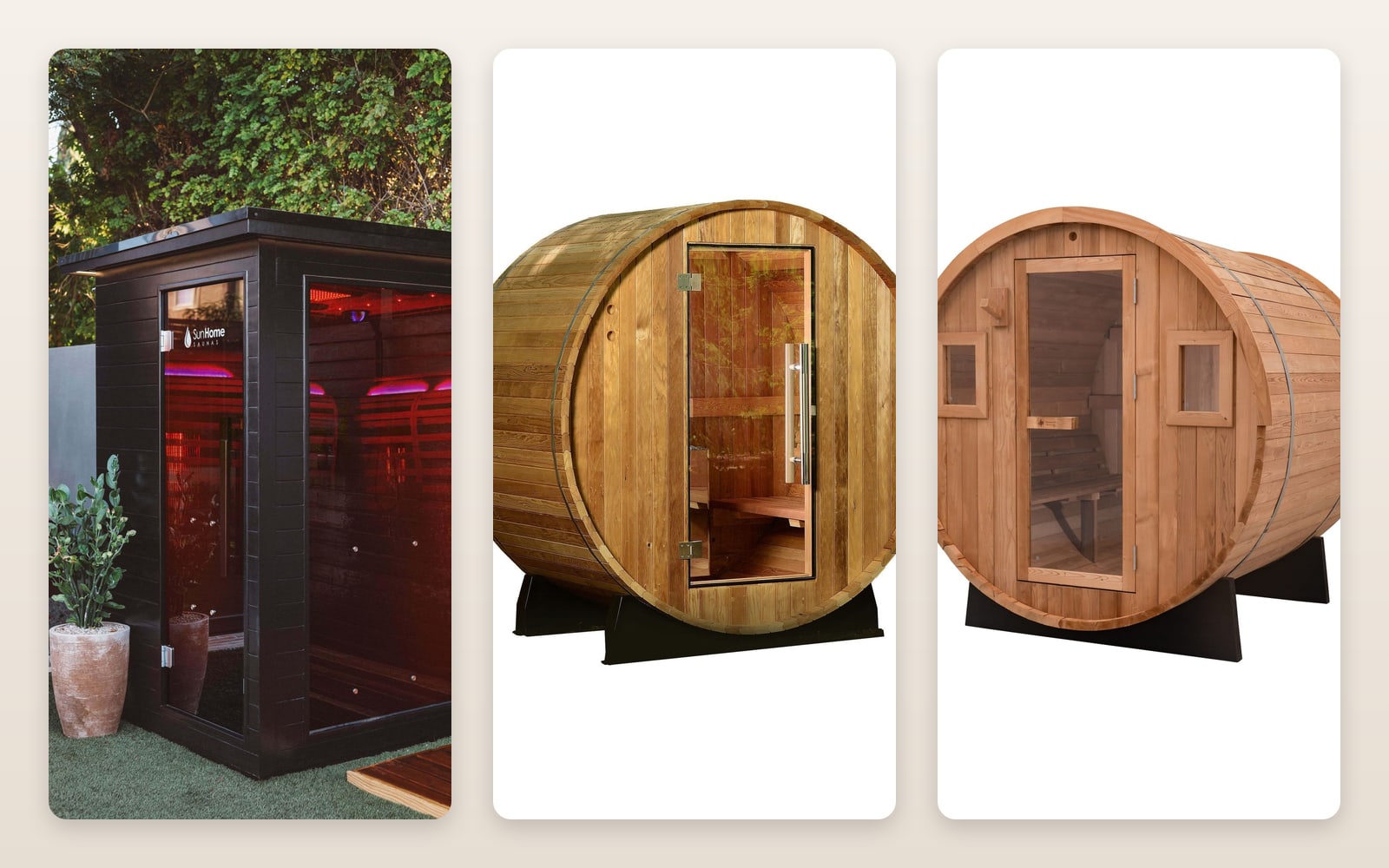
We compare five outdoor saunas for backyards, terraces, and gardens: full-spectrum infrared cabins from Sun Home and traditional Harvia-heated barrel and cabin saunas from Almost Heaven and Redwood Outdoors.
Sauna Blanket vs Cabin: Which One Should You Actually Buy?
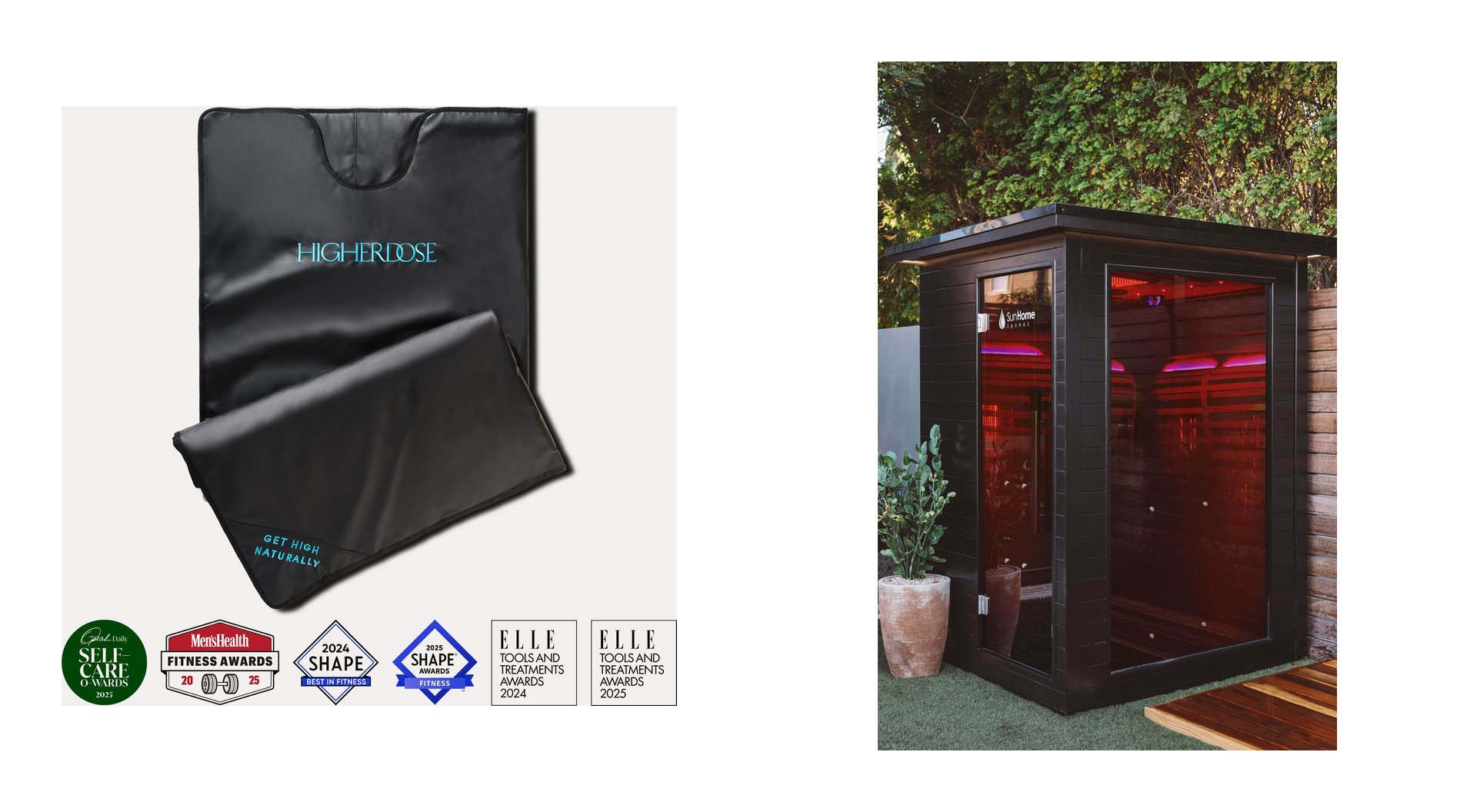
A practical comparison of infrared sauna blankets and cabin saunas. We use the HigherDOSE Sauna Blanket and Sun Home Luminar 2 as reference points and break down price, space, experience, and who each form factor fits best.