Best Infrared Saunas for Home 2026: Reviewed & Compared
From full-size cabins to portable blankets, we review the best infrared saunas for home use at every price point.
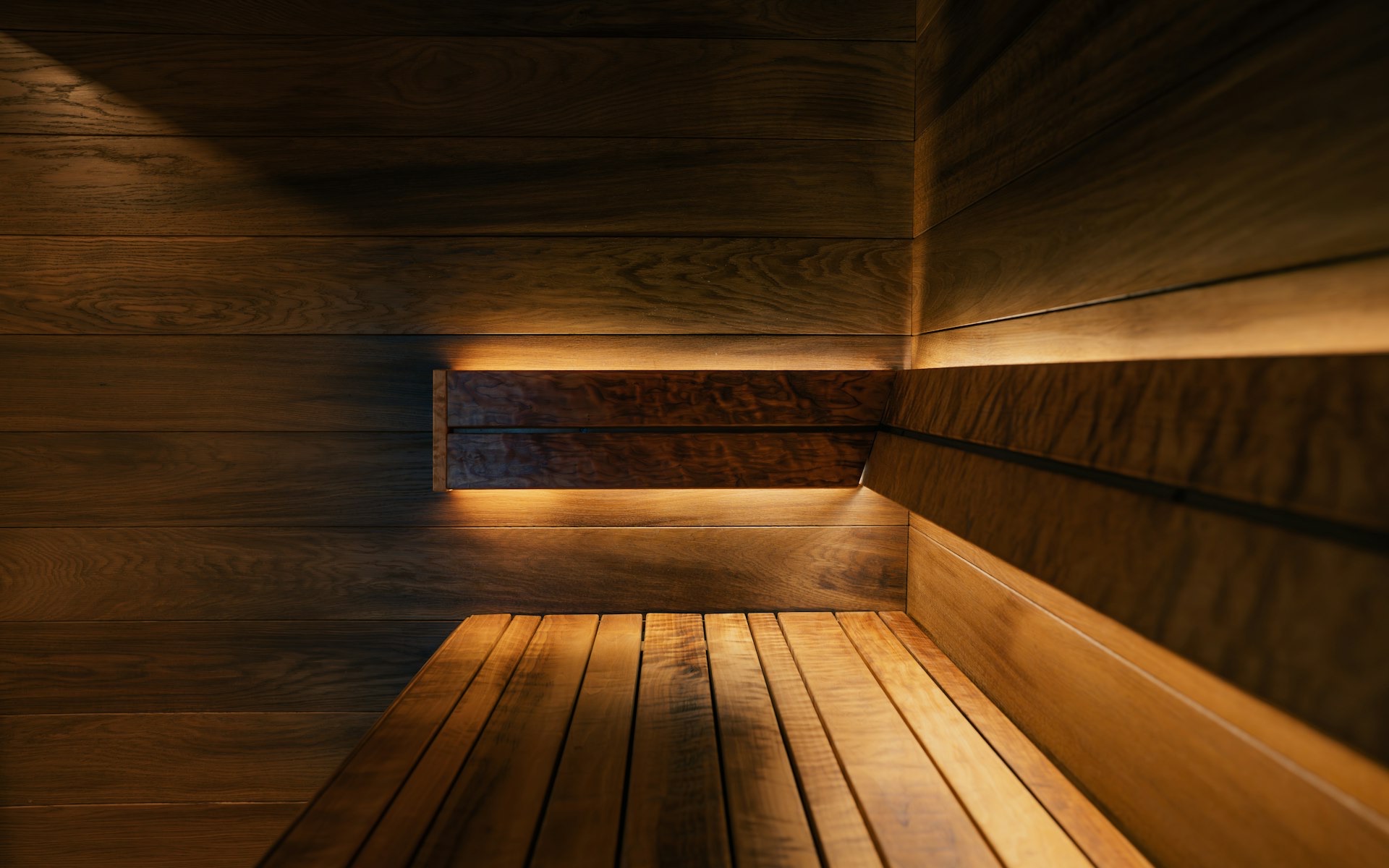
Best overall: Sunlighten mPulse Aspire. Full-spectrum infrared (far, mid, near, plus red light), ultra-low EMF, and SoloCarbon heaters with a lifetime warranty.
Top 3 picks for 2026:
- Sunlighten mPulse Aspire (Sunlighten, from ~$6,500): best overall full-spectrum personal cabin, lifetime heater warranty, PulseIQ control
- Sun Home Luminar 2 (Sun Home Saunas, $10,999): best for two, outdoor-rated cabin with carbonized red cedar and 2-person bench
- HigherDOSE Infrared Sauna Blanket (HigherDOSE, ~$699): best portable, far-infrared blanket that needs no installation and stores in a closet
In Scandinavia, sauna isn’t a luxury, it’s a way of life. Finland alone has over 3 million saunas for a population of 5.5 million. Infrared saunas bring that tradition home, with lower operating temperatures and deeper tissue penetration than traditional steam saunas. The Nordic Recovery Guide team compared three popular options across different form factors: a premium full-spectrum personal cabin, a 2-person outdoor cabin, and a portable sauna blanket.
New to infrared saunas? Start with our beginner’s guide to infrared sauna therapy to learn how they work and what to expect.
Who This Guide Is For
- You’re considering a home sauna but unsure whether to go with a cabin or try a portable blanket first
- You want infrared-specific benefits (lower temperatures, deeper tissue heat) rather than traditional steam
- You use sauna for recovery, stress relief, or cardiovascular health
- You’re adding heat to a recovery routine that includes cold plunge or red light therapy
The Big Decision: Cabin or Blanket?
Before comparing individual models, the first question is form factor.
Cabin saunas ($5,600-$11,000+) are permanent installations that seat 1-2 people. They heat the entire body evenly and offer the closest experience to a traditional sauna. Full-spectrum models add near-infrared wavelengths for cellular benefits beyond deep sweating. The trade-off: you need dedicated floor space, and delivery and assembly are part of the process.
Sauna blankets (~$700) need no installation and store in a closet. They use far-infrared only, and your head and arms stay outside. The experience is different from a cabin, but the core benefit (infrared-induced deep sweating) is the same. If you’re renting, limited on space, or want to test infrared therapy before committing to a cabin, a blanket is a low-risk entry point.
For a deeper breakdown of which form factor fits which buyer, see our sauna blanket vs cabin comparison.
Side-by-Side Comparison
| Feature | Sunlighten mPulse Aspire | Sun Home Luminar 2 | HigherDOSE Blanket |
|---|---|---|---|
| Type | Full-spectrum personal cabin | Full-spectrum outdoor cabin | Portable blanket |
| Infrared range | Far + Mid + Near + Red light | Far + Mid + Near | Far only |
| EMF levels | Ultra-low | Ultra-low | Low |
| Heater material | SoloCarbon® + PulseIQ control | Carbon + NIR | Tourmaline + charcoal |
| Max temperature | 170°F | 150°F | 158°F |
| Seats | 1 | 2 | 1 (lying down) |
| Wood | Eucalyptus | Carbonized red cedar | N/A |
| Warranty (heaters) | Lifetime | 6 years | 1 year |
| Bluetooth speakers | |||
| Chromotherapy | |||
| Price | From ~$6,500 | $10,999 | $699 |
| Check Price at Sunlightenvia Sunlighten |
Detailed Reviews
1. Sunlighten mPulse Aspire - Best Overall
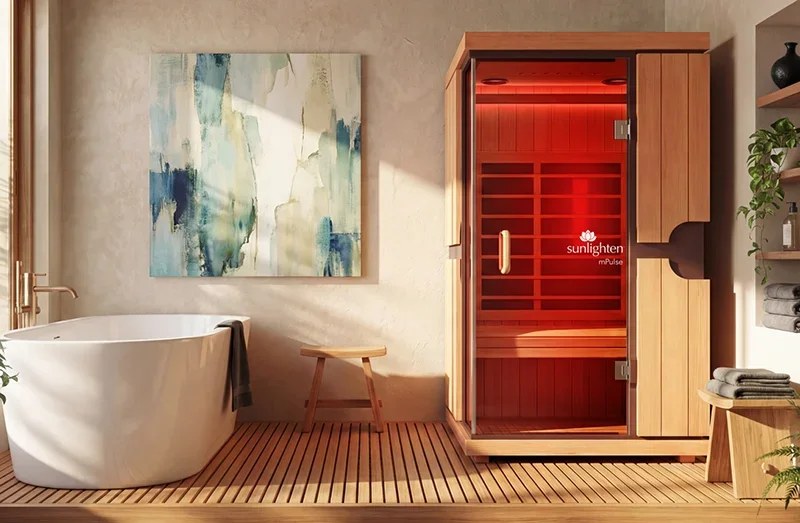
Sunlighten mPulse Aspire
From ~$6,500
Pros
- True full-spectrum infrared (far, mid, near) plus red light
- PulseIQ delivers each wavelength on demand
- Patented SoloCarbon® heaters with ultra-low EMF
- Sustainably sourced eucalyptus construction
- 6 preset wellness programs via tablet and app
- Chromotherapy lighting included
Cons
- Premium price, request a quote from Sunlighten
- 1-person footprint, not for shared sessions
- Heavy, delivery and assembly needed
- Lead time on custom orders
The mPulse Aspire’s full-spectrum heaters deliver far-, mid-, and near-infrared independently through Sunlighten’s patented PulseIQ control, so each wellness program targets a specific wavelength mix. You can run a 30-minute “Muscle Recovery” cycle one day and a “Detox” cycle the next without manually adjusting anything. Sunlighten markets ultra-low EMF across the mPulse line, and the SoloCarbon® heaters are the same technology used in their commercial spas.
The cabin uses sustainably sourced eucalyptus with Celliant fabric heater covers that reflect infrared back toward the body. A built-in tablet handles temperature, program selection, chromotherapy, and Bluetooth audio. Wi-Fi connectivity adds app control from your phone. Max temperature is 170°F.
Sunlighten doesn’t publish list prices on its site; you submit a form for a quote. The Aspire typically lands in the $6,500-$7,500 range based on configuration. If a personal premium cabin is what you want and you value the wavelength-specific programs, the Aspire is the closest thing to a tuned-instrument sauna at home.
2. Sun Home Luminar 2-Person - Best Outdoor
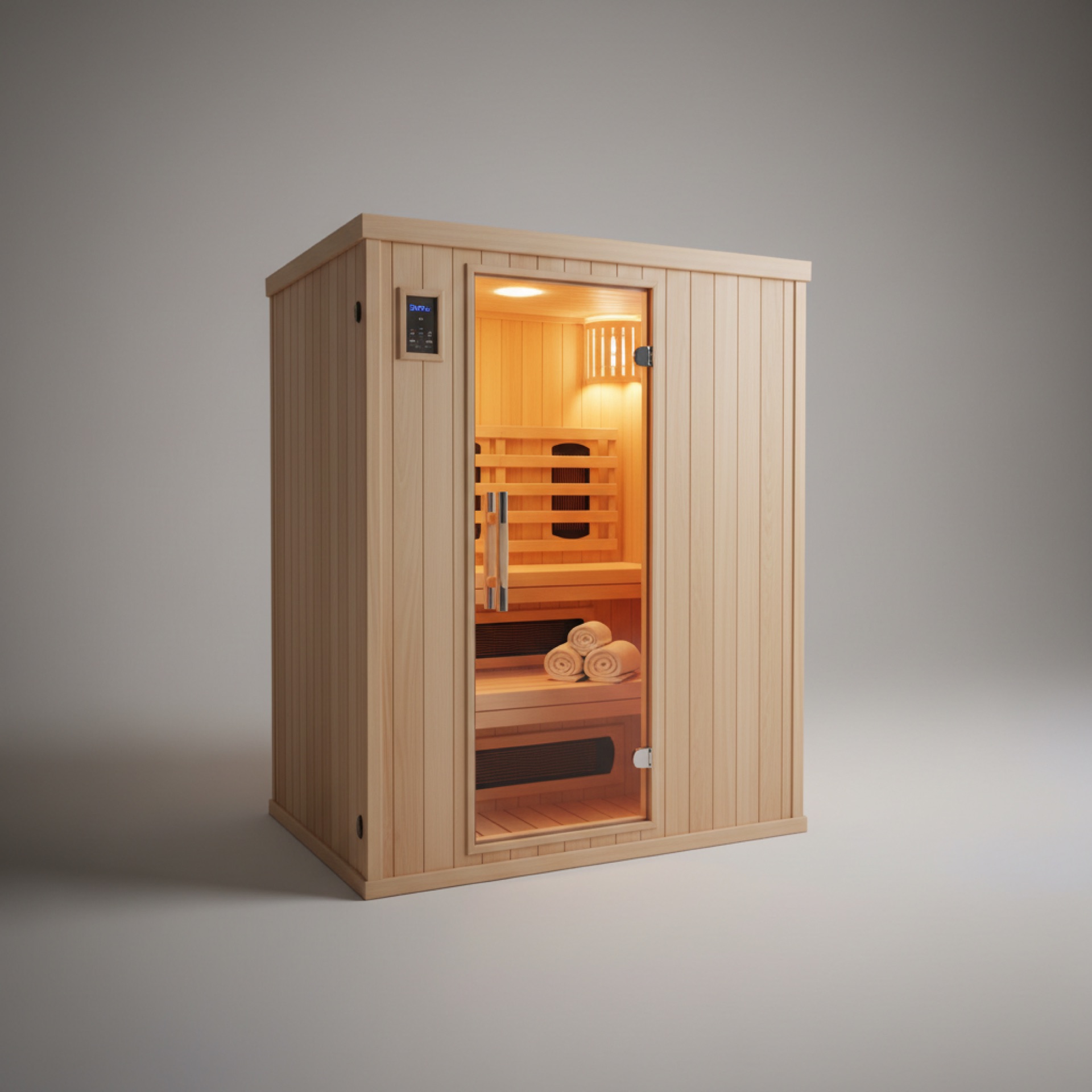
Sun Home Luminar 2-Person Sauna
$10,999
Pros
- Full-spectrum infrared (far, mid, near)
- Outdoor-rated with aluminum exterior panels
- Ultra-low EMF certified
- Carbonized red cedar construction
- Bluetooth speakers and chromotherapy built in
- 240V dedicated circuit for consistent heat
Cons
- Most expensive option at $10,999
- Requires 240V/20A dedicated electrical circuit
- 6-year limited warranty (vs. Sunlighten's lifetime on heaters)
- Professional installation recommended (~$1,100-$1,300)
The Sun Home Luminar 2 is designed specifically for outdoor use, with carbonized red cedar and aluminum exterior panels that withstand the elements. You get full-spectrum infrared heating (far, mid, near), ultra-low EMF certification, built-in Bluetooth speakers, and chromotherapy lighting.
At $10,999 (direct from Sun Home), this is the most expensive option in our comparison. The 240V/20A dedicated circuit requirement means you will likely need an electrician for installation, adding $1,100-$1,300 to the total cost. The 6-year limited warranty is solid but shorter than Sunlighten’s lifetime heater warranty.
If you want your sauna outdoors and want 2 seats, the Luminar 2 is purpose-built for that. If indoor placement works and a personal cabin is enough, the Sunlighten mPulse Aspire offers wavelength-specific programs at a lower total cost.
3. HigherDOSE Infrared Sauna Blanket - Best Portable
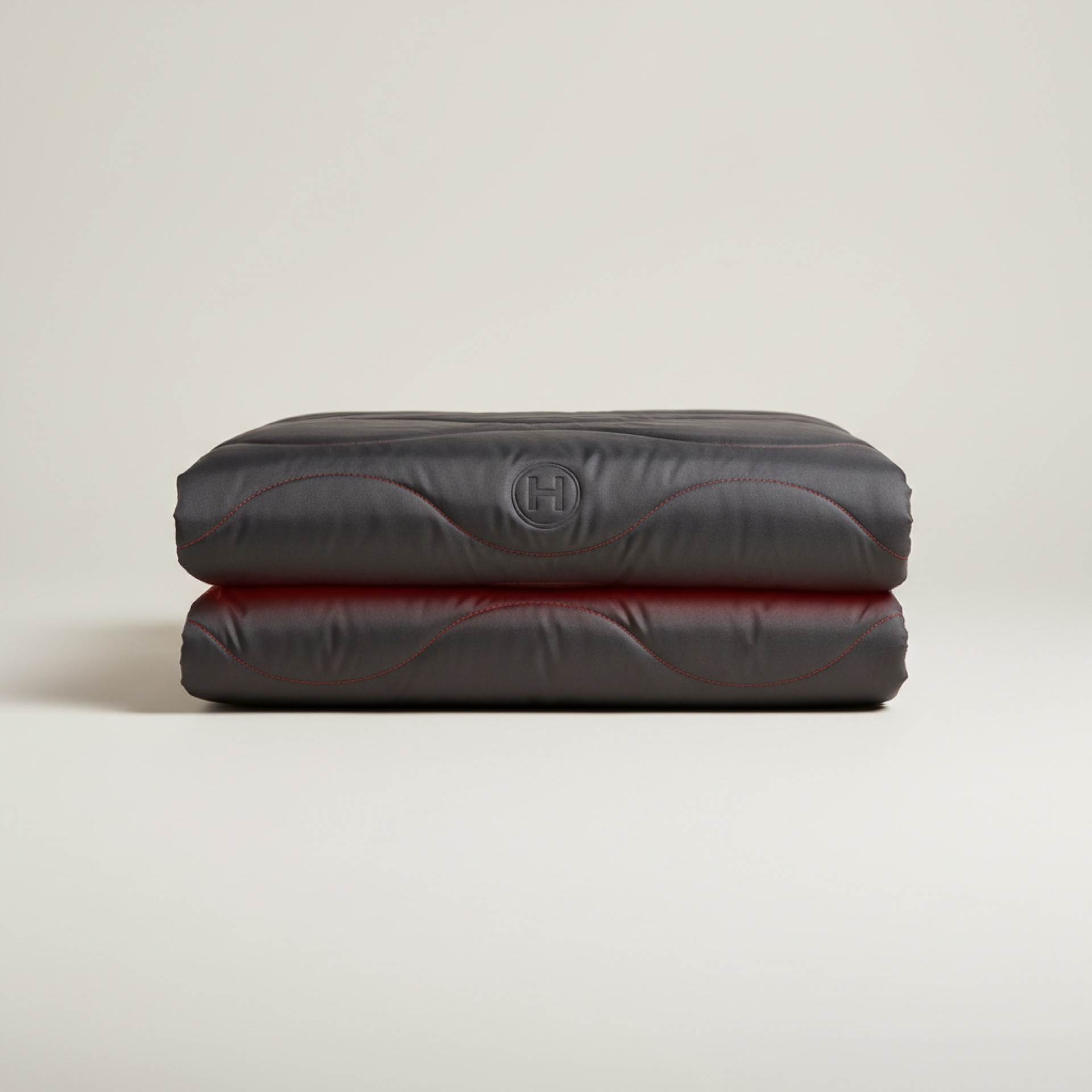
HigherDOSE Infrared Sauna Blanket
$699
Pros
- Fraction of the price of a cabin sauna
- No installation, unroll and use
- Stores in a closet or under the bed
- Far-infrared with tourmaline, charcoal, and clay layers
- 9 temperature settings (up to 158°F)
- Great for apartments and small spaces
Cons
- Far-infrared only, no near-infrared
- Not the same experience as a cabin sauna
- Arms and head are outside the blanket
- Requires lying down, can't sit upright
- Cleaning the inner lining takes effort
No installation, no dedicated floor space, no electrician. The HigherDOSE Sauna Blanket rolls out on your bed or couch, stores in a closet when you’re done, and costs $699. For apartment dwellers, renters, or anyone curious about infrared therapy before committing to a full cabin, it removes every practical barrier.
The blanket uses far-infrared heating combined with tourmaline and charcoal layers. It heats up in about 10 minutes, and at the highest of its 9 temperature settings, you’ll be sweating heavily within 15 minutes. The experience is obviously different from sitting upright in a cedar cabin. Your head and arms stay outside, and you’re lying flat. But for pure sweat output, it gets the job done. It’s far-infrared only, so you won’t get the near-infrared cellular benefits of the cabin saunas above. That said, most infrared sauna research has been conducted using far-infrared specifically, so the blanket covers the most well-studied part of the spectrum.
Infrared Sauna Basics
Far-Infrared vs. Near-Infrared vs. Full-Spectrum
The type of infrared determines how deep the heat penetrates:
- Far-infrared (FIR): The most common type. Heats the body at 5.6-15 micron wavelengths. Direct penetration is shallow (millimeters), but the heat transfer it creates drives the deep-sweating effect. Most research on infrared saunas uses FIR.
- Near-infrared (NIR): Wavelengths of 0.7-1.4 microns. Penetrates deeper into tissue. Overlaps with red light therapy benefits (wound healing, collagen, inflammation).
- Full-spectrum: Combines far, mid, and near infrared. Gives you the widest range of benefits in a single session.
Our recommendation: Full-spectrum saunas offer the most versatility, but far-infrared-only saunas are perfectly effective and usually more affordable.
Key Specifications
- Temperature range: Most infrared saunas operate at 120-150°F (49-66°C), significantly lower than traditional saunas (150-195°F)
- EMF levels: Critical for infrared saunas. You’re sitting inside the heating elements for 30+ minutes. Look for ultra-low EMF certification
- Heater type: Carbon fiber heaters provide even heat distribution. Ceramic heaters are older tech, hotter but less uniform
- Wood type: Canadian red cedar is the preferred choice. It’s naturally anti-bacterial and resists moisture well
Your First Session
Start conservatively. Set the temperature to 120°F for your first few sessions and keep it to 15-20 minutes. Bring a towel to sit on and one to wipe sweat. Drink at least 16oz of water beforehand.
As you build tolerance, work up to 140-150°F and 30-45 minute sessions, 3-5 times per week. Cool down gradually afterward, or combine with a cold shower or cold plunge if you’re interested in contrast therapy.
If you feel lightheaded or overly fatigued, step out and hydrate. Consult your doctor before use if you’re pregnant, have cardiovascular conditions, or take medications that affect heat tolerance.
Frequently Asked Questions
How much does it cost to run an infrared sauna?
A typical 2-person infrared sauna draws 1.5-2.0 kW. At average US electricity rates (~$0.16/kWh), a 45-minute session costs roughly $0.20-0.25. Even daily use adds less than $10/month to your power bill.
Can I install an infrared sauna myself?
Most infrared cabin saunas are designed for self-assembly. They use plug-in 120V or 240V outlets. No special wiring needed for most 120V models. Assembly typically takes 1-2 hours with two people.
Infrared sauna vs. traditional sauna - which is better?
Neither is objectively “better.” Infrared saunas operate at lower temperatures (120-150°F vs. 150-195°F), making them more tolerable for longer sessions. They also heat the body directly rather than heating the air. Traditional saunas offer the classic steam experience and higher temperatures. Many sauna enthusiasts use both.
Who should avoid infrared saunas?
Consult your doctor before use if you’re pregnant, have cardiovascular conditions, take medications that affect sweating or heat tolerance, or have a fever. Children should use saunas only under close supervision at lower temperatures.
Our Verdict
The Sunlighten mPulse Aspire is the best personal infrared sauna for indoor home use. Full-spectrum heating with PulseIQ wavelength control, ultra-low EMF SoloCarbon® heaters, eucalyptus construction, and a lifetime heater warranty make it a long-term investment at around $6,500.
If you want an outdoor sauna or need to seat 2, the Sun Home Luminar 2 at $10,999 is purpose-built for it with weatherproof red cedar and aluminum panels.
And if you’re not ready to commit to a cabin, the HigherDOSE Sauna Blanket at $699 is a low-commitment way to try infrared therapy. A month of regular use will tell you whether a full cabin is worth the investment.
An infrared sauna becomes even more effective as part of a broader recovery routine. Combine it with cold plunging and red light therapy for the full contrast therapy experience. We cover the exact protocol in our contrast therapy guide.
Related Articles
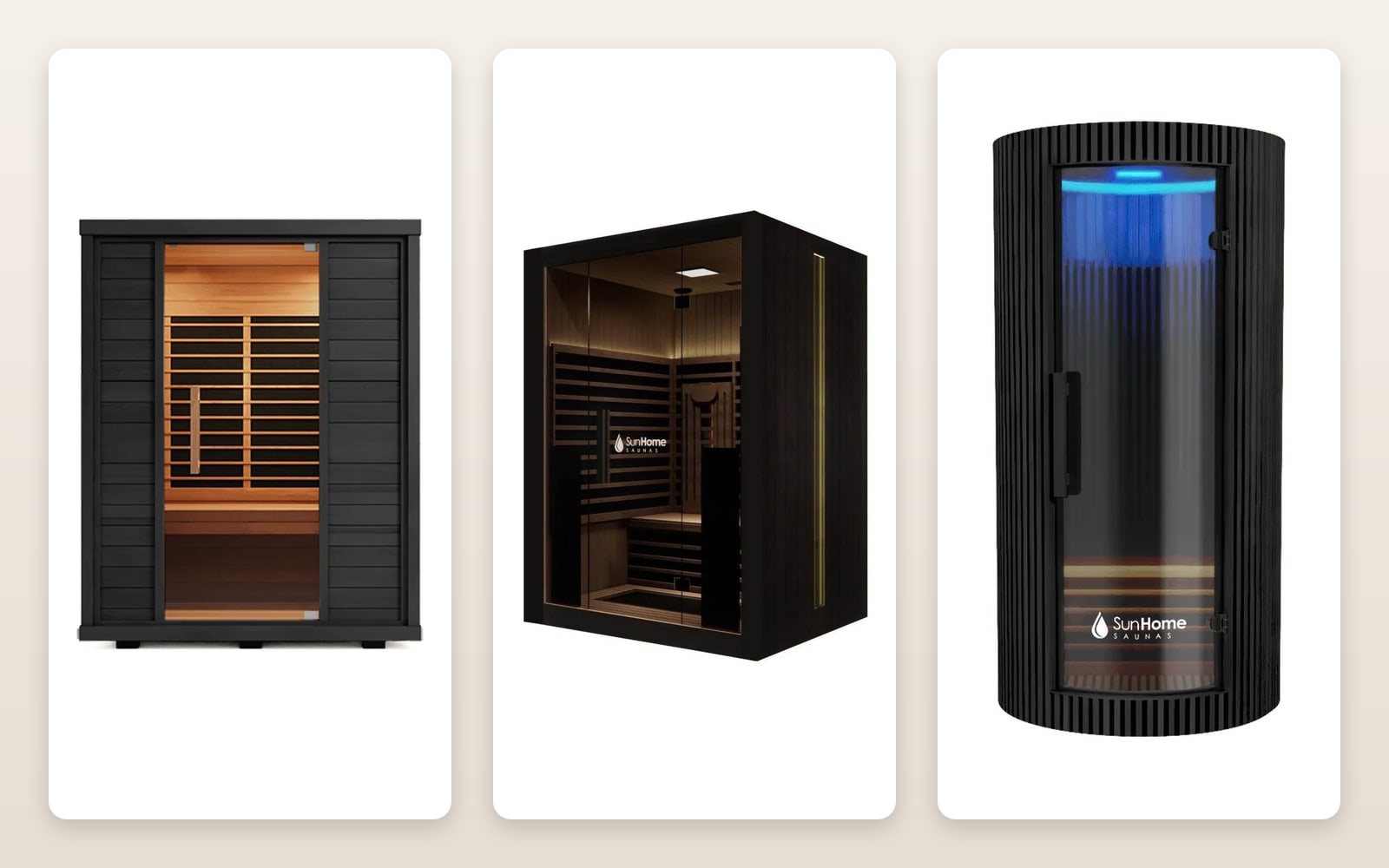
Best Home Saunas 2026: Top Infrared Saunas Compared
We compare eight infrared saunas for home use, from a $2,099 budget cabin to full-spectrum and outdoor-rated models with built-in red light therapy.
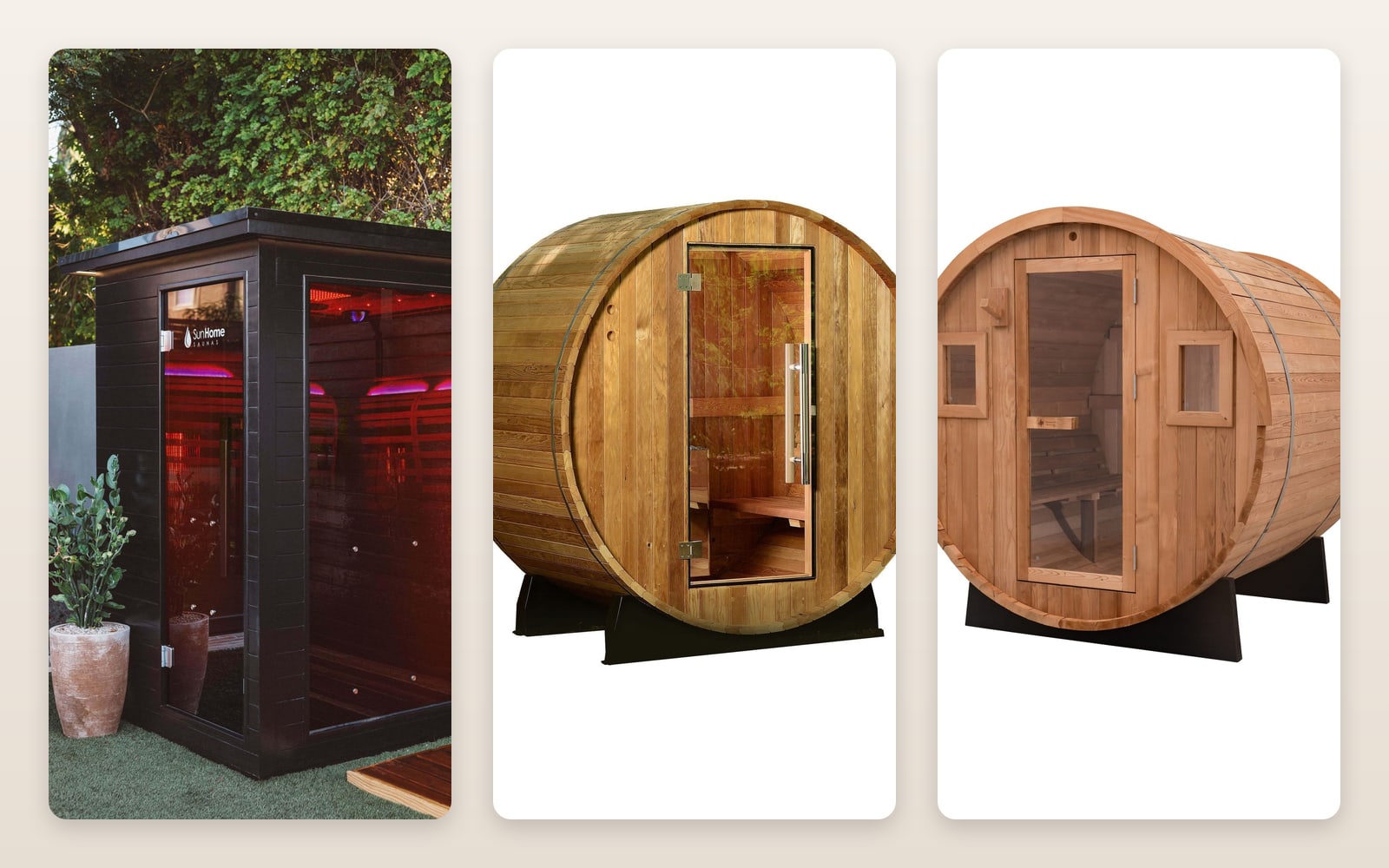
Best Outdoor Saunas 2026: Infrared and Traditional Compared
We compare five outdoor saunas for backyards, terraces, and gardens: full-spectrum infrared cabins from Sun Home and traditional Harvia-heated barrel and cabin saunas from Almost Heaven and Redwood Outdoors.
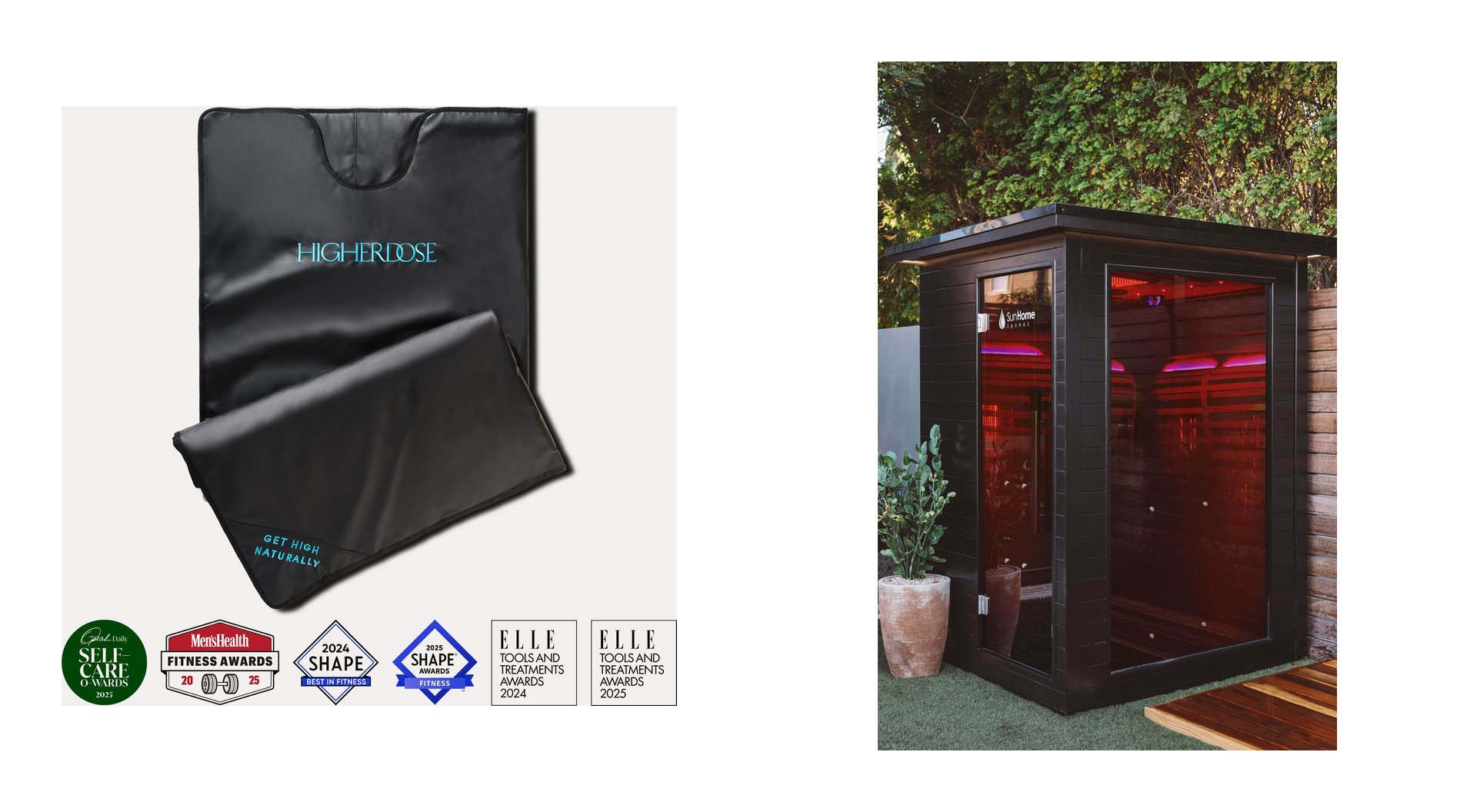
Sauna Blanket vs Cabin: Which One Should You Actually Buy?
A practical comparison of infrared sauna blankets and cabin saunas. We use the HigherDOSE Sauna Blanket and Sun Home Luminar 2 as reference points and break down price, space, experience, and who each form factor fits best.