What Is Cold Plunge Therapy? A Beginner's Guide
Everything you need to know about cold water immersion: the benefits, the risks, and how to start safely.
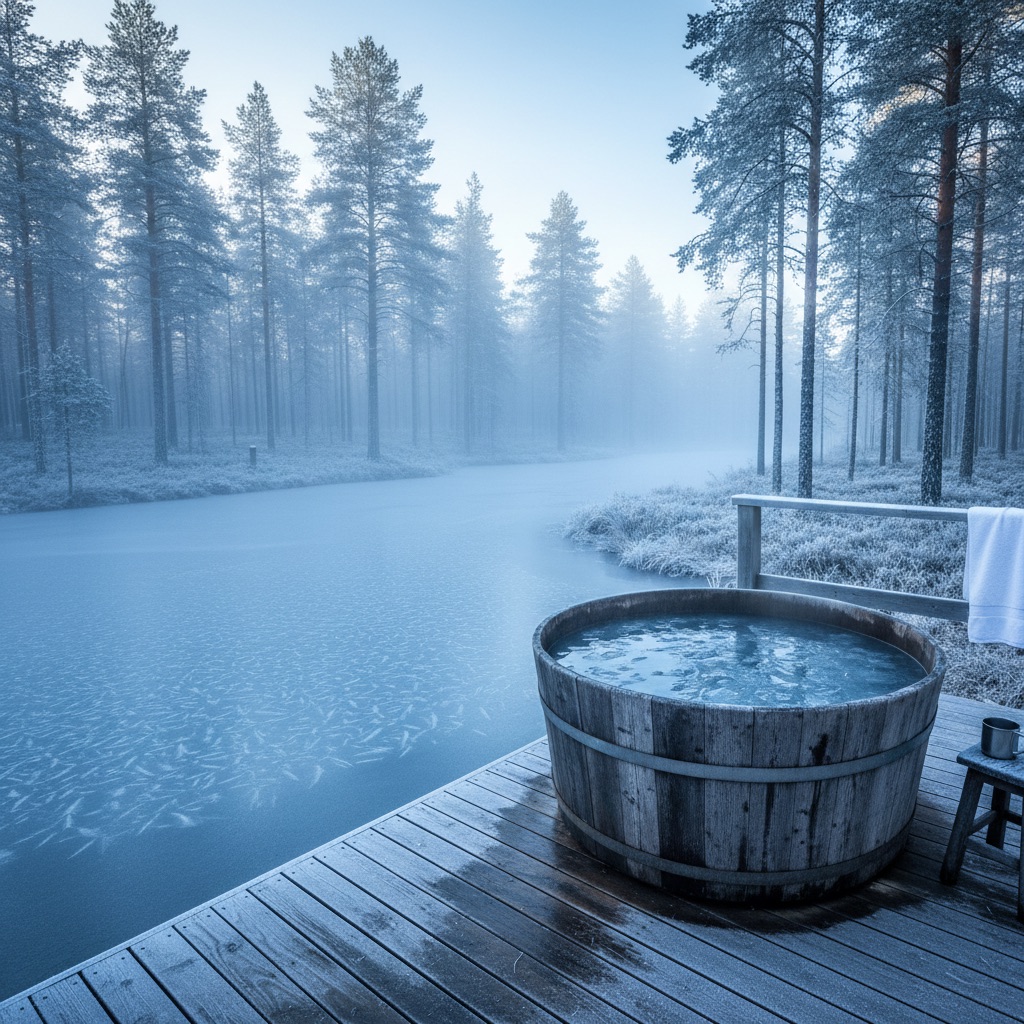
Cold water immersion is not new. In Norway and Finland, people have been plunging into freezing rivers and lakes for centuries, usually right after a sauna session. Vikings used cold water as part of their daily routine. Scandinavian families still cut holes in frozen lakes every winter.
What is new is the growing mainstream interest. Cold plunge tubs are now sold alongside gym equipment. Podcasters and athletes talk about their morning ice baths. And researchers are finally studying what Nordic cultures have practiced intuitively for over a thousand years.
This guide covers how cold water affects your body, what the research actually says, and how to get started safely.
How Cold Water Affects Your Body
When you step into cold water, your body launches an immediate stress response. Understanding what happens physiologically helps explain both the benefits and the risks.
Vasoconstriction. Blood vessels near your skin constrict rapidly, redirecting blood toward your core to protect vital organs. This is why your skin goes pale and your extremities feel cold first. When you exit the cold water, blood vessels re-open and blood rushes back to the surface. This contraction-expansion cycle is sometimes called “vascular gymnastics,” and it is one of the primary mechanisms behind the recovery benefits of cold immersion.
Norepinephrine release. Cold exposure triggers a significant release of norepinephrine, a neurotransmitter and hormone that affects attention, focus, and mood. Research cited by neuroscientist Andrew Huberman suggests cold water immersion can increase norepinephrine by 200-300%, depending on temperature and duration. This is a large, sustained increase compared to what most activities produce. Norepinephrine also plays a role in reducing inflammation, which is part of why cold exposure helps with soreness and swelling.
Dopamine elevation. Cold water immersion also raises dopamine levels. One frequently referenced study showed a 250% increase in dopamine after immersion in 57°F (14°C) water. Unlike caffeine or other stimulants, this dopamine rise tends to be gradual and long-lasting, often persisting for several hours. This sustained dopamine response is what many regular cold plungers describe as “calm energy” or a prolonged sense of well-being after a session.
Reduced inflammation. Cold constricts blood vessels and slows metabolic processes in tissue, which can reduce swelling and inflammation. This is the same principle behind icing a sprained ankle, just applied to the entire body. The cold also reduces nerve conduction velocity, which is why pain and soreness decrease during and after immersion.
Nervous system activation. The initial shock of cold water activates your sympathetic nervous system (fight-or-flight). Your heart rate spikes, your breathing quickens, and your body goes on high alert. Learning to control your breathing and stay calm in that moment is part of what makes cold plunging a mental practice as much as a physical one. Over time, practitioners report that this voluntary stress exposure improves their ability to stay calm under pressure in everyday life.
Endorphin release. Cold water also triggers the release of endorphins, your body’s natural painkillers. Combined with the dopamine and norepinephrine response, this creates the euphoric feeling that many cold plungers describe after exiting the water.
What the Research Shows
Cold water immersion research is growing, but it is important to be honest about where the evidence is strong and where it is still developing.
Recovery After Exercise
This is the most studied application. Research suggests cold water immersion after intense exercise can reduce muscle soreness (delayed onset muscle soreness, or DOMS) and perceived fatigue. A 2022 meta-analysis in Sports Medicine found that cold water immersion at 50-59°F (10-15°C) for 10-15 minutes was effective for reducing soreness 24-72 hours after exercise.
One important caveat: If your primary goal is building muscle, cold immersion immediately after strength training may blunt some of the muscle-building signaling pathways (specifically mTOR). Research suggests waiting at least 4 hours after strength training, or using cold plunge on rest days instead.
Mood and Alertness
The norepinephrine and dopamine response is well-documented. Many regular cold plungers report improved mood, sharper focus, and a sense of calm energy that lasts through the day. While large-scale randomized controlled trials on mood are still limited, the neurochemical mechanisms are well understood.
Immune Function
Some research, including a notable 2016 Dutch study (the “Iceman study”), found that participants who practiced cold showers reported 29% fewer sick days. However, the study could not separate the effects of cold exposure from the effects of breathing exercises and meditation that were also part of the protocol. The evidence here is promising but not yet conclusive.
Sleep Quality
Some practitioners report improved sleep quality from regular cold exposure, particularly when cold plunging is done in the morning. The theory is that the norepinephrine and cortisol spike from morning cold exposure helps reinforce a healthy circadian rhythm. Evening cold plunging, on the other hand, may delay sleep onset for some people due to the stimulating effects. If you plan to plunge in the evening, consider keeping sessions shorter and the water less extreme.
Metabolic Effects
Cold exposure activates brown adipose tissue (brown fat), which burns calories to generate heat. Research suggests regular cold exposure may increase brown fat activity over time. However, the calorie-burning effect is modest, and cold plunging should not be viewed primarily as a weight loss tool.
The Nordic Tradition
Cold water immersion is deeply woven into Scandinavian culture. In Finland, where there are roughly 3.3 million saunas for a population of 5.5 million, the tradition of moving from a hot sauna directly into cold water, whether a lake, a snow bank, or a hole cut in the ice, has been practiced for centuries. Norwegians have a similar tradition, with winter bathing clubs found in cities and coastal towns across the country.
The Nordic approach has always been communal and casual. It is not treated as a biohacking protocol or an extreme sport. Families do it together. Neighbors gather at the local bathing spot. The attitude is practical: you feel better after, so you keep doing it.
This cultural context matters because it frames cold water immersion as a sustainable, everyday practice rather than something that requires expensive equipment or extreme willpower. The most important lesson from the Nordic tradition is consistency over intensity. Regular exposure at moderate temperatures, done week after week, year after year, is the pattern that has endured.
Cold Plunge vs Cold Shower
This is one of the most common questions we see. Here is an honest comparison.
Cold showers are free, accessible, and require zero equipment. You can start today. They provide genuine cold exposure, especially if your water supply runs cold enough. For many people, ending a regular shower with 1-2 minutes of cold water is a perfectly good starting point.
Cold plunge tubs offer consistency and full immersion. With a shower, cold water hits parts of your body at a time. In a plunge tub, your entire body (up to the neck) is submerged simultaneously, which produces a stronger and more uniform physiological response. A chiller-equipped tub also maintains a precise, consistent temperature every time, which a shower cannot do.
Neither is wrong. If you are curious about cold exposure, start with cold showers. They cost nothing and you will learn quickly whether you respond well to cold. If you find yourself wanting more, colder, and deeper immersion, that is when a dedicated cold plunge tub makes sense.
Here is how they compare side by side:
| Factor | Cold Shower | Cold Plunge Tub |
|---|---|---|
| Cost | Free | $200-$10,000+ |
| Temperature control | Limited (tap dependent) | Precise (with chiller) |
| Immersion | Partial | Full body |
| Convenience | Immediate | Setup required (unless chiller) |
| Physiological response | Moderate | Stronger |
| Good for beginners | Yes | Yes (start moderate) |
Who Should Consider Cold Plunging
Cold plunging is not for everyone, and that is fine. Here is who tends to benefit most, and who should avoid it.
Good candidates
- Athletes and active people looking for faster recovery between training sessions
- People seeking mental clarity who respond well to the dopamine and norepinephrine boost
- Anyone dealing with chronic muscle soreness from exercise, physical work, or sitting at a desk all day
- Sauna users who want to add the contrast therapy element (alternating heat and cold is the traditional Nordic approach)
- People who struggle with afternoon energy dips and want a natural, non-caffeinated pick-me-up
Who should NOT cold plunge
- People with Raynaud’s disease or other conditions affecting blood circulation to the extremities
- Anyone with uncontrolled cardiovascular conditions, including unmanaged high blood pressure, arrhythmias, or a history of heart attack or stroke. The sudden vasoconstriction puts real stress on your cardiovascular system
- Pregnant women should consult their doctor before any form of cold immersion
- People with cold urticaria (an allergic reaction to cold)
- Anyone who has just consumed alcohol. Alcohol impairs your ability to sense how cold you are and affects blood vessel function
If you have any pre-existing health conditions, talk to your doctor before starting a cold plunge practice.
Getting Started Safely
The biggest mistake beginners make is going too cold, too fast. Cold plunging is a skill you build gradually, not an all-or-nothing challenge.
Step 1: Start with cold showers
For your first 1-2 weeks, simply end your regular shower with 30 seconds of the coldest water your tap provides. Focus on slow, controlled breathing. In through the nose, out through the mouth. The gasping reflex is normal. Controlling it is the first skill you are building.
Step 2: Extend the cold shower duration
Over the next 2 weeks, work up to 1-2 minutes of cold water at the end of your shower. Notice how your body adapts. The second week will feel meaningfully different from the first.
Step 3: Try full immersion
If you have access to a cold plunge tub (or a natural body of cold water), your first session should be conservative:
- Temperature: 50-59°F (10-15°C) for beginners. This is cold enough to trigger a strong physiological response without being dangerously cold
- Duration: 1-2 minutes for your first few sessions. There is no prize for staying in longer than your body is ready for
- Breathing: Slow, controlled breaths. In through the nose for 4 counts, out through the mouth for 6 counts. Your body will try to make you hyperventilate. Resist it calmly
- Never go alone the first time. Have someone nearby who can help if you feel dizzy, disoriented, or unable to exit on your own
Step 4: Build over time
As you adapt over weeks, you can gradually:
- Lower the temperature toward 40-50°F (4-10°C)
- Extend duration to 2-5 minutes
- Experiment with morning vs. evening timing
- Add cold plunging after sauna sessions for full contrast therapy
What to do immediately after
When you exit the cold water, resist the urge to jump into a hot shower. Let your body rewarm naturally over 5-10 minutes. This natural rewarming phase drives one final wave of blood flow cycling and is part of what produces the lasting mood and energy boost. Wrap in a towel or robe if you want, but give your body time to do its work. Many experienced practitioners say the 10 minutes after the plunge feel better than anything else in their day.
Temperature reference
| Level | Temperature | Duration | Who it’s for |
|---|---|---|---|
| Beginner | 50-59°F (10-15°C) | 1-2 min | First month |
| Intermediate | 45-50°F (7-10°C) | 2-3 min | After 4-6 weeks |
| Advanced | 37-45°F (3-7°C) | 2-5 min | Experienced practitioners |
Important: Colder is not always better. Research shows that most of the benefits of cold exposure occur at 50-59°F (10-15°C). Going below 40°F (4°C) increases risk without proportionally increasing benefit for most people.
What to Look for in a Cold Plunge Tub
If you decide to invest in a dedicated cold plunge tub, here are the factors that matter most.
Chiller vs. manual ice. The biggest decision. A built-in chiller ($5,000-$10,000+) maintains your set temperature automatically and keeps water clean with ozone filtration. Manual ice setups ($200-$1,800) are much cheaper upfront but require buying or making ice before each session and changing the water regularly. Chiller owners tend to stick with the habit longer because there is less friction.
Insulation. If your tub will sit in a garage, basement, or outdoors, insulation matters significantly for both energy efficiency and maintaining temperature. Poorly insulated tubs force the chiller to work harder and cost more to run.
Size and fit. Make sure you can fully submerge up to your neck. Taller users (over 6 feet) need to pay attention to interior dimensions. Some tubs are designed for seated immersion, others for a reclined position.
Filtration. With a chiller, ozone or UV filtration keeps the water clean for months. Without filtration, you will need to drain and refill the tub every few days to a week, depending on use.
Price range. Budget-friendly manual tubs start around $200-$500. Mid-range insulated tubs without chillers run $800-$1,500. Premium chiller-equipped tubs typically cost $5,000-$10,000+.
Indoor vs. outdoor placement. If you plan to keep your tub outdoors, look for UV-resistant materials and a secure cover. Outdoor placement in cold climates can reduce energy costs since ambient temperatures help keep the water cold. Indoor placement offers more privacy and protection from the elements, but you will need adequate drainage and possibly a floor mat to catch splashes.
For detailed comparisons, see our Best Cold Plunge Tubs 2026 review.
Our Picks for Getting Started
We highlight two cold plunge tubs that represent opposite ends of the market. Both are popular for good reason.
Plunge Evolve XL (Premium Pick)
The Plunge Evolve XL is a fully integrated cold plunge tub with a built-in chiller that maintains water temperature anywhere from 37°F to 60°F. WiFi app control lets you set and monitor temperature remotely. Ozone and filter-based water care means you rarely need to change the water.
It fits users up to 6’5” in a comfortable reclined position, with 125 gallons of capacity. The insulated shell keeps energy costs manageable.
Best for: Anyone who wants a set-it-and-forget-it cold plunge experience. The convenience factor makes it much easier to build a consistent daily habit.
Price: Around $6,690.
Ice Barrel 300 (Budget Pick)
The Ice Barrel 300 takes a completely different approach. It is a well-insulated barrel designed for standing or seated immersion. No electricity, no chiller, no filtration. You add ice, step in, and plunge.
The barrel shape is surprisingly practical. It uses less water than rectangular tubs, which means less ice needed per session. The insulated walls help maintain cold temperatures longer than you might expect.
Best for: People who want to try cold plunging without a large upfront investment, or those who prefer a simpler, no-tech approach.
Price: Around $1,800.
Frequently Asked Questions
How cold should the water be?
For most people, 50-59°F (10-15°C) provides the full range of benefits. Competitive athletes and experienced practitioners often go colder (40-50°F / 4-10°C), but the additional benefit over moderate cold is relatively small for general wellness purposes.
How long should I stay in?
Start with 1-2 minutes and build up to 2-5 minutes over several weeks. Research suggests that the majority of the neurochemical response (norepinephrine, dopamine) happens in the first 1-3 minutes. Staying in for 10+ minutes does not necessarily make it more effective and increases risk of hypothermia.
Is it safe to cold plunge every day?
For healthy individuals, daily cold plunging at moderate temperatures (above 45°F / 7°C) and moderate durations (under 5 minutes) appears to be safe. Many regular practitioners plunge daily. Listen to your body. If you feel excessively fatigued, sluggish, or notice persistent numbness in your extremities, take a rest day.
Can I just use a regular bathtub with ice?
Yes. A standard bathtub filled with cold water and 40-60 pounds of ice is a perfectly functional cold plunge setup. The downsides are that it takes 20-30 minutes to prepare, uses a lot of ice, and the temperature is difficult to control precisely. But for trying out cold immersion before investing in dedicated equipment, a bathtub works fine.
Should I cold plunge before or after a workout?
Both approaches have merit. Cold plunging before a workout can increase alertness and energy. Cold plunging after a workout can reduce soreness and inflammation. The one scenario to be cautious about is cold immersion immediately after strength training focused on muscle growth, as the anti-inflammatory effect may blunt some of the hypertrophy signaling. If building muscle is your priority, consider waiting 4+ hours or plunging on rest days.
What about combining cold plunge with sauna?
Cold plunging combines powerfully with sauna use. The alternation between extreme heat and cold, known as contrast therapy, has been practiced in Nordic countries for centuries and produces a stronger physiological response than either modality alone. See our contrast therapy protocol for the full routine.
I have high blood pressure. Is cold plunging safe for me?
Cold immersion causes a sudden spike in blood pressure due to vasoconstriction. If you have uncontrolled or poorly managed hypertension, cold plunging may not be appropriate for you. Consult your doctor before starting. Some people with managed hypertension do cold plunge safely, but this is a conversation to have with a medical professional, not something to decide based on an article.
Do I need to submerge my head?
No. Submerging up to your neck is sufficient for the full physiological response. Head submersion adds cold shock risk and makes breathing control much harder. Keep your head above water, especially as a beginner.
Will cold plunging help me lose weight?
Cold exposure does activate brown fat and increase calorie expenditure, but the effect is modest. A typical 3-minute cold plunge burns roughly the equivalent of a short walk. Cold plunging has many well-supported benefits, but significant weight loss on its own is not one of them.
Cold water immersion is one of the simplest, oldest recovery practices in the world. The barrier to entry is as low as turning your shower handle to cold. Whether you start there or invest in a dedicated setup, the most important thing is to start gradually, stay consistent, and listen to your body.
Related Articles
Cold Plunge Routine for Beginners: Your First 4 Weeks
A week-by-week cold plunge protocol for beginners. Covers temperature, duration, breathing, timing, and how to build a sustainable routine based on research.
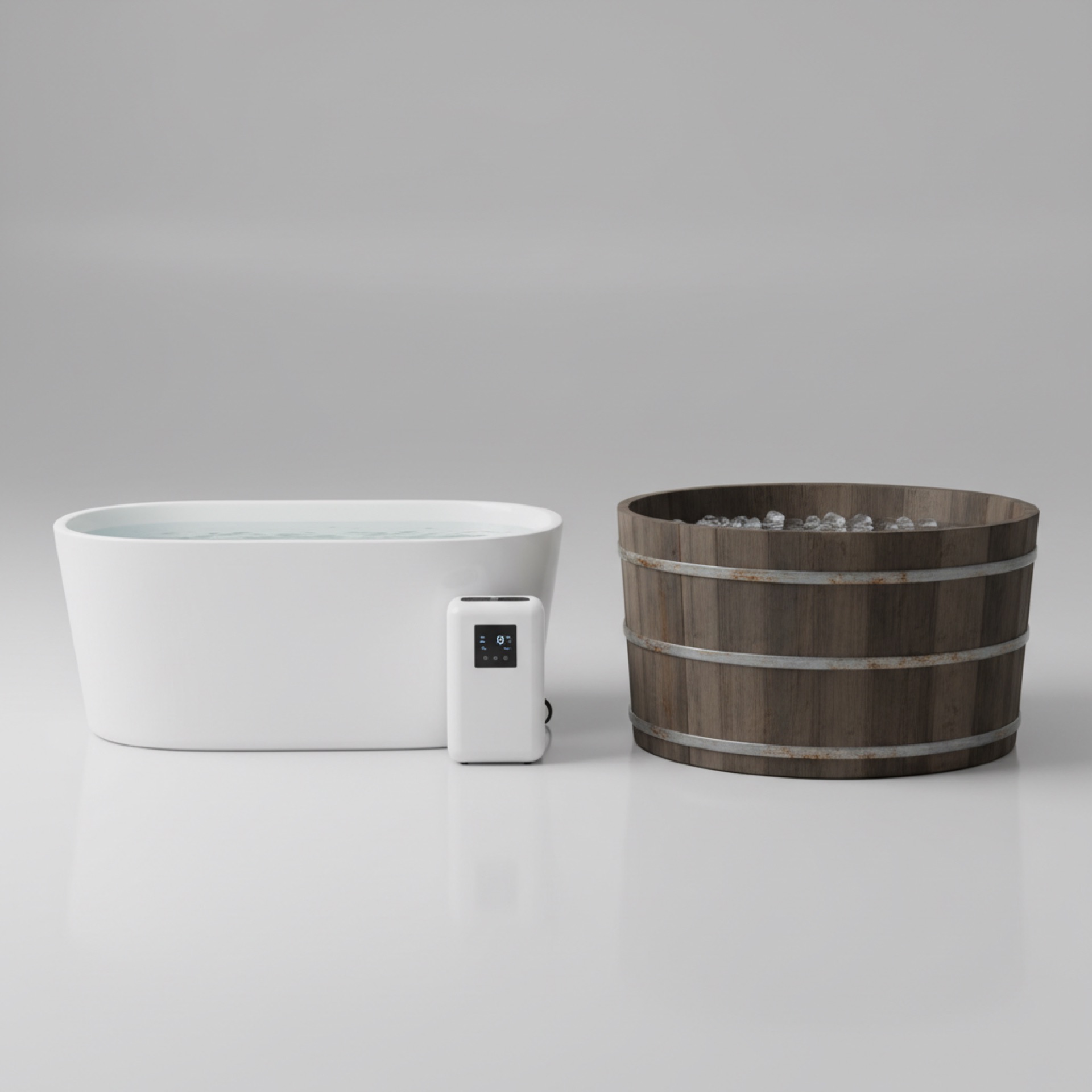
Plunge All-In vs Ice Barrel 300: Chiller vs Manual Ice Compared
A detailed comparison of the Plunge All-In and Ice Barrel 300. We break down cooling, temperature control, maintenance, total cost, and who each cold plunge is best for.
Best Cold Plunge Tubs 2026: Compared Head-to-Head
We compare the best cold plunge tubs for home use, from premium chillers to budget ice baths. Find the right cold plunge for your routine.