Recovery Stacking: How to Combine Multiple Recovery Tools
A practical guide to combining red light therapy, sauna, cold plunge, massage guns, and compression boots into an effective routine.
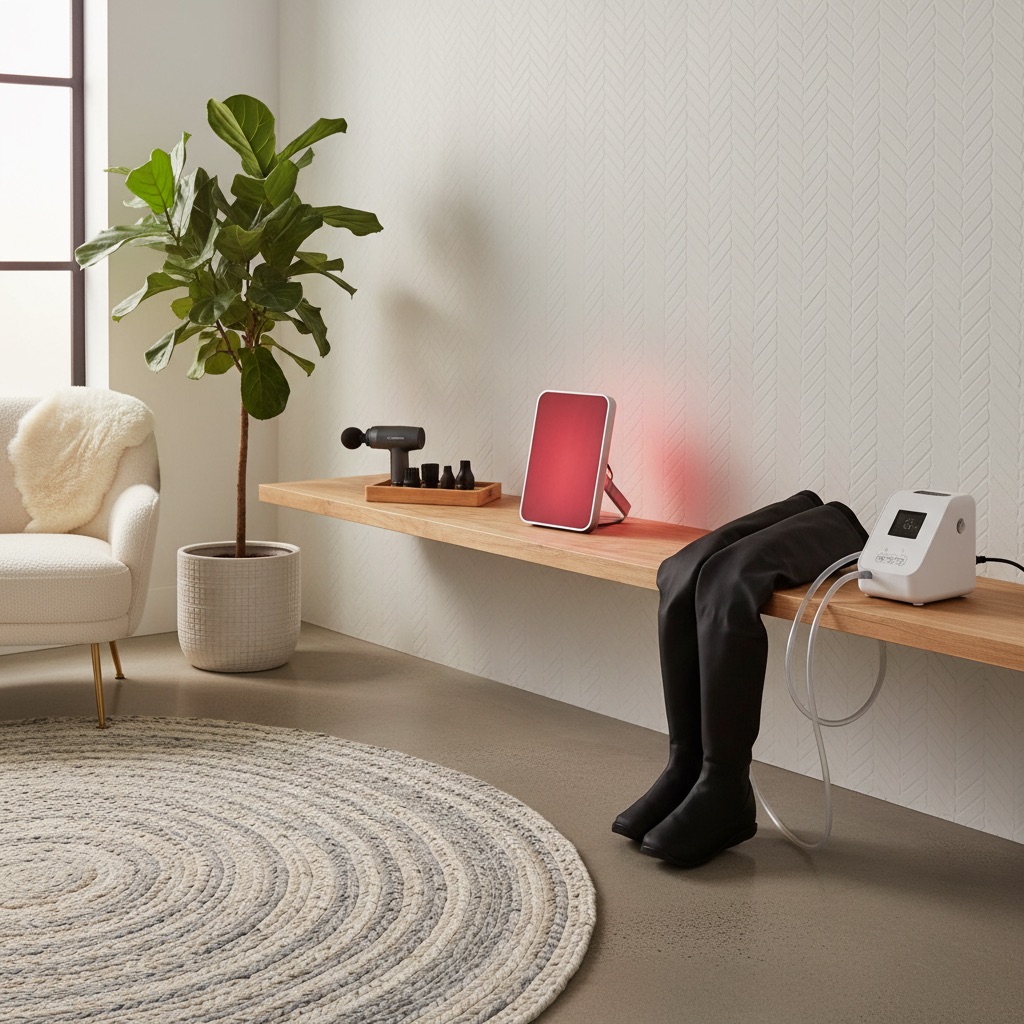
Most people who get into recovery tools start with one thing. A massage gun after workouts. A cold plunge in the morning. A sauna on weekends. And at some point, the question comes up: what if I combined all of these?
That instinct is right. Different recovery tools target different systems in your body, and using more than one can cover ground that a single modality never will. But more is not always better. Stacking without a plan can waste time, waste money, and in some cases actually work against your goals.
This guide covers the five major recovery modalities, how they complement each other, and how to build a practical routine that fits your life and budget. Whether you own one tool or five, the principles here will help you get more out of what you have.
The Five Recovery Modalities
Before you combine anything, it helps to understand what each tool actually does. Here is a quick overview.
Red Light Therapy
Red and near-infrared light penetrates your skin and is absorbed by mitochondria, the energy factories inside your cells. This boosts ATP production, which gives cells more fuel for repair and regeneration. Red light therapy is particularly useful for skin health, joint recovery, and reducing inflammation at the cellular level.
Sessions are simple: stand in front of a panel for 10 to 20 minutes. No heat, no UV, no consumables.
Learn more about red light therapy
Infrared Sauna
Unlike traditional saunas that heat the air around you, infrared saunas use light waves to heat your body directly. This raises your core temperature, increases heart rate, dilates blood vessels, and triggers a cascade of heat shock proteins that repair damaged cells.
A typical session lasts 20 to 30 minutes at 55 to 65 degrees Celsius (130 to 150 degrees Fahrenheit). The deep heating promotes circulation, relaxation, and detoxification through sweat.
Learn more about infrared sauna therapy
Cold Plunge
Immersing yourself in cold water (typically 7 to 13 degrees Celsius, or 45 to 55 degrees Fahrenheit) triggers vasoconstriction, a sharp narrowing of blood vessels that pushes blood to your core. This reduces inflammation, numbs sore tissue, and produces a significant spike in norepinephrine and dopamine that can last for hours.
Cold exposure also builds mental resilience. There is no way to make it comfortable. You simply learn to tolerate it.
Learn more about cold plunge therapy
Massage Guns
Percussion therapy uses rapid, targeted impacts to release tension in muscles and fascia. A good massage gun can increase blood flow to a specific area, reduce perceived muscle soreness, and improve range of motion before or after training.
The main advantage of massage guns is precision. You can target exactly the muscle group that needs attention, for as long as it needs it.
Compression Boots
Pneumatic compression devices wrap around your legs and inflate in a sequential pattern, squeezing from feet to hips. This mimics and accelerates your body’s natural lymphatic drainage, flushing out metabolic waste products like lactate and reducing swelling.
Compression boots are passive recovery. You sit back, turn them on, and let them work for 20 to 40 minutes.
Learn more about compression therapy
How They Work Together
Each modality targets a different recovery pathway. That is the whole point of stacking.
| Modality | Primary Target | Recovery Mechanism |
|---|---|---|
| Red light therapy | Cellular | ATP production, mitochondrial function, inflammation modulation |
| Infrared sauna | Circulatory + deep tissue | Vasodilation, heat shock proteins, cardiovascular stress |
| Cold plunge | Neurochemical + anti-inflammatory | Vasoconstriction, dopamine, norepinephrine, inflammation reduction |
| Massage gun | Mechanical | Tension release, fascial mobility, localized blood flow |
| Compression boots | Lymphatic | Fluid movement, metabolic waste clearance, swelling reduction |
When you use a sauna, you are driving blood to the surface and increasing circulation. When you follow that with cold, you are reversing the flow and creating a pumping action that flushes waste and delivers nutrients. Red light therapy works at a level beneath all of that, giving individual cells more energy to do their repair work. Massage guns address specific mechanical problems that systemic tools cannot reach. And compression boots handle the plumbing, moving fluid out of your legs after a hard session.
No single tool covers all five pathways. But you do not need all five tools to benefit from stacking. Even combining two modalities gives you more coverage than using one alone.
Building Your Recovery Stack
Not everyone needs or can afford a full home recovery setup. Here are three practical tiers based on budget and commitment level.
Starter Stack ($250-$500)
What you get: A massage gun, cold showers, and morning sunlight.
This is the most cost-effective entry point. A quality massage gun runs $150 to $300 and will last for years. Cold showers are free. Morning sunlight (10 to 15 minutes within the first hour of waking) provides some of the same wavelengths as red light panels, though at much lower intensity.
Daily routine:
- Morning: 10 minutes of outdoor sunlight exposure
- Post-workout: 2 to 3 minutes of cold shower (end your regular shower with cold)
- Evening: 10 minutes of massage gun work on sore areas
This covers three recovery pathways (cellular via sunlight, neurochemical via cold, mechanical via percussion) for minimal investment. Build the habit before you build the equipment collection.
Intermediate Stack ($1,500-$3,000)
What you get: Red light panel + massage gun + cold plunge setup.
This is where stacking starts to deliver noticeably better results. A dedicated red light panel provides consistent, clinical-level wavelengths that sunlight cannot match. A cold plunge tub (or a converted chest freezer) lets you control temperature precisely and immerse fully, which is far more effective than cold showers.
Daily routine:
- Morning: 10 to 15 minutes of red light therapy, followed by 2 to 3 minutes of cold immersion
- Post-workout: Massage gun on trained muscle groups (5 to 10 minutes)
- Rest days: Red light therapy + longer cold exposure (3 to 5 minutes)
Suggested products:
- Red light: MitoPRO+ Series ($369+)
- Cold: Ice Barrel 300 (~$1,150) or DIY chest freezer conversion ($200-400)
- Massage gun: Hypervolt 3 Pro ($349)
Full Stack ($8,000-$15,000)
What you get: Infrared sauna + cold plunge tub + red light panel + massage gun + compression boots.
This is the complete home recovery room. Every major recovery pathway is covered. The addition of an infrared sauna changes the equation significantly, as it provides deep tissue heating, cardiovascular stress, and heat shock protein production that no other modality replicates. Compression boots add passive lymphatic support, which is especially valuable for runners, cyclists, and anyone doing high-volume lower body training.
Daily routine:
- Morning: Red light (15 min), sauna (25 min), cold plunge (3 min), rest (10 min)
- Post-workout: Massage gun on trained areas, compression boots for 30 minutes
- Evening (alternate days): Sauna for relaxation and sleep preparation
Suggested products:
- Red light: MitoPRO+ Series ($369+)
- Sauna: Sunlighten mPulse Aspire (from ~$6,500)
- Cold: Plunge All-In (~$7,990)
- Massage gun: Hypervolt 3 Pro ($349)
- Compression: Normatec 3 ($799)
Sample Weekly Routines
Knowing what tools to use is only half of it. You also need a schedule that works with your life. Here are three templates.
The 3-Day Athlete
Best for: Serious recreational athletes who train 4 to 5 days per week and want structured recovery.
| Day | Morning | Post-Workout | Evening |
|---|---|---|---|
| Monday | Red light (10 min) | Massage gun (10 min) | Compression boots (30 min) |
| Tuesday | Red light (10 min) | - | - |
| Wednesday | Red light (10 min) + sauna (25 min) + cold plunge (3 min) | Massage gun (10 min) | Compression boots (30 min) |
| Thursday | Red light (10 min) | - | - |
| Friday | Red light (10 min) + sauna (25 min) + cold plunge (3 min) | Massage gun (10 min) | Compression boots (30 min) |
| Saturday | Red light (10 min) | - | Sauna (20 min) for relaxation |
| Sunday | Full contrast protocol | - | - |
Key principle: Use the full sauna-cold stack on 3 days, and keep the other days lighter. Daily red light is fine because it requires minimal recovery itself.
The Daily Wellness Routine
Best for: People focused on general health, stress management, and longevity rather than athletic performance.
Morning block (30 minutes):
- Red light therapy (10 min)
- Cold exposure (2 min cold shower or plunge)
- 10 minutes of rest and hydration
Evening block (40 minutes, 3 to 4 times per week):
- Infrared sauna (25 min)
- Compression boots (30 min, can overlap with sauna cool-down)
Daily maintenance:
- Massage gun as needed for tension (neck, shoulders, lower back)
This routine separates the stimulating modalities (cold, light) into the morning and the relaxing ones (sauna, compression) into the evening. That alignment supports natural circadian patterns.
The Weekend Warrior
Best for: People with limited weekday time who want to concentrate recovery into fewer sessions.
Weekdays:
- 5 minutes of massage gun on problem areas (daily)
- Cold shower at the end of your morning shower (daily)
Saturday (full protocol, 60 to 75 minutes):
- Red light therapy (15 min)
- Infrared sauna (25 min)
- Cold plunge (3 to 5 min)
- Rest (10 min)
- Compression boots (30 min)
Sunday:
- Red light therapy (15 min)
- Massage gun (15 min, full body)
- Light stretching
The Saturday session covers all five modalities in one block. Weekday maintenance with massage gun and cold showers keeps some momentum going between the longer sessions.
Timing and Sequencing
The order in which you use recovery tools matters. Here are the general principles.
Sauna Before Cold (Not the Other Way Around)
Always heat before cold when combining the two. The contrast from hot to cold creates the vascular pumping effect that drives recovery benefits. Going cold first, then hot, feels less intense but produces a weaker physiological response. The Nordic tradition has always been heat first, cold second, and modern research supports this sequence.
For a detailed breakdown of the heat-cold protocol, see our contrast therapy guide.
Red Light Can Go Anytime
Red light therapy is the most flexible modality in terms of scheduling. It works well as the first step before sauna (when skin is clean and dry, ideal for light absorption). It also works as a standalone session at a completely different time of day. Unlike sauna and cold, it does not create significant physiological stress, so timing is less critical.
One exception: if you use red light in the evening, consider using red-only mode (630 to 660nm) rather than near-infrared, as red wavelengths may support melatonin production while near-infrared can be mildly stimulating.
Massage Gun: Before or After Training
Use a massage gun before training for activation and mobility. Short bursts (30 seconds per muscle group) on low to medium intensity can increase range of motion and blood flow to the target area.
Use it after training for recovery. Longer passes (60 to 90 seconds per muscle group) on medium intensity help reduce perceived soreness and promote blood flow to the worked muscles.
Avoid using a massage gun on the highest setting immediately after intense training on a muscle group. Already-stressed tissue does not need aggressive percussion. Medium intensity is enough.
Compression Boots: After Training or in the Evening
Compression boots are best used in the 1 to 4 hour window after training, or as an evening passive recovery tool. Many people use them while watching TV, reading, or working at a desk. A 20 to 40 minute session is standard.
They pair well with the post-sauna cool-down period. After your sauna and cold plunge, sitting in compression boots during the rest phase is an efficient way to stack two modalities simultaneously.
The 4-Hour Rule for Cold and Strength Training
If building muscle is a primary goal, avoid cold immersion within 4 hours after strength training. Cold exposure reduces inflammation, and that sounds good, but the inflammatory signaling after resistance training is part of what triggers muscle adaptation and growth. Blunting that signal with cold water may reduce your gains over time.
This applies mainly to full-body cold immersion (plunge tubs, ice baths). It applies less to cold showers and localized ice packs.
On days when you lift heavy, use your cold plunge in the morning (before training) or save it for the next day. On cardio or rest days, cold plunge timing is less important.
Common Mistakes
1. Doing Too Much Too Fast
The most common mistake is buying five tools and trying to use all of them on day one. Each modality requires some adaptation. Cold exposure needs gradual temperature progression. Sauna tolerance builds over weeks. Even red light therapy benefits from starting with shorter sessions.
Start with one tool. Use it consistently for 2 to 3 weeks. Then add another. Give your body time to adapt and give yourself time to build the habit.
2. Skipping the Basics
No amount of recovery stacking will compensate for poor sleep, bad nutrition, or chronic dehydration. These three fundamentals account for the vast majority of your recovery capacity. If you are sleeping 5 hours a night and eating processed food, buying a $7,400 sauna will not fix the problem.
Before investing in any recovery tool, make sure you are sleeping 7 to 9 hours, eating enough protein, drinking enough water, and managing your training load. Then add recovery tools to enhance what is already working.
3. Cold Immersion Right After Strength Training
This deserves its own callout because it is so common. Many people finish a hard workout and jump straight into cold water because it feels good. And it does feel good. But if muscle growth is your goal, you are potentially undermining the training stimulus.
Wait at least 4 hours, or use cold on rest days instead. For endurance training, the timing matters less.
4. Inconsistency
Using every modality once and deciding it “doesn’t work” is like going to the gym once and wondering why you are not stronger. Recovery tools produce cumulative benefits. The dopamine spike from a single cold plunge fades within hours. The long-term mood, sleep, and inflammation benefits come from doing it 3 to 5 times per week for months.
Pick a frequency you can actually maintain. Three solid sessions per week beats seven sessions for two weeks followed by nothing.
5. Buying Expensive Equipment Before Building the Habit
This applies to every recovery modality but especially to saunas and cold plunge tubs. Before spending $5,000 or more on equipment, prove to yourself that you will actually use it.
- Before buying a cold plunge tub: do cold showers for 30 days straight
- Before buying an infrared sauna: visit a local sauna facility weekly for a month
- Before buying a red light panel: try a budget option like the NovaaLab Pad first
If you can maintain the habit with the cheap or free version, you will get your money’s worth from the upgrade. If you cannot, you have saved thousands.
Where to Start
If you can only buy one recovery tool, which one should it be? Here is our recommendation order based on cost-effectiveness and versatility.
1. Massage gun ($150-$300). The most versatile tool on this list. You will use it daily. It addresses the most common recovery complaint (sore, tight muscles) with no setup time and no consumables. Start here.
2. Red light panel ($250-$600). The broadest range of benefits relative to cost and effort. Ten minutes a day, every day, with essentially no downside. The entry cost is reasonable and the research base is solid.
3. Cold plunge or cold exposure (free to $1,800). Cold showers cost nothing. An ice barrel or converted freezer costs a few hundred dollars. The neurochemical benefits are immediate and unmistakable. You will know within the first session whether this is something you want to pursue.
4. Compression boots ($600-$900). Most valuable for runners and endurance athletes who accumulate significant leg fatigue. Less critical for general fitness, but very effective at what they do.
5. Infrared sauna ($700-$7,400+). The most expensive item on the list, but also the one people tend to use most consistently once they have it. If you can afford it and have the space, a sauna becomes the anchor of your recovery routine. Start with a sauna blanket ($700) if you want to test the waters.
For detailed equipment recommendations, see our individual reviews:
- Best Red Light Therapy Panels
- Best Infrared Saunas
- Best Cold Plunge Tubs
- Best Massage Guns
- Best Compression Boots
And for the classic Nordic heat-cold protocol, see our contrast therapy guide.
Related Articles

The Ultimate Contrast Therapy Protocol: Sauna + Cold Plunge + Red Light
A complete protocol for combining infrared sauna, cold plunge, and red light therapy into a daily recovery routine.
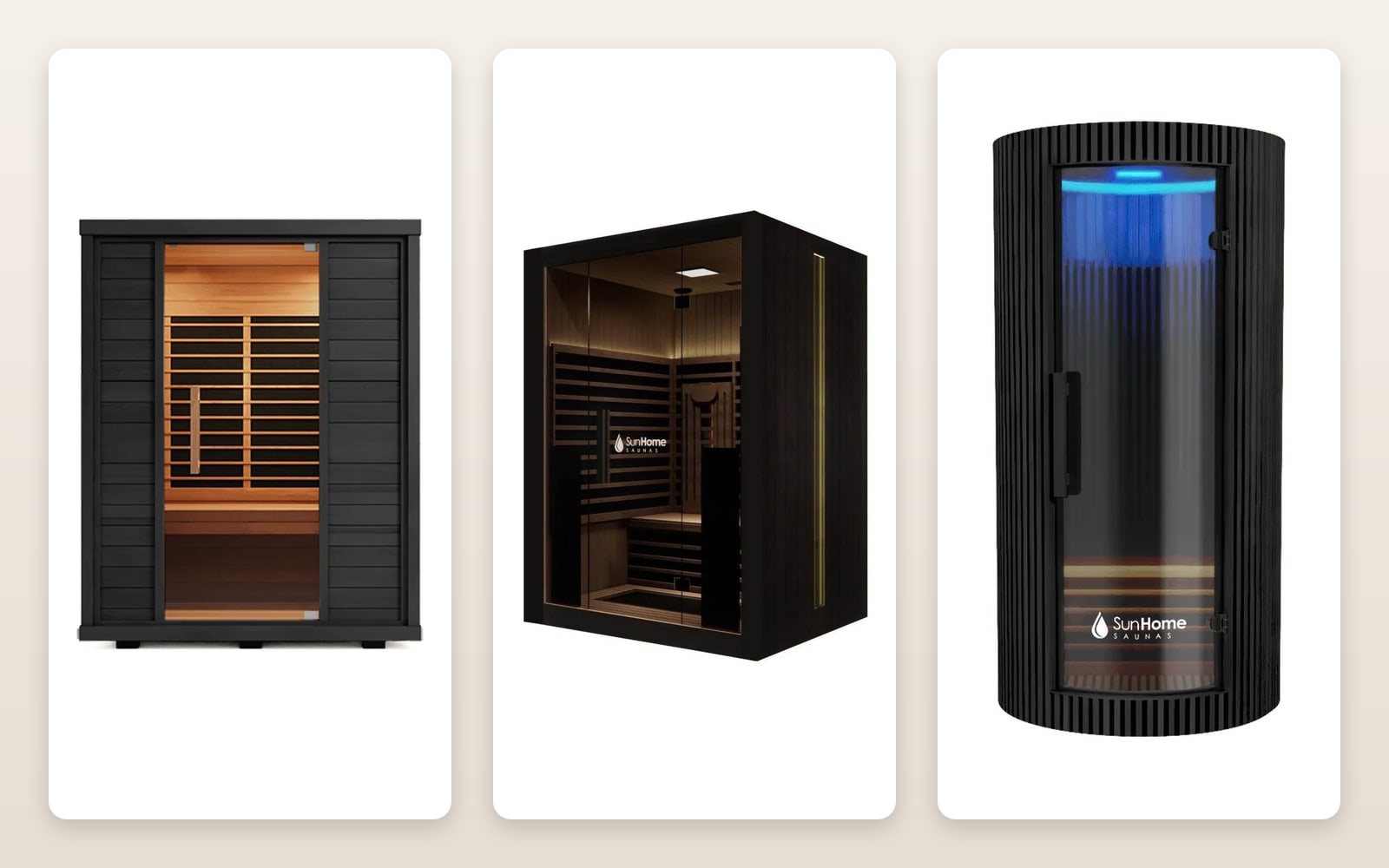
Best Home Saunas 2026: Top Infrared Saunas Compared
We compare eight infrared saunas for home use, from a $2,099 budget cabin to full-spectrum and outdoor-rated models with built-in red light therapy.
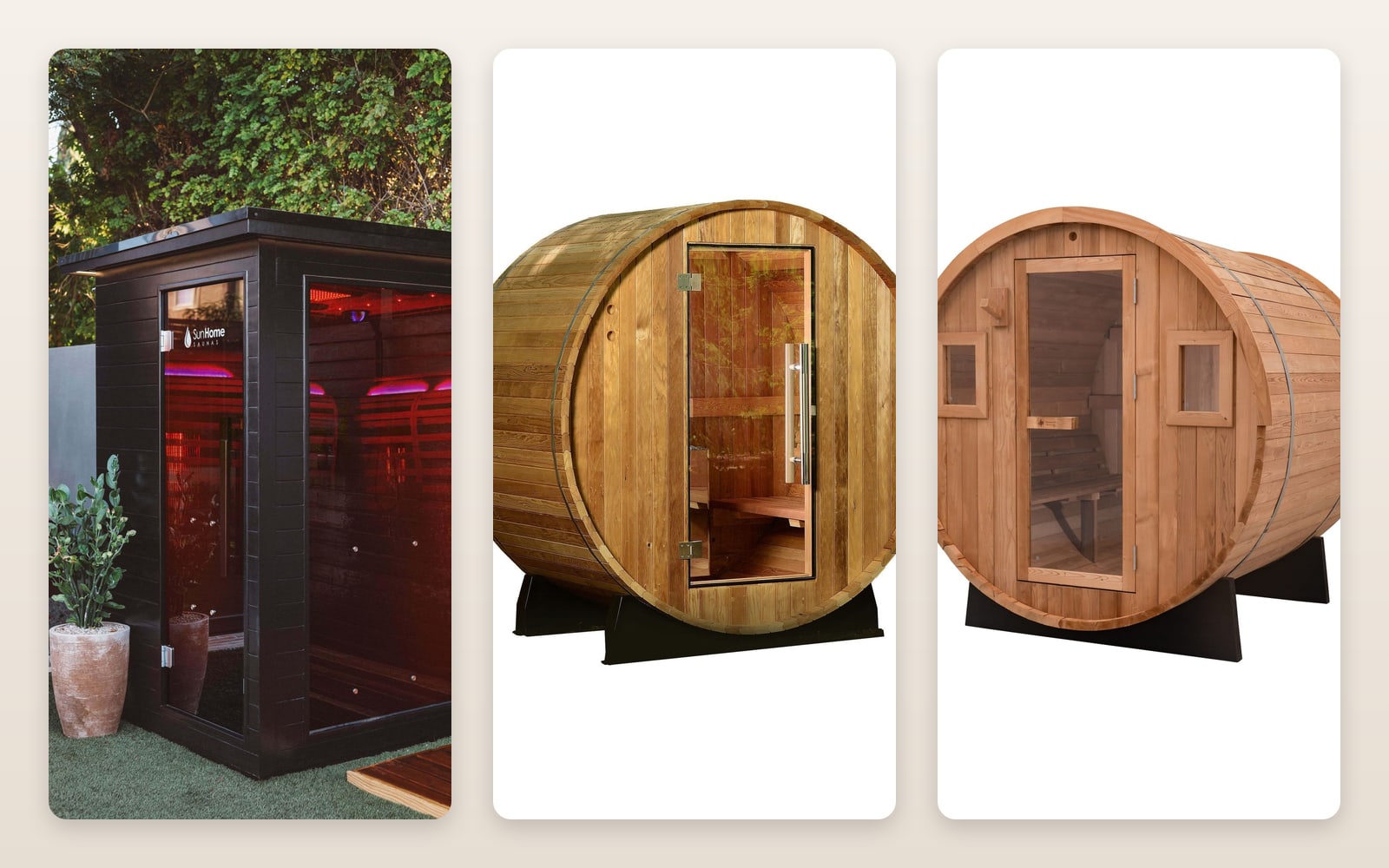
Best Outdoor Saunas 2026: Infrared and Traditional Compared
We compare five outdoor saunas for backyards, terraces, and gardens: full-spectrum infrared cabins from Sun Home and traditional Harvia-heated barrel and cabin saunas from Almost Heaven and Redwood Outdoors.